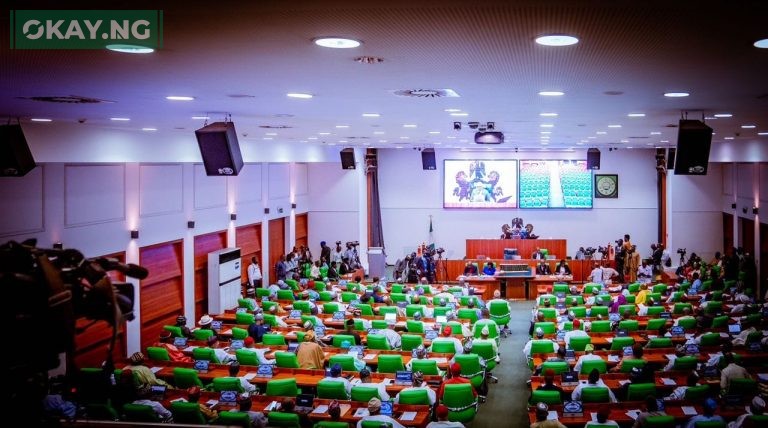
A move that could fundamentally reshape Nigeria’s economic and political landscape has been initiated, the House of Representatives through the advanced a bill proposing to transfer control of lucrative natural resources, including oil fields and minerals, from the federal government to state jurisdictions. This legislative action, which scaled second reading, has ignited a national debate on the balance of power and the equitable distribution of wealth within the nation.
The bill, jointly sponsored by Speaker Abbas Tajudeen and three other lawmakers, seeks to amend the 1999 Constitution, specifically targeting the “Exclusive Legislative List” which currently grants the federal government sole authority over mines, minerals, oil fields, and natural gas. This provision, found in Item 39 of Part 1 of the Second Schedule, has long been a point of contention, with states arguing for greater autonomy over resources within their boundaries.
“The current framework, where the federal government exclusively controls these resources, creates an imbalance,” stated a legislative aide, speaking on background. “This bill aims to rectify that, allowing states to directly benefit from the wealth generated within their territories.”
Essentially, the proposed amendment would shift these resources to the “Concurrent Legislative List,” enabling both federal and state governments to legislate and regulate their extraction and management. If enacted, this could potentially empower states to issue mining and oil exploration licenses, regulate extraction, and independently collect revenues.
However, the implications are far-reaching and complex. As one economic analyst pointed out, “While the argument for state autonomy is compelling, we must consider the potential for increased economic disparities. Oil-producing states, naturally, stand to gain significantly more than those with fewer natural resources.” This raises concerns about how revenue sharing mechanisms would be structured to ensure equitable development across all states.
It is worth noting that a similar bill faced stagnation at the second reading stage in 2016, highlighting the contentious nature of this issue. “I remember the debate then,” said a long time political observer, “there was much concern about the potential for chaos if states were given too much power.”
The emotional undercurrent of this debate is palpable. For many in resource-rich regions, this bill represents a long-awaited opportunity to address perceived injustices and reclaim control over their economic destinies. Conversely, others fear a fragmented Nigeria, where regional disparities widen, and national unity is undermined.
The legislative journey is far from over. The bill now proceeds to the Committee Stage, specifically the Committee on Constitution Amendment. If approved, it will return for a third reading before being sent to the Senate for concurrence. Crucially, as stipulated under Section 9 of the 1999 Constitution, the bill must also secure approval from two-thirds of the 36 State Houses of Assembly to become law.
As I observe this process, I find myself reflecting on the delicate balance between state autonomy and national unity. The potential impact of this bill on Nigeria’s economic future is undeniable, and the coming months will be critical in determining whether this proposed shift in resource governance will ultimately benefit the nation as a whole.