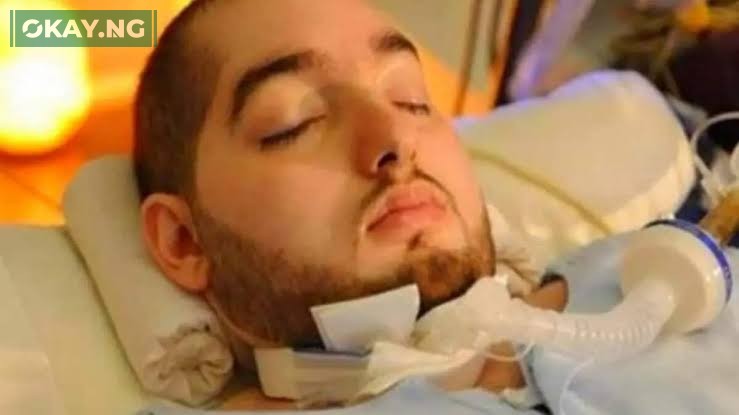
Prince Al-Waleed bin Khaled bin Talal, widely known as Saudi Arabia’s “Sleeping Prince,” passed away today at the age of 36 after spending two decades in a coma following a devastating car accident. His story has captured the hearts of many across the Arab world and beyond, symbolizing unwavering faith, familial devotion, and the complexities of modern critical care.
Early Life and Tragic Accident
Born in April 1990, Prince Al-Waleed was the eldest son of Prince Khaled bin Talal Al Saud and the nephew of billionaire Prince Alwaleed bin Talal. In 2005, while studying as a military cadet in London, the prince was involved in a severe car accident at the age of 15. The collision caused catastrophic brain injuries and internal bleeding, leaving him in a persistent vegetative state from which he never recovered.
Medical Condition: Persistent Vegetative State
After the accident, Prince Al-Waleed was immediately hospitalized and later transferred to King Abdulaziz Medical City in Riyadh. Despite global medical efforts—including consultations from American and Spanish doctors—the prince remained largely unresponsive. He was sustained by mechanical ventilation and feeding tubes, with occasional minimal signs of consciousness such as slight hand or head movements in later years, but these reflex actions never indicated a return to awareness.
The prince’s condition, medically defined as a “persistent vegetative state,” is characterized by severe brain damage resulting in loss of cognitive function, while basic life-sustaining reflexes may remain. Over the years, the family publicly shared occasional videos showing the prince responding to bedside interactions, such as moving his fingers, which renewed public hope and prayer but did not signal recovery.
Family’s Devotion and Ethical Dilemmas
Prince Khaled bin Talal, the prince’s father, became a symbol of steadfast paternal love, rejecting all medical advice to withdraw life support. He cited profound religious faith, insisting that, if God had intended for his son to die in the accident, he would not have survived so long. The family’s public communications emphasized hope, faith, and patience, making the prince a focus of empathy and discussion across the Middle East and globally.
Ethical dilemmas emerged as the family’s decision to maintain life support clashed with widespread medical recommendations, igniting debates about the value of life, hope, and the role of technology in critical care. Nonetheless, the Saudi public largely supported the family, drawing strength from displays of communal prayer and respect for the prince’s dignity in suffering.
Public Response and Final Days
The prince’s hospital room became a spiritual landmark, with thousands offering prayers and support over the years. Social media regularly trended with messages of hope, especially after brief signs of movement. Even so, rumors of his potential awakening were always dispelled by the family and credible news sources.
On July 19, 2025, Prince Al-Waleed’s death was confirmed at King Abdulaziz Medical City in Riyadh. Funeral prayers are to be held at the Imam Turki bin Abdullah Mosque, with an outpouring of condolences from across the world. His passing marks the end of a widely followed chapter in the story of the Saudi royal family, but also raises lasting questions on the intersection of modern medicine, faith, and family loyalty.
Conclusion
Prince Al-Waleed bin Khaled bin Talal’s two-decade coma became a poignant saga of human endurance, love, and the search for hope. His family’s commitment, his brief moments of apparent awareness, and the sustained social attention all made his life a unique case at the crossroads of medicine, religion, and cultural values. His story will continue to be referenced whenever debates arise about the ethical boundaries of life-sustaining interventions and the extraordinary lengths to which families may go for their loved ones.