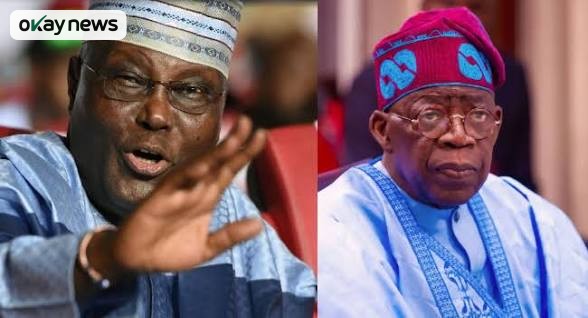
ABUJA, Federal Capital Territory, Nigeria — The political atmosphere in Nigeria took a sharp, personal turn on Thursday, April 16, 2026, as President Bola Ahmed Tinubu launched a stinging verbal assault on former Vice President Atiku Abubakar. While hosting the Renewed Hope Ambassadors at the State House, the President characterized Atiku as the “head of privatization,” linking the internal fractures of the African Democratic Congress (ADC) to Atiku’s long-standing economic philosophy.
Atiku, who chaired the National Council on Privatization (NCP) during his tenure from 1999 to 2007, has become a lightning rod for criticism regarding the sale of state assets. President Tinubu was quick to point out the perceived failures of these past moves, citing the stagnant steel industries in Delta State and the Ajaokuta Steel Company Limited. But the jab went deeper than economics. The President suggested that Atiku was now attempting to “privatize” another man’s political party, a direct reference to the chaotic leadership tussle currently tearing the ADC apart.
Okay News reports that many Nigerians have expressed growing anxiety over these labels. There is a palpable fear among the citizenry that if Atiku ever secures the presidency, his “privatization” agenda wouldn’t stop at parastatals; it might extend to the very soul of the country. Many believe he is ready to sell Nigeria piece by piece under the guise of economic reform. This isn’t just about balance sheets; it is about the sovereignty of the common man’s resources.
However, we must look closely at the timing of these remarks. By framing Atiku as a man who only knows how to sell, President Tinubu is effectively using propaganda to downplay a rival’s personality. It is a calculated move to define the narrative ahead of the 2027 general elections. While the rhetoric flies high, the reality on the ground is that the Independent National Electoral Commission (INEC) has already stepped in to clean house. Following an interim ruling by the Court of Appeal, the electoral umpire removed the embattled leadership of the ADC from its portal.
This move by the Independent National Electoral Commission (INEC) signals a return to the rules of engagement. For the average Nigerian, the political bickering is secondary to the preservation of law. The Constitution of the Federal Republic of Nigeria must be upheld in this matter to ensure that democratic institutions are not sacrificed on the altar of party infighting.
The crisis has left the ADC split into factions led by figures like former Senate President David Mark and Nafiu Bala. With the Supreme Court of Nigeria set to hear an appeal on Wednesday, April 22, 2026, at 9:00 AM WAT, the fate of the opposition coalition hangs in the balance. Whether this is a case of genuine reform or a strategic takedown of a political opponent, the outcome will fundamentally shift how Nigerians view the 2027 race.