
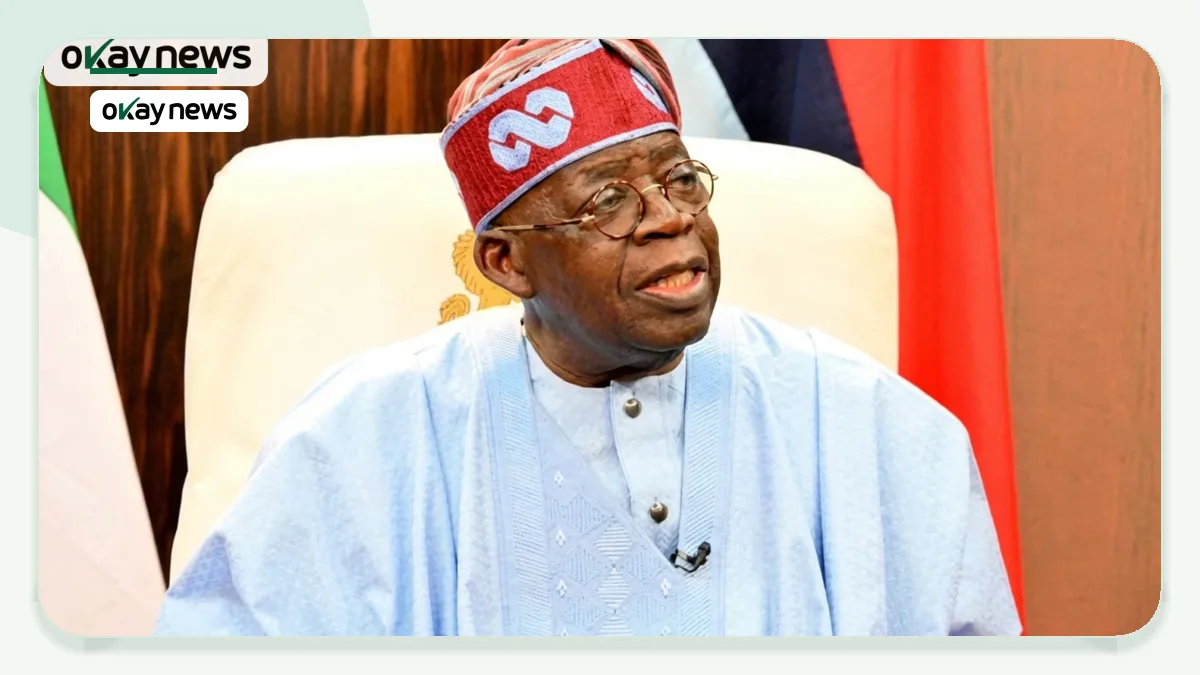
LAGOS, Nigeria — President Bola Tinubu is not Nigeria’s biggest borrower since the country’s return to democracy in 1999, according to a new report by policy and economic research firm Think Business Africa, which argues that recent claims about the administration’s debt accumulation are inconsistent with available data.
Okay News reports that the report, titled “Who Borrowed Most? Nigeria’s Presidential Debt Record 1999-2025,” stated that much of the sharp increase in Nigeria’s debt profile since 2023 reflects the revaluation of inherited foreign currency obligations following exchange rate reforms rather than equivalent new borrowing.
“Nigeria’s external debt stock stood at approximately $42.5 billion when President Tinubu assumed office in May 2023. By December 2025, it had risen to approximately $51.9 billion, representing a net increase of around $9.4 billion,” the report stated.
“By comparison, external debt rose from about $10.3 billion in 2015 to $42.9 billion in 2023 under former President Muhammadu Buhari, representing a net increase of roughly $32.6 billion,” the report added.
Think Business Africa maintained that former President Olusegun Obasanjo remains the only democratic leader to have significantly reduced Nigeria’s external debt stock, cutting it by approximately $25.9 billion between 1999 and 2007.
The report argued that comparisons based solely on naira-denominated debt figures create a misleading picture because Nigeria’s external obligations are contracted and repaid in foreign currencies. Following exchange rate reforms introduced in June 2023, the naira depreciated significantly against the US dollar, automatically increasing the local currency value of existing foreign debt.
The inherited external debt stock of approximately $42.5 billion, previously valued at around N19.6 trillion under the old exchange rate regime, appeared substantially larger after revaluation. Think Business Africa noted that domestic debt also underwent significant accounting adjustments following the securitisation of approximately N23.9 trillion in Ways and Means advances accumulated under previous administrations.
Excluding these accounting adjustments and exchange rate effects, actual new borrowing has been materially smaller than headline naira figures suggest, the report said. Domestic debt measured in dollar terms declined by approximately $6.5 billion between Q1 2023 and the end of 2025, while total public debt increased by only approximately $2.7 billion over the same period.
Think Business Africa said Nigeria’s biggest fiscal concern is the growing cost of servicing debt, which continues to constrain spending on infrastructure, healthcare, education, and other critical sectors.
According to the Debt Management Office (DMO), total public debt stood at N87.38 trillion as of June 30, 2023, shortly after Tinubu assumed office. By December 31, 2025, Nigeria’s total public debt had increased to N159.28 trillion, reflecting rising borrowing levels, exchange rate adjustments and securitisation of legacy obligations.