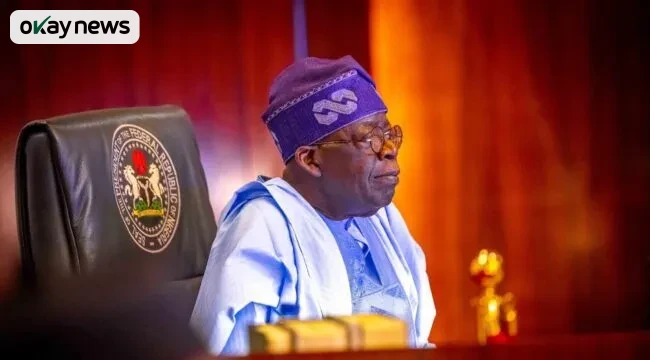
President Bola Ahmed Tinubu on Sunday participated in the Sixty-Eighth Ordinary Session of the Economic Community of West African States Authority of Heads of State and Government, held at the State House Conference Centre in Abuja, Nigeria’s federal capital.
Although the President remains within the country, Nigeria’s Vice President, Kashim Shettima, led the Nigerian delegation at the regional gathering. This development marked the first occasion Vice President Shettima would represent Nigeria at an Economic Community of West African States summit held on Nigerian soil while the President was present in the country.
President Tinubu, who served as Chairman of the Economic Community of West African States from July 2023 to July 2025, handed over leadership of the regional bloc to President Julius Maada Bio of Sierra Leone. No official explanation was given regarding the President’s decision to delegate Nigeria’s representation to the Vice President at the summit.
According to the summit agenda, proceedings commenced at Three O’Clock in the afternoon local time with a special debate focused on the future direction of the regional bloc. Okay News reports that the meeting is taking place against the backdrop of growing security, political, and economic challenges confronting West Africa.
Leaders present at the high-level session include President Julius Maada Bio of Sierra Leone, who currently chairs the bloc, President Patrice Talon of the Republic of Benin, President José Maria Neves of Cabo Verde, President Alassane Ouattara of Côte d’Ivoire, President Adama Barrow of The Gambia, President John Mahama of Ghana, President Umaro Sissoco Embaló of Guinea-Bissau, President Joseph Boakai of Liberia, President Bassirou Diomaye Faye of Senegal, and President Faure Gnassingbé of Togo.
President John Mahama’s presence marks his return to regional leadership following his inauguration in January 2025, after succeeding former President Nana Addo Dankwa Akufo-Addo.
The opening ceremony featured welcome remarks from the host nation, a statement by the President of the Economic Community of West African States Commission, Doctor Omar Alieu Touray, and an opening address delivered by the Chairman, President Julius Maada Bio. Officials of the United Nations Office for West Africa and the Sahel and the African Union Commission were also scheduled to speak before deliberations moved behind closed doors.
Items listed on the agenda include the Two Thousand and Twenty-Five State of the Community Report, updates from the Mediation and Security Council, a report on the Economic Community of West African States Trade Liberalisation Scheme, and special briefings on Guinea-Bissau, the evolving situation in the Republic of Benin, confirmation of a host country for the West African Health Organisation headquarters, and Guinea’s political transition.
The summit follows a turbulent five-year period in West Africa marked by multiple military takeovers in Mali, Burkina Faso, and the Republic of Niger. These developments significantly weakened regional cohesion and governance frameworks.
Further strain emerged in early 2024 when military-led governments in Niger, Mali, and Burkina Faso announced their withdrawal from the Economic Community of West African States.
Recent security concerns include an attempted coup in the Republic of Benin on December Seven, , as well as renewed instability in Guinea-Bissau, which former Nigerian President Goodluck Jonathan described as a “ceremonial coup.”
Following the attempted putsch in Benin, President Tinubu, responding to requests from the Béninoise government, ordered the deployment of Nigerian fighter jets and ground troops to repel the attackers. On December Nine, the Nigerian Senate approved the President’s request to deploy Nigerian forces to assist Benin in restoring stability.
Benin’s Ministry of Foreign Affairs confirmed that approximately Two Hundred West African troops, mainly from Nigeria and Côte d’Ivoire, are currently supporting the Beninese government. Officials noted that Benin’s stability is critical to Nigeria’s economic interests due to shared trade corridors.
Cotonou Port remains a major transit hub for Nigerian-bound imports, including vehicles and consumer goods, sustaining extensive re-export and informal trade networks. The Sèmè border crossing along the Lagos–Abidjan corridor is also among the busiest in the sub-region.
Additionally, a Two Thousand-kilometre Niger–Benin export pipeline financed by China transports crude oil from landlocked Niger to the offshore terminal at Sèmè-Kpodji, underscoring Benin’s strategic importance to regional energy security.
Leaders are expected to deliberate on enhanced security cooperation, possible sanctions, and economic integration measures, including reforms to the Trade Liberalisation Scheme, before agreeing on a date for the Sixty-Ninth Ordinary Session.