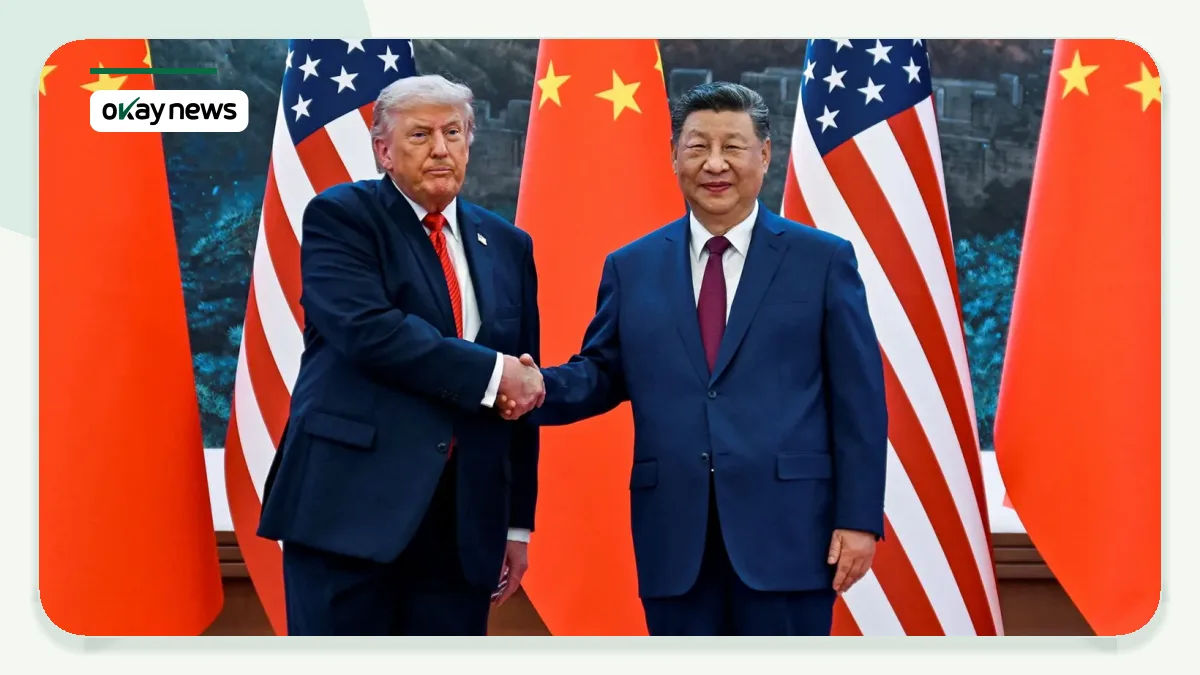
BEIJING, China – In a historic summit on Thursday, U.S. President Donald Trump and Chinese Leader Xi Jinping signaled a rare strategic alignment by agreeing that the Strait of Hormuz must remain open to ensure the global flow of energy.
Okay News reports that the meeting, held at the Great Hall of the People, was dominated by the shadow of the ongoing U.S.-Iran war and its crippling effects on global oil markets. While the two leaders found common ground on maritime stability, Xi Jinping issued a stern warning regarding Taiwan, labeling it the “most important issue” in China-U.S. relations and a potential flashpoint for dangerous conflict if mishandled.
According to a White House readout, the summit produced several pivotal energy and security commitments. Firstly, on the Strait of Hormuz. Both nations agreed the strategic waterway must stay open. China voiced specific opposition to the “militarization” of the strait and any attempts to impose transit tolls.
President Xi also expressed interest in increasing purchases of American oil to reduce China’s future reliance on Middle Eastern routes vulnerable to the conflict.
Both leaders further reaffirmed that Iran must never be allowed to acquire a nuclear weapon.
President Trump was accompanied by a high-profile delegation of American tech titans, including Elon Musk (Tesla), Tim Cook (Apple), and Jensen Huang (Nvidia). Trump noted that these leaders came to China to “pay respects” and foster long-term business ties. Musk, in particular, became a social media fixture during the trip, with viral clips showing him striking “Zoolander-like” poses and taking selfies with Xiaomi CEO Lei Jun and Tim Cook.
Despite the positive public tone, U.S. Secretary of State Marco Rubio offered a more cautious assessment in an interview with NBC News. Rubio clarified that while Trump raised the Iran issue, the U.S. “did not ask for China’s help” in resolving the conflict. “We don’t need their help,” Rubio stated, emphasizing that the U.S. was simply making its position clear to avoid any geopolitical misunderstandings.
The summit concludes tomorrow with further discussions expected on artificial intelligence, trade imbalances, and the fentanyl precursor trade. While experts suggest the meeting managed to stabilize a volatile relationship, the “dangerous” underlying tension over Taiwan remains the primary obstacle to a lasting peace between the world’s two largest economies.