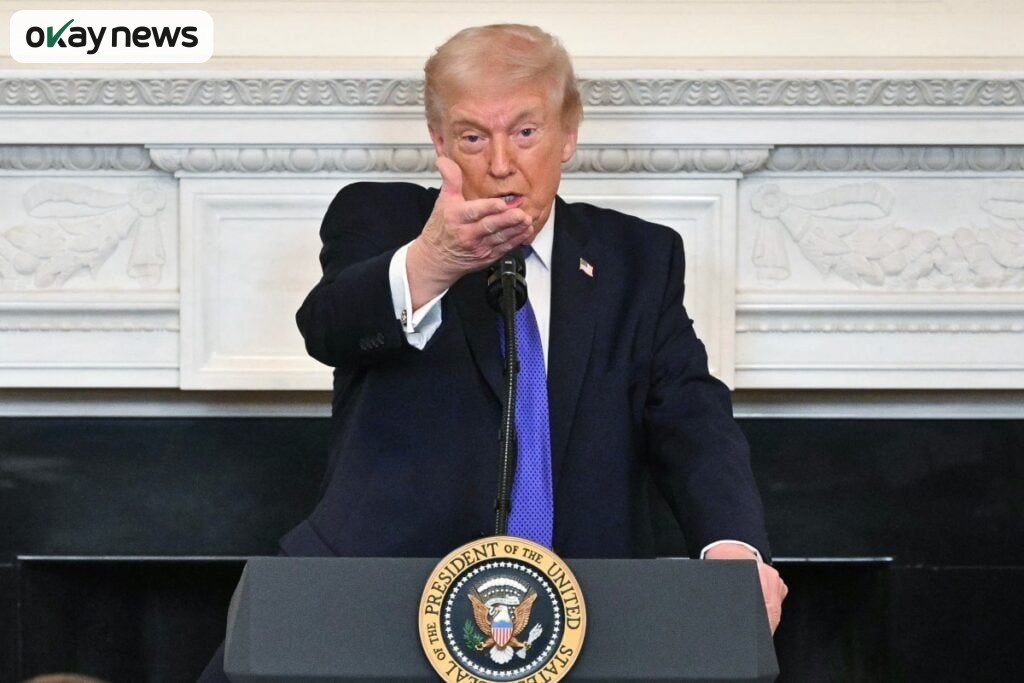
Washington, District of Columbia, United States — United States President Donald Trump has called on countries around the world to deploy naval forces to help reopen the Strait of Hormuz, one of the most important shipping routes for global energy supplies.
The appeal came as tensions in the Middle East intensified following a new United States military strike targeting Iranian facilities linked to oil exports. The strike took place on Kharg Island, a key oil export terminal located off the coast of Iran in the Persian Gulf, from which the country ships most of its crude oil to international markets.
President Trump made the call for international naval support in a message posted on Truth Social, the social media platform he owns. In the post, he said warships could soon be sent to the area to secure the shipping route and allow commercial vessels to move safely through the waterway.
“Warships will ‘hopefully’ be sent,” Trump wrote, referring to possible military deployments aimed at protecting merchant ships traveling through the strait.
The Strait of Hormuz lies between Iran and Oman and connects the Persian Gulf to the Gulf of Oman and the Arabian Sea. It is widely considered one of the world’s most strategically important maritime chokepoints. A significant portion of global oil exports passes through the narrow channel each day, making it vital for international energy markets.
Trump’s comments came only hours after the United States ordered a strike on military installations on Kharg Island. The island is the main hub for Iran’s oil export infrastructure, handling the vast majority of the country’s crude shipments. The attack was carried out amid an escalating conflict in the Middle East that has continued for more than two weeks and shows little sign of ending.
According to reports, the strike formed part of a broader military campaign known as Operation Epic Fury, a joint operation launched earlier by the United States and Israel targeting Iranian military assets.
The developments have raised concerns among governments, energy traders, and shipping companies around the world. Any disruption to the Strait of Hormuz can have immediate consequences for oil prices and global supply chains because many tankers transporting crude oil and natural gas rely on the passage to reach international markets.
Okay News reports that tensions surrounding the waterway have historically triggered global economic worries because even temporary disruptions can affect energy security for major importers in Asia, Europe, and other regions.
While President Trump did not provide a specific timeline for when international naval deployments might begin, his call suggests the United States is seeking broader multinational involvement to guarantee safe navigation in the region.
Analysts say the situation could draw further international attention if the conflict continues to threaten commercial shipping. Governments with naval capabilities may now face pressure to contribute forces to patrol the strait and escort oil tankers moving through the area.
For now, oil loading operations have continued at Kharg Island despite the strikes, according to available reports. However, the rapidly evolving military situation means energy markets and shipping companies are closely monitoring developments in the Persian Gulf.
The coming days may determine whether global powers decide to coordinate naval operations to secure one of the most critical trade routes in the world.