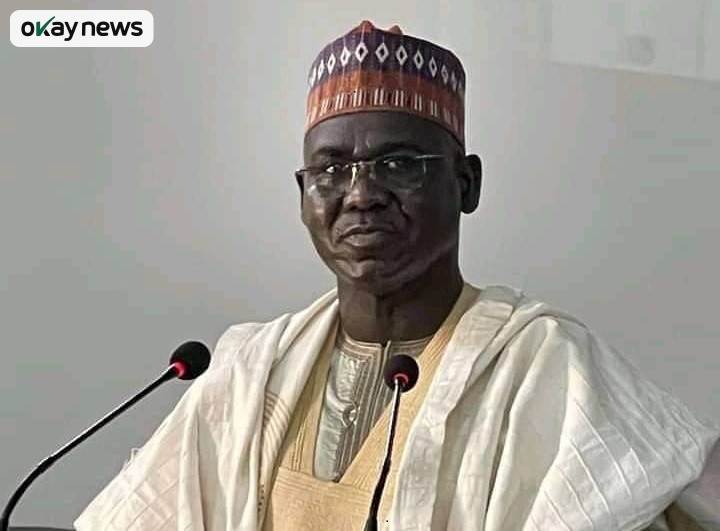
A former Chief of Army Staff, Lieutenant General Tukur Buratai (retired), has firmly rejected assertions circulating on social media that Nigeria is on the brink of becoming a failed state. In a statement posted on his verified Facebook page on Wednesday, titled “Nigeria: An Unbreakable Nation Rising Through Challenges,” Buratai described such claims as both misinformed and disconnected from the country’s historical record of resilience. Okay News reports.
Buratai argued that assessments, including the 2011 Country Social and Administrative Trends (CSAT) evaluation, fail to account for recent leadership reforms and the persistent determination of Nigerians to overcome adversity. He emphasized that the nation has repeatedly survived political instability, economic shocks, and security threats that would have debilitated many other countries.
“Nigerian leaders have repeatedly steered the nation from the brink. Today, a new generation of patriotic leaders—in government, private sector, civil society, and technology—is rising. They are more connected, more accountable to a vibrant citizenry, and deeply committed to national unity. The idea that such a leadership corps would allow national collapse is inconceivable. From independence to date, our leaders, civilian and military, have steered this country out of storms many nations would not survive. Nigeria cannot and will not fail,” Buratai wrote.
The retired Army chief lauded historical leaders such as Nnamdi Azikiwe, Ahmadu Bello, Yakubu Gowon, Murtala Mohammed, and Olusegun Obasanjo, noting that they successfully guided Nigeria through defining periods. He added that contemporary leaders are even more accountable, transparent, and responsive to the populace.
Acknowledging present economic challenges, Buratai cautioned against defining the nation solely through current difficulties, describing such assessments as shortsighted. He pointed out that Nigeria continues to be Africa’s largest economy and maintains growing influence in telecommunications, financial technology, entertainment, and human capital development.
On security matters, Buratai described the situation as entering a “renewal phase,” asserting that Boko Haram has been significantly weakened compared to its peak periods. He cited ongoing infrastructure projects, including railway modernisation, major road constructions, airport upgrades, and the Dangote Refinery, as clear indicators of a country actively building a stronger future.
Criticizing what he termed “doomsday projections” by Western organizations, Buratai urged international partners to focus on investment, technology transfer, and fairer global trade practices. He encouraged Nigerian leaders to deepen economic diversification, implement decentralized security strategies, and strengthen civic patriotism.
He further called on African nations to accelerate regional integration under the African Continental Free Trade Area (AfCFTA) and push for a more equitable global financial system.
“Nigeria’s destiny lies in the hands of Nigerians, a people blessed with abundant resources and an unbreakable spirit. We will not fail. We are rising,” Buratai concluded.