Several Western leaders are moving to rebuild trade and investment links with China as uncertainty grows over tariff policy from the United States under President Donald Trump, analysts and trade experts say.
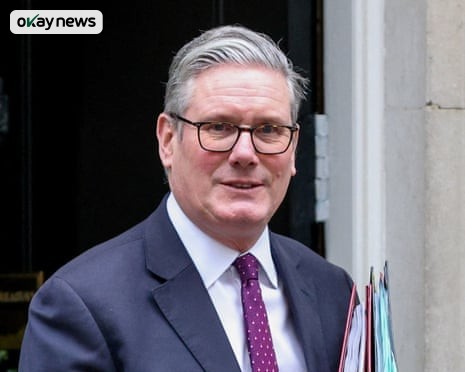
The latest high-level outreach comes from the United Kingdom, where Prime Minister Keir Starmer, who leads Britain’s government, travelled to Beijing, China’s capital, this week to push what he called “pragmatic” cooperation. China is the world’s second-largest economy and a major global manufacturing and export power.
Starmer’s trip follows recent visits or renewed engagement efforts involving leaders from Canada, Ireland, France, and Finland, many of whom have not made such visits for years as relations with Beijing cooled in parts of the West.
Hosuk Lee-Makiyama, director of the European Centre for International Political Economy, a Brussels-based trade policy think tank in Belgium, said there is “a veritable race among European heads of government” to meet Chinese President Xi Jinping, China’s leader. He linked the scramble to competition for Chinese investment and market access ahead of expected China-United States summits scheduled for February 2026 and April 2026.
Okay News reports that the renewed attention on Beijing is happening alongside a wider push by Western economies to broaden trade options beyond the United States at a time when tariff threats and shifting policies are making long-term planning harder for companies and governments.
On Tuesday, 27 January 2026, India and the European Union announced a major trade agreement after negotiations that stretched for roughly two decades. India is the world’s most populous country and one of the fastest-growing major economies, while the European Union is a 27-country political and economic bloc.
Also on Thursday, 29 January 2026, Vietnam and the European Union said they would deepen cooperation on trade, technology and security. Vietnam is a fast-growing manufacturing hub in Southeast Asia that has become increasingly important in global supply chains.
Despite these deals, Lee-Makiyama argued that India and other emerging markets, including parts of South America, are not large enough to replace the role of China for some of the world’s most export-dependent economies, particularly in Europe. He said that is one reason European leaders are looking again at China, even as concerns remain over Beijing’s human rights record and claims that China sometimes uses economic pressure in its foreign relations.
Lee-Makiyama also pointed to the size of the United States and China in the global economy, saying a large share of worldwide growth is generated by one of the two powers, while warning that the United States is not acting like a country that wants to open up markets.
William Alan Reinsch, a trade expert at the Centre for Strategic and International Studies (CSIS), a Washington-based policy research organisation in the United States, said Trump’s tariff approach has sent a signal that “the United States is no longer a reliable trading partner.”
Reinsch said the newly finalised European Union and India Free Trade Agreement can be seen, in part, as a response to that pressure. He argued that Trump’s policies may have helped push the deal to completion, even though talks began about 20 years earlier.
During Starmer’s meetings in Beijing on Thursday, 29 January 2026, the British leader told Xi that it was “vital” to develop relations between the United Kingdom and China, while Xi also called for stronger ties at a time of geopolitical tension.
Britain and China once described their relationship as a “Golden Era” around a decade ago, but ties became more strained from 2020, when Beijing imposed a national security law on Hong Kong, a semi-autonomous Chinese territory and global financial centre. The law drew criticism in parts of the West, with opponents saying it reduced political freedoms in the former British colony.
Even with the political disputes, China remains the United Kingdom’s third-largest trading partner, and Starmer’s centre-left government has signalled it wants to boost economic growth and attract investment at home.
Within Europe, the European Union has also indicated interest in better relations with China, but officials remain concerned about what they see as an unbalanced trading relationship. The bloc is alarmed by a trade deficit of more than $350 billion that is tilted in China’s favour.
In early January 2026, Ireland’s Prime Minister Micheal Martin called for “open trade” during talks with Xi. In December 2025, France’s President Emmanuel Macron publicly criticised the scale of the trade gap during a visit to Beijing.
China is also adjusting to the tariff environment created by the United States, and India is working to protect its exports as well. Chinese Vice Premier He Lifeng, one of Beijing’s top economic officials, used an appearance at the World Economic Forum (WEF), an annual gathering of political and business leaders held in Davos, Switzerland, to criticise global trade practices that he suggested favour a few countries. He said “the world cannot revert to the law of the jungle where the strong prey on the weak.”
In some cases, Trump has responded to new trade discussions between allies and China with further tariff threats. One example cited by analysts is a warning of a possible 100 per cent levy on Canadian goods if Canada reaches a major trade deal with China.
Canada’s Prime Minister Mark Carney visited Beijing in January 2026 and announced what he described as a “new strategic partnership” with China. He also promoted what he called a “preliminary but landmark trade agreement” aimed at reducing tariffs and improving access for certain products.
Under the arrangement described by officials, China is expected to cut tariffs on Canadian canola products to around 15 per cent from the current 84 per cent. Canola is a major Canadian farm export used for edible oil and animal feed. In exchange, Canada is expected to import 49,000 Chinese electric vehicles under a preferential tariff rate, according to the details released.
Vina Nadjibulla, vice-president of research and strategy at Asia Pacific Foundation of Canada (APF Canada), a Canadian think tank focused on relations with Asia, said Carney’s trip signalled a major shift in how Ottawa plans to manage a more divided and uncertain global system. However, she warned the move could also be read as a softening of Canada’s view of the national security and economic risks China may pose.
Reinsch said the growing number of trade arrangements outside Washington could leave the United States at a disadvantage over time, even if the agreements themselves follow long-standing trade patterns. He said negotiations focused on cutting tariffs and reducing non-tariff barriers reflect the traditional approach countries have taken for decades, adding that “the outlier is the United States.”