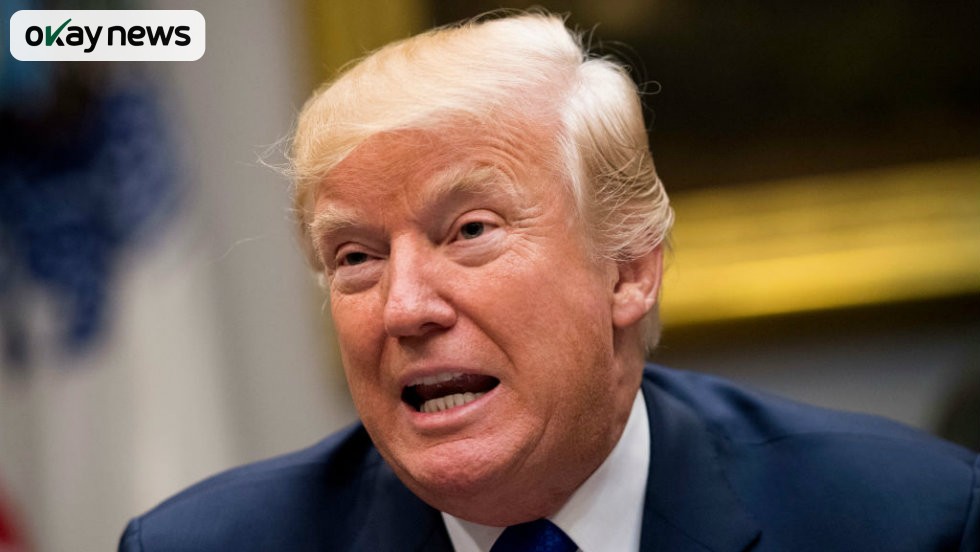
Washington, District of Columbia, United States — United States President Donald Trump said that Iran has been “totally defeated” in the ongoing military confrontation involving the United States and Israel, while also claiming that Iranian authorities were seeking a deal that he would not agree to.
Trump made the remarks on Friday, March 13, 2026, through his social media platform, Truth Social, as tensions continued to escalate in the Middle East following a series of military operations.
“The Fake News Media hates to report how well the United States Military has done against Iran, which is totally defeated and wants a deal – But not a deal that I would accept!” Trump wrote.
His comments came shortly after he announced that the United States had carried out heavy air strikes on military targets around Kharg Island, a major Iranian oil export hub located in the Persian Gulf. According to Trump, the attacks were part of a wider campaign against Iranian military infrastructure.
Trump also stated that the United States Navy would soon begin escorting commercial oil tankers through the Strait of Hormuz, one of the world’s most important maritime oil transit routes that links the Persian Gulf to global shipping lanes.
Okay News reports that the military developments come amid intensifying hostilities between Iran and Israel, with both sides exchanging attacks across the region. As the United States continued its strikes against Iranian targets, Iranian forces launched a new wave of drone and missile attacks directed at Israel and several neighbouring Gulf states.
In Iran’s capital, Tehran, senior government officials joined thousands of demonstrators on Friday during a large pro-government rally. Participants marched through the city carrying banners with slogans including “Death to America” and “Death to Israel,” reflecting strong domestic support for Iran’s confrontational stance against its adversaries.
Iran’s Foreign Minister, Abbas Araghchi, said earlier in the week that diplomatic negotiations with the United States were no longer under consideration. He said Iran’s leadership remained determined to continue its military response.
“I don’t think talking with the Americans would be on our agenda anymore,” Araghchi told the United States public broadcasting network PBS during an interview.
He added that Iran had experienced a “very bitter experience” in earlier negotiations with Washington, suggesting that trust between the two countries had deteriorated significantly.
The current tensions highlight the fragile security situation across the Middle East, a region that already faces complex geopolitical rivalries involving Iran, Israel, Gulf states, and Western powers led by the United States.
Analysts say the latest escalation could have significant implications for global energy markets and international shipping, particularly because of the strategic importance of the Strait of Hormuz, through which a large portion of the world’s oil supply is transported.
While both sides continue to exchange threats and military actions, diplomatic observers say the prospects for immediate negotiations remain uncertain as hostilities persist across the region.