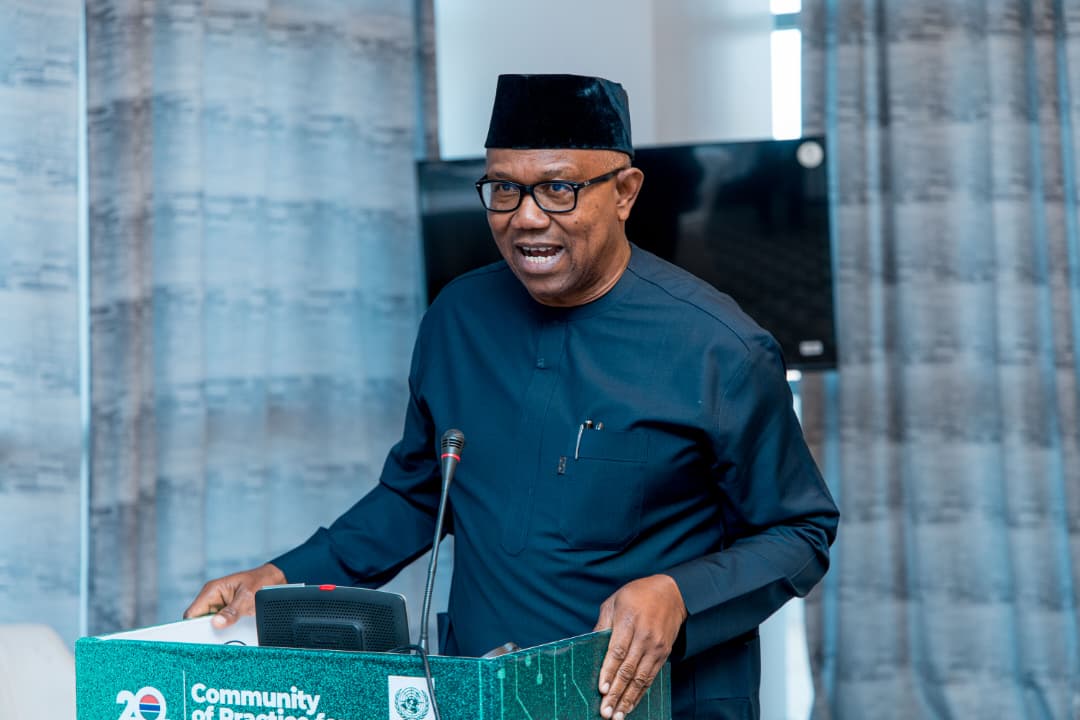
Abuja, NIGERIA – Former presidential candidate Peter Obi has characterized the recent United States security directive as a “bad omen” for Nigeria, urging the government to treat the deteriorating security situation as a national emergency.
Okay News reports that Obi’s statement, released on Thursday, April 9, 2026, came in response to the U.S. Department of State’s decision to authorize the evacuation of non-emergency embassy staff and their families from Abuja. The U.S. advisory, dated April 8, cited a “volatile and unpredictable” security environment, specifically flagging 23 Nigerian states as “Level 4: Do Not Travel” zones.
The Labour Party leader’s concerns were amplified by reports of a significant military setback in the Northeast. Earlier on Thursday, Brigadier General Oseni Braimah, Commander of the 29 Task Force Brigade, was killed during a terrorist assault on a military base in Benisheikh, Borno State.
The Nigerian Army confirmed that while the attack was successfully repelled, General Braimah and several other soldiers paid the supreme price. Obi noted that such high-profile losses signal a declining confidence in the nation’s security architecture and place an immense strain on frontline troops.
Obi highlighted that Nigeria currently ranks fourth in the 2026 Global Terrorism Index, a position he argued is incompatible with the country’s need to attract foreign investment. He criticized the current political leadership for being “preoccupied with politics” rather than the protection of lives and property.
“A nation where people cannot live, work, worship, or travel safely cannot progress or attract investment,” Obi stated. He warned that without a drastic shift in focus from political maneuvering to effective security governance, the country risks further deterioration, leaving “no nation to govern and no future to campaign for.”
The statement coincides with broader political unrest, as opposition leaders including Atiku Abubakar and Peter Obi himself participated in a “Save Democracy” meeting earlier this week, protesting what they term the “institutional capture” of the country’s democratic and security organs.