


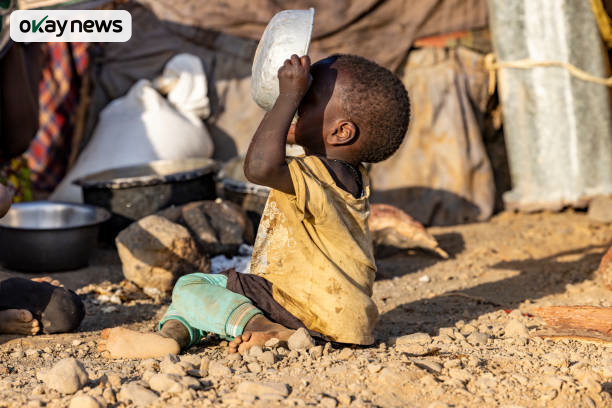
Dakar, Senegal – The World Food Programme (WFP) warned that 10.4 million people in West and Central Africa face acute food insecurity if Middle East conflict persists. High oil prices from the crisis drive up food and fuel costs. The region, spanning nations like Nigeria and Senegal, imports most of its energy and staples.
The March 17 report projects 45 million more people globally pushed toward hunger. This adds to 318 million already affected worldwide. Disrupted Strait of Hormuz shipping hits supply chains hard.
Okay News reports WFP Deputy Executive Director Carl Skau’s alert. He said, “If this conflict continues, it will send shockwaves across the globe, and families who already cannot afford their next meal will be hit the hardest.” Skau added that underfunded aid could spell catastrophe for those on the edge.
Projections show 21 percent more food-insecure people in West and Central Africa. East and Southern Africa faces 17 percent rise, or 17.7 million additional cases. Asia could see 9.1 million more, Middle East and North Africa 5.2 million.
Analysts modeled impacts from $100 per barrel oil on diets of 2,100 calories daily. Import-dependent countries suffer most from transport and input costs. Iran-U.S.-Israel war since February 28 disrupts global flows.
Nigeria grapples with fuel subsidy cuts since 2023 under President Bola Tinubu. Poverty jumped from 49.8 percent to 63 percent per recent studies. Opposition figure Peter Obi called reforms insufficiently people-centered.
International Monetary Fund forecasts 3.9 percent growth in 2025 and 4.2 percent in 2026. Yet aid groups urge urgent response to shield vulnerable households. Petrol prices soared to 1,230-1,300 naira per litre amid global shocks.


 warned that 10.4 million people in West and Central Africa face acute food insecurity if Middle East conflict persists.)