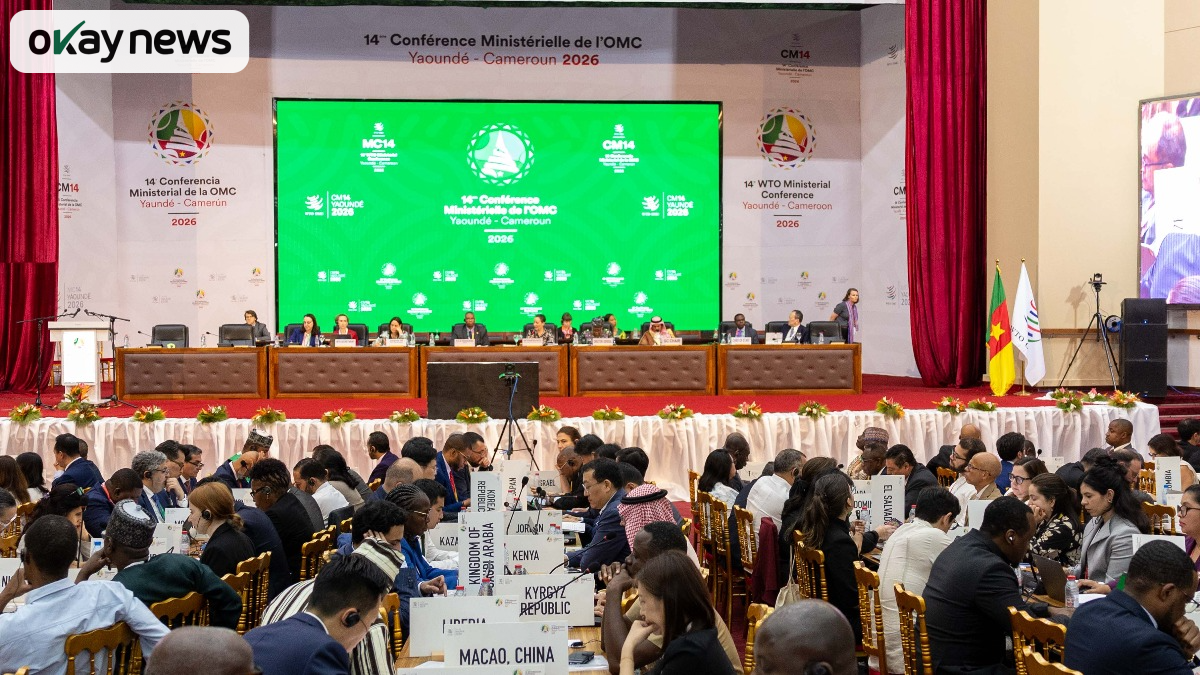
Yaoundé, Cameroon – World Trade Organization talks on extending a moratorium on customs duties for electronic transmissions have stalled as ministers entered the final day of their meeting with no agreement in sight. The impasse underscores deep divisions over how digital trade should be governed globally.
Okay News reports that the WTO’s e‑commerce moratorium, first adopted in 1998, has long barred member countries from imposing tariffs on digital products such as software downloads, online subscriptions, and streaming services. The rule is due to expire this month, and the failure so far to agree on its future has become a key test of the organization’s ability to adapt to modern trade patterns.
India reportedly supports a two‑year extension of the moratorium, while the United States opposes any temporary arrangement and insists on a permanent solution. A Western diplomat told Reuters the talks have been bogged down by debates over procedure instead of substantive WTO reform. Another official warned that if the moratorium is not extended, Washington could use the outcome to argue that the WTO is dysfunctional and push alternative trade arrangements.
Several compromise proposals are circulating, including a 10‑year “pathway to permanence” and a five‑ to 10‑year extension with a review clause. Diplomats are also discussing how to balance the interests of advanced and developing economies, with some drafts aiming to support poorer members while leaving room for future policy flexibility. Business groups are lobbying for an extension to avoid uncertainty and the risk of new digital‑trade tariffs.
The deadlock reflects broader structural challenges within the WTO, where consensus‑based voting often slows progress. The talks are part of a wider reform agenda that includes disputes‑system changes, subsidy transparency, and the role of the Most‑Favoured‑Nation principle. If ministers fail to strike a viable deal, more countries may look to regional or bilateral frameworks to set their own digital‑trade rules, potentially weakening the WTO’s authority in the long run.