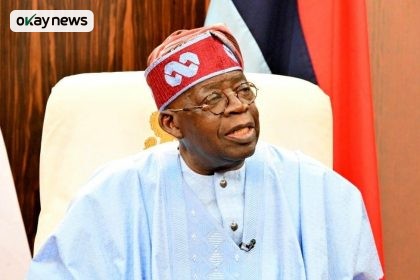
President Bola Ahmed Tinubu has strongly rejected Nigeria’s re-designation by United States President Donald Trump as a “Country of Particular Concern” (CPC), describing the classification as unfair and inconsistent with the nation’s true identity.
In a statement shared on his official X (formerly Twitter) handle on Saturday, President Tinubu said Nigeria “stands firmly as a democracy governed by constitutional guarantees of religious liberty.” He noted that the U.S. designation misrepresents the country’s commitment to protecting religious freedom and promoting peaceful coexistence among citizens.
“The characterisation of Nigeria as religiously intolerant does not reflect our national reality, nor does it take into consideration the consistent and sincere efforts of the government to safeguard freedom of religion and beliefs for all Nigerians,” Tinubu said.
Okay News reports that the President emphasised that religious tolerance remains a key part of Nigeria’s social fabric. “Religious freedom and tolerance have been a core tenet of our collective identity and shall always remain so. Nigeria opposes religious persecution and does not encourage it,” he added.
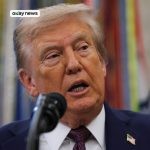
His comments came in reaction to a post by U.S. President Donald Trump on his Truth Social account, where he alleged that Christianity in Nigeria was under existential threat. Trump claimed that “thousands of Christians are being killed” and blamed “radical Islamists” for the attacks, urging the U.S. Congress to investigate.
Under U.S. law, the CPC designation is reserved for countries accused of committing or tolerating “particularly severe violations of religious freedom.” Nigeria was first placed on the list in December 2020 during Trump’s presidency but was later removed by the Biden administration in 2021, a move that drew criticism from conservative groups and religious advocates.
Tinubu noted that since assuming office in 2023, his administration has maintained “an open and active engagement with Christian and Muslim leaders alike” and continues to address national security challenges that affect citizens across religious and regional lines.
He reaffirmed Nigeria’s readiness to collaborate with the U.S. and other international partners to promote global understanding and the protection of communities of all faiths. “Our administration is committed to working with the United States government and the international community to deepen understanding and cooperation on the protection of communities of all faiths,” the President stated.
Although Nigeria operates as a secular state, it continues to face religious tensions, especially between Christian-majority and Muslim-majority regions. These divisions have at times fueled violent conflicts, including farmer-herder clashes, insurgent attacks, and mob violence over alleged blasphemy.
Successive Nigerian governments, however, maintain that such conflicts are rooted in socio-economic and security issues rather than deliberate religious persecution.