



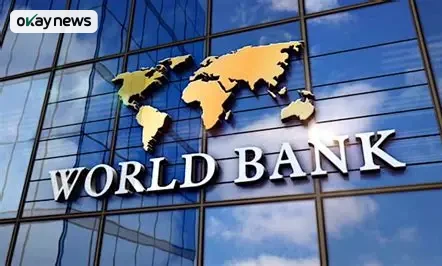
The World Bank has scheduled 16 December 2025 as the tentative approval date for a fresh $1 billion Development Policy Financing (DPF) loan to Nigeria, aimed at supporting economic reforms and boosting private sector-led growth.
The initiative, titled “Nigeria Actions for Investment and Jobs Acceleration (P512892),” is structured as a two-tranche standalone operation comprising a $500 million International Development Association (IDA) credit and a $500 million International Bank for Reconstruction and Development (IBRD) loan.
According to a project document published by the World Bank on 27 October, the facility falls under the Macroeconomics, Trade and Investment practice area for Western and Central Africa. It is designed to consolidate Nigeria’s post-reform stability and transition the economy from short-term stabilisation to inclusive, long-term growth.
The loan will be implemented through Nigeria’s Federal Ministry of Finance, with oversight from the Central Bank of Nigeria (CBN) and other relevant ministries. The Bank confirmed that the preparation process has been authorised to proceed, with the programme expected to catalyse private investment, expand access to credit, deepen capital markets and digital services, and promote export diversification.
Since 2023, Nigeria has undertaken significant reforms under President Bola Tinubu’s Renewed Hope Agenda, including the removal of petrol subsidies, exchange rate unification, and the cessation of central bank deficit financing. While these measures have helped stabilise the economy and restore investor confidence, growth remains sluggish, and over 130 million Nigerians still live in poverty.
The DPF loan is anchored on two strategic pillars: unlocking private sector growth and lowering the cost of doing business. It supports legislative reforms such as the Investment and Securities Act 2025 and the National Digital Economy and E-Governance Bill 2025, which aim to modernise Nigeria’s financial and governance systems.
The second pillar focuses on reducing inflationary pressures and enhancing export competitiveness. Measures include simplifying trade barriers, adopting African Continental Free Trade Area (AfCFTA) tariff concessions, and improving certified seed systems for crops like rice, maize, and soybeans.
Complementary projects under the World Bank’s FY2026 support package include FINCLUDE (MSME financing), BRIDGE (digital infrastructure), and AGROW (agricultural value chain development). These are expected to attract private capital, expand financial access, and create millions of jobs.
The programme also aligns with the Paris Climate Agreement, incorporating climate-resilient agriculture and digital governance systems to reduce emissions.
As of 30 June 2025, Nigeria’s external debt stood at $46.98 billion, with the World Bank Group accounting for $19.39 billion—41.3% of the total. This underscores the Bank’s pivotal role in financing Nigeria’s development agenda.


 loan to Nigeria, aimed at supporting economic reforms and boosting private sector-led growth.)