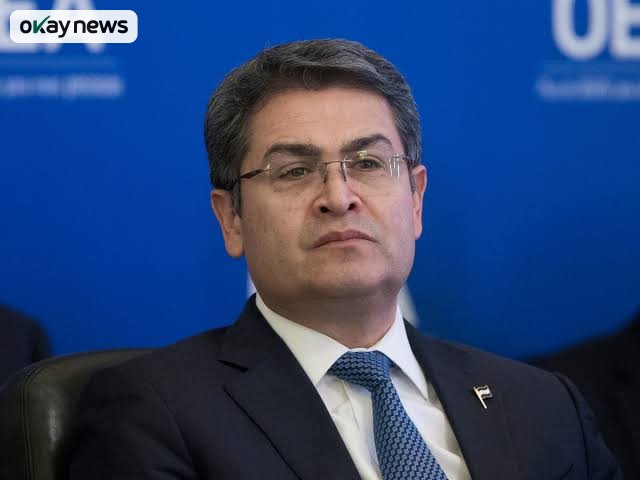
Former Honduran President Juan Orlando Hernandez has been released from a United States federal prison after President Donald Trump issued a “full and unconditional pardon”, effectively wiping out his 45-year sentence for drug trafficking.
Hernandez’s lawyer, Renato Stabile, confirmed to Al Jazeera that the former leader was freed early Tuesday, just a day after Trump signed the pardon order. US federal prison records show Hernandez was released from a West Virginia detention facility, where he had spent a little over three years behind bars.
Hernandez was convicted for his role in what US prosecutors described as “one of the largest and most violent drug-trafficking conspiracies in the world.” He was found guilty of facilitating the movement of more than 400 tons of cocaine into the United States, while allegedly accepting millions in bribes from criminal organisations across nearly two decades in politics.
Trump had publicly announced his intention to pardon Hernandez last week while urging Hondurans to support right-wing presidential candidate Nasry “Tito” Asfura, a member of Hernandez’s party. In a social media post, Trump called the former Honduran president’s treatment “harsh and unfair” and said the pardon was necessary as Honduras moves toward what he described as “great political and financial success.”
The decision has sparked strong criticism in the United States.
Democratic Senator Catherine Cortez Masto condemned the move, arguing that Trump had undermined law enforcement efforts that brought Hernandez to justice.
Hernandez’s release comes at a sensitive time for Honduras, where the presidential race remains too close to call. Preliminary counts show sports journalist Salvador Nasralla narrowly ahead of Asfura by only a few hundred votes.
Trump has already cast doubt on the election process, accusing Honduran authorities—without evidence—of trying to manipulate the results. “If they do, there will be hell to pay!” he warned on Truth Social.
The pardon also fuels debate over Trump’s rapidly shifting and aggressive policies in Latin America. His administration is currently carrying out deadly airstrikes on boats in the Caribbean and Atlantic Ocean, claiming they are part of anti-drug operations. Critics argue these actions violate international law and risk escalating tensions, particularly with Venezuela.
Trump has also intensified verbal attacks on Venezuelan President Nicolas Maduro, accusing him of leading a drug cartel, a claim US officials have not backed with evidence.