By using this site, you agree to the Privacy Policy and Terms of Use.
Accept
Okay News
  • News
  • Politics
  • Business
  • Technology
  • Security
  • Entertainment
  • Sports
Reading: Federal Government’s Electronic Transfer Levy Revenue Hits N360bn In 10 Months
Font ResizerAa
Okay NewsOkay News
  • News
  • Politics
  • Business
  • Technology
  • Security
  • Entertainment
  • Sports
Follow US
2026 © Okay International Limited - All rights reserved
Business

Federal Government’s Electronic Transfer Levy Revenue Hits N360bn In 10 Months

Ogungbayi Feyisola Faesol
By
Ogungbayi Feyisola Faesol
ByOgungbayi Feyisola Faesol
Faesol is a journalist at Okay.ng, reporting on business, technology, and current events with clear, engaging, and timely coverage.
Follow:
Published: 2025/12/07
2 Min Read
Share
electronic money transfer levy
SHARE

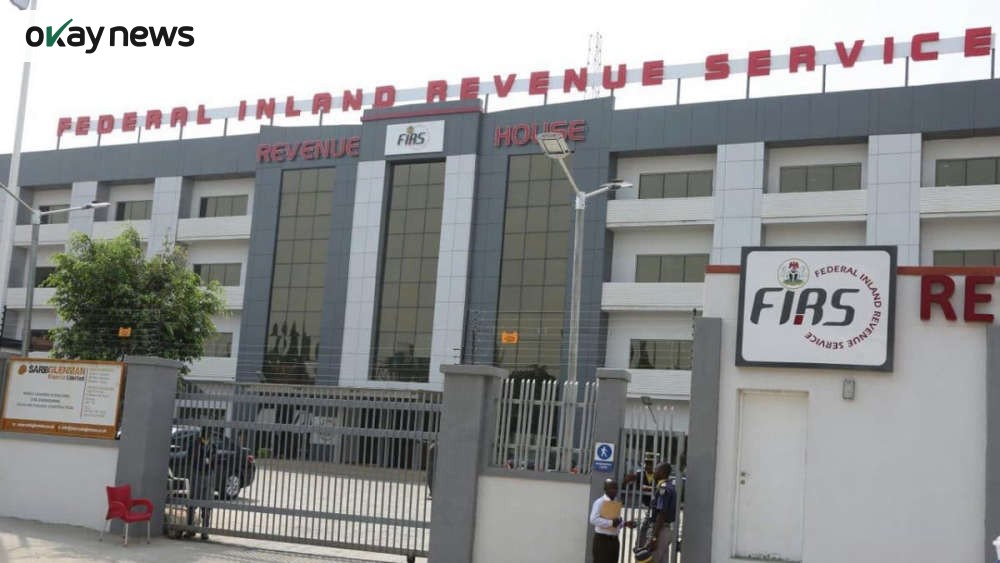
The Federal Government received N360.29bn from the Electronic Money Transfer Levy (EMTL) between January and October 2025, more than double the N170.92bn recorded in the same period of 2024. A Federal Inland Revenue Service (FIRS) document shows revenue increased by N189.36bn, representing 110.8 percent growth, with every month of 2025 outperforming its 2024 equivalent.

January generated N21.40bn, up from N16.59bn. February more than doubled to N36.64bn from N15.79bn. March collections rose to N26.01bn from N15.37bn. April recorded N40.48bn, a 115.6 percent jump from N18.77bn. May reached N28.82bn, compared with N15.78bn, while June grew to N30.38bn from N16.35bn.

July nearly doubled, rising to N39.17bn from N19.60bn. August climbed to N33.68bn, up from N15.64bn. September posted the sharpest increase, jumping to N53.84bn from N19.21bn, a 180.2 percent rise. October recorded N49.87bn, up from N17.82bn.

Revenue from the levy is shared across the three tiers of government, with 15 percent allocated to the Federal Government and 85 percent to states and local governments. EMTL has become a major non-oil revenue source as Nigeria pushes to expand its tax base.

- Advertisement -

The levy, introduced under the Finance Act 2020, imposes a N50 charge on electronic inflows of N10,000 and above. Its full implementation across banks and fintech platforms began on December 1, 2024, after initial suspension. Operators such as Moniepoint and OPay informed their customers of the mandatory deductions, clarifying that the charges are collected and remitted to FIRS.

The rollout triggered criticism from Nigerians and industry stakeholders. Former Zenith Bank Chief Economist Marcel Okeke warned that the levy could slow fintech adoption and discourage digital transactions, describing the policy as poorly timed with potentially negative economic consequences.

Follow Okay News channel on WhatsApp
Add as a preferred source on Google
Follow Okay News on Instagram
- Advertisement -

TAGGED:electronic transfer levyFIRS
Share This Article
Facebook Pinterest Whatsapp Whatsapp Email Print
Previous Article Nigerian Navy Deploys 1,962 Newly Trained Ratings Into Service
Next Article Akwa Ibom Governor Awards ₦100m, Land, and Studio to Visually-Impaired Gospel Singer Chris Vic

Stay Connected

FacebookLike
XFollow
InstagramFollow
TiktokFollow
WhatsAppFollow
- Advertisement -

More News

Business

Nigeria’s Pharma Sector Attracts Investments, But Local Manufacturing Still Lags

By
Ogungbayi Feyisola Faesol
3 Min Read
JAMB
Business

FG Allocates Over N1.3 Billion for JAMB CBT Centres in 2026 Budget

By
Ogungbayi Feyisola Faesol
2 Min Read
Central Bank of Nigeria (CBN)
Business

CBN Plans ATM-Card Ratio Policy to Tackle Cash Shortages

By
Ogungbayi Feyisola Faesol
2 Min Read
Okay NewsOkay News
2026 © Okay International Limited - All rights reserved
  • About Us
  • Advertising
  • Contact
  • Careers
  • Team
Welcome Back!

Sign in to your account

Username or Email Address
Password

Lost your password?

Not a member? Sign Up