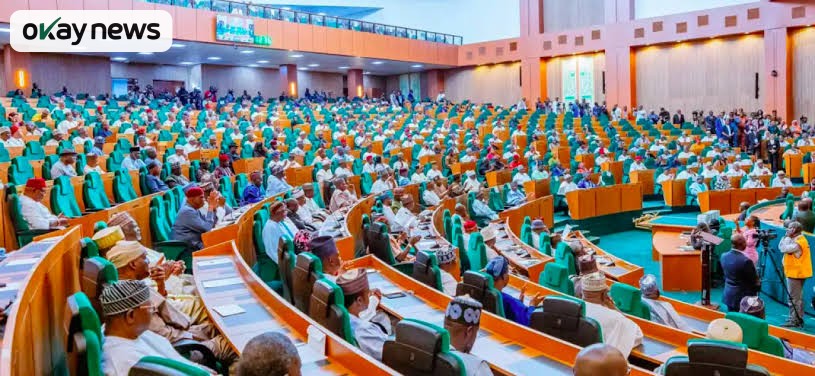
The House of Representatives has taken new legislative steps to strengthen governance in the Central Bank of Nigeria through a bill seeking far-reaching amendments to the CBN Act, 1991.
Okay News reports that the bill, co-sponsored by House Leader Julius Ihonvbere and Lagos lawmaker Jesse Onakalausi, received unanimous support during its second reading on the floor of the chamber.
The lawmakers said the proposed legislation responds to rising concerns over weak corporate oversight at the apex bank following controversies tied to monetary policy decisions, foreign exchange management, and the 2022 currency redesign.
Analysts have long argued that the concentration of operational and supervisory powers in the office of the CBN Governor has contributed to opacity in policy formulation and excessive discretion in foreign exchange administration.
The bill seeks to separate the roles of CBN Governor and Board Chairman to ensure institutional balance and prevent conflict of interest in day-to-day management of the bank’s affairs.
Onakalausi told lawmakers that recent economic disruptions exposed structural gaps in the CBN Act that undermine transparency, autonomy, and monetary policy stability.
He said the proposed amendments aim to align Nigeria’s central banking model with global standards by strengthening the independence and expertise of the Monetary Policy Committee.
The draft legislation also tackles the historic misuse of Ways and Means financing by introducing a clear cap set at 10% of the previous year’s actual revenue to prevent inflationary deficit funding.
It further outlines new transparency measures requiring audited accounts within two months, quarterly public reports, and a dedicated online portal for policy updates.
Another highlight of the bill is the introduction of a 90-day notice period, impact assessments, and mandatory National Assembly briefings for major monetary actions, including redesign or demonetisation.
The reforms propose that the CBN Governor and Deputy Governors serve a single six-year term to promote continuity and reduce political interference in monetary affairs.
The restructured MPC will include the Governor, four Deputy Governors, two board members, and four external experts who must be independent and free from public office holdings.
If passed, the bill would become one of the most consequential reforms of the CBN Act in decades, reshaping governance, policy autonomy, and Nigeria’s broader financial system.