


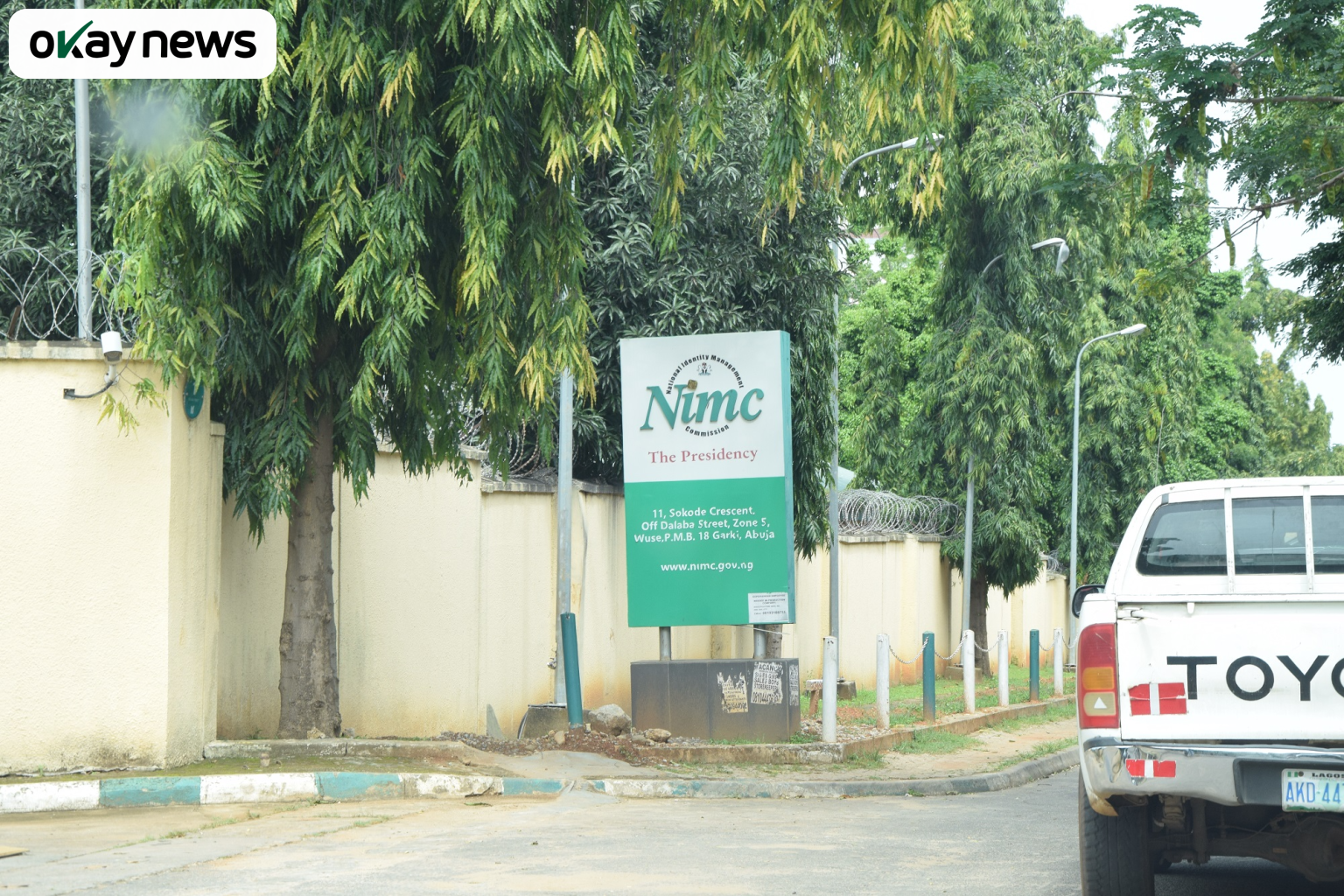
The National Identity Management Commission (NIMC) and nine other federal ministries, departments and agencies (MDAs) are set to spend approximately N24 billion on software-related projects in 2026, according to details from the Federal Government’s 2026 Appropriation Bill.
Okay News reports that while a total of 115 MDAs were budgeted for software acquisition this year, these ten entities emerged as the biggest spenders, with allocations spread across identity management, education, mining, cybersecurity, health, finance and immigration.
NIMC accounts for the single largest software allocation among the group, budgeted to spend N7.58 billion in 2026.
This is followed closely by the Federal Ministry of Education (Headquarters) with a proposed software budget of N7.55 billion, reflecting ongoing digitisation efforts in education administration and data systems.
Other notable allocations include the Mining Cadastral Office at N2.23 billion and the Geological Survey Agency of Nigeria with N1.32 billion earmarked for software.
The National Cybercrime Coordination Centre (NCCC) is allocated N1.26 billion, underscoring the government’s continued push to strengthen cybersecurity coordination and digital crime prevention.
In the health sector, the Nigeria Centre for Disease Control (NCDC) in Abuja has N1.23 billion budgeted for software, while the Federal Ministry of Finance (Headquarters) is expected to spend N1.09 billion.
The Nigeria Immigration Service has a proposed allocation of N1.01 billion, and the Budget Office of the Federation rounds out the top ten with N827.14 million.
Stakeholders in Nigeria’s ICT industry have repeatedly expressed concern over the annual practice of budgeting billions for software by government MDAs without commensurate improvements in service delivery to citizens.
The National Information Technology Development Agency (NITDA) has previously confirmed these worries, noting that billions of naira flow into IT projects because they are considered too technical for thorough scrutiny during National Assembly budget defence sessions.
Last year, NITDA revealed that 56 per cent of IT projects executed by Federal Public Institutions (FPIs) have failed, largely due to poor compliance with the agency’s IT Project Clearance Guidelines.
NITDA Director-General Kashifu Inuwa stated that these projects often fail because they are not cleared to ensure alignment with national standards and priorities, urging an end to the waste of public funds on fragmented, uncoordinated IT systems that deliver no real value.
The Director-General of the Bureau of Public Procurement (BPP), Dr. Adebowale Adedokun, corroborated this view, adding that some MDAs use IT projects as a cover to siphon public funds.
He explained that most IT projects are intangible, making them difficult to verify, and many are presented without proper standardisation, leading to inefficiencies and corruption.
IT expert Mr. Adewale Adeoye noted that Nigeria’s economy could benefit significantly if even half of the annual software budget were spent on locally developed solutions.
He highlighted that most agencies still prefer to import software even when local alternatives could perform the same functions, resulting in substantial capital flight.
According to the Institute of Software Practitioners of Nigeria (ISPON), the country loses N156 billion annually to software importation, a trend the institute believes is largely fuelled by MDAs’ preference for foreign software.
To curb wastage in IT procurement, the BPP Director-General said the Bureau has introduced standard bidding documents for IT projects and pledged to work closely with NITDA to ensure transparency, avoid duplication, and eliminate unnecessary spending.
Adedokun recommended that NITDA explore service-wide procurement of software licences, particularly for global vendors like Microsoft and Oracle, to reduce costs and prevent contract inflation.
He also urged the development of a national IT price intelligence template to help benchmark costs and improve value for money.
NITDA first introduced its Guideline for IT Project Clearance in 2018 to ensure federal IT projects deliver value and support Nigeria’s digital transformation goals.
Last year, the agency revised the Guideline, placing greater emphasis on interoperability, cost-effectiveness, transparency, and alignment with national digital economy objectives.
The updated guidelines introduce a three-step implementation framework: Solution Design, Implementation, and Quality Assurance.
They also mandate that contractors must be licensed and employ certified professionals across all stages before qualifying for government IT contracts.


 and nine other federal ministries, departments and agencies (MDAs) are set to spend approximately N24 billion on software-related projects in 2026, according to details from the Federal Government’s 2026 Appropriation Bill.)