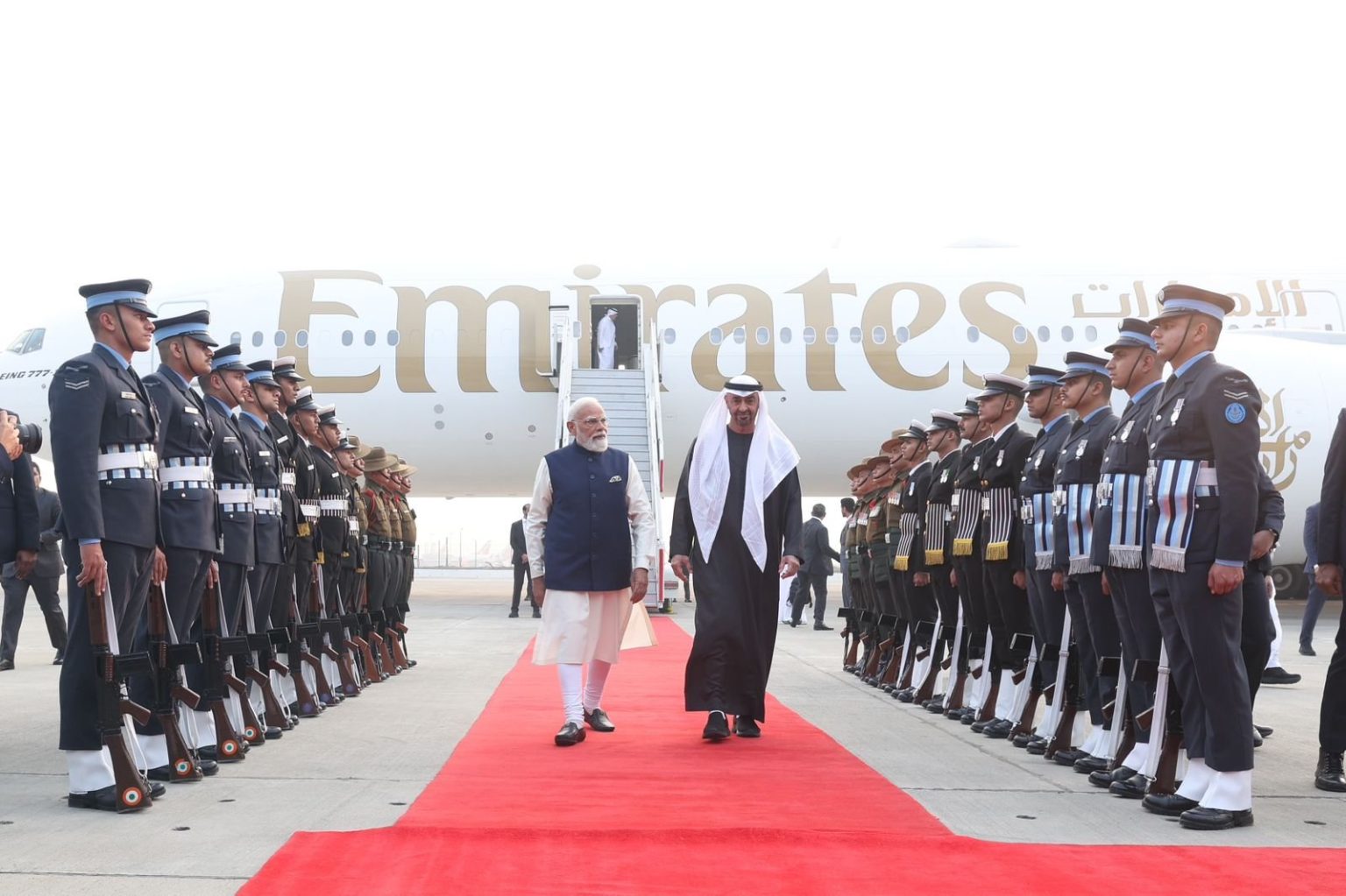
His Highness Sheikh Mohamed bin Zayed Al Nahyan, President of the United Arab Emirates, has touched down in New Delhi to commence a significant state visit aimed at deepening the bond between the Gulf nation and the South Asian giant. Received warmly by Indian Prime Minister Narendra Modi, the visit underscores the rapid evolution of ties between the two countries, which have transcended traditional diplomatic relations to become a robust comprehensive strategic partnership.
Okay News reports that this trip marks Sheikh Mohamed’s third official visit to India since assuming the presidency, highlighting the exceptional priority placed on this bilateral alliance. The high-level discussions are expected to cover a wide array of strategic interests, ranging from energy security and defense collaboration to advanced technology and cultural exchange, reflecting a relationship that is currently among the most dynamic in the world.
The economic backdrop of this meeting is historic, with bilateral trade figures recently surpassing the prestigious $100 billion threshold for the 2024-2025 period. The UAE currently stands as India’s third-largest global trading partner, while India is the second-largest for the UAE. Furthermore, the financial integration is deepening, with the UAE pledging a massive $75 billion investment into Indian infrastructure, signaling long-term confidence in India’s economic growth trajectory.
Beyond the boardroom statistics, the relationship is deeply rooted in a massive human connection. The UAE is home to the largest population of Indian passport holders in the world, with approximately 4.3 million Indian expatriates residing in the Emirates. This demographic represents roughly 35 percent of the UAE’s total population, serving as a vital cultural and economic bridge through labor, professional expertise, and significant remittance flows that support families across India.
Collaboration has also intensified in critical sectors such as energy, defense, and education. Both nations are actively pursuing green energy initiatives, including hydrogen projects and the Global Green Credit Initiative launched at COP28. In the defense sector, military cooperation has become routine, evidenced by joint exercises like Desert Cyclone-II and the participation of the Indian Air Force in multinational drills hosted by the UAE, showcasing increasing interoperability between the armed forces of both countries.
Culturally, the bond was recently cemented by the inauguration of the BAPS Hindu Mandir in Abu Dhabi and the establishment of Indian educational heavyweights, such as IIT Delhi and IIM Ahmedabad, opening campuses within the UAE. As the leaders convene, the agenda reflects a partnership that has evolved far beyond simple commodity trade to encompass technology, education, and shared geopolitical goals on the global stage.