



Economic analysts have identified significant domestic risks that could derail the International Monetary Fund’s (IMF) upwardly revised 4.4% growth projection for Nigeria in 2026. While the IMF expressed optimism based on ongoing macroeconomic reforms, local experts warn that stalled budgetary progress and “heightened pre-election politicking” could undermine these gains.
Okay News reports that the IMF’s January 2026 World Economic Outlook Update raised Nigeria’s growth forecast from 3.9% to 4.4%. This revision aligns with projections from local firms like Afrinvest (4.3%) and EnterpriseNGR (4.49%), which are predicated on major private-sector investments in telecommunications, energy, and agriculture.
Structural And Political Headwinds
Despite the positive outlook, Afrinvest highlighted several “subsisting structural constraints” in its latest weekly research. The firm noted that the N58.18 trillion 2026 “Budget of Consolidation, Renewed Resilience and Shared Prosperity” remains unpassed, creating fiscal uncertainty. Afrinvest stated: “We are concerned that poor management of global geopolitical alignments, heightened pre-election politicking, and stalled budgetary progress… could materially undermine the growth outlook.”
Fiscal Pressure And Oil Dependency
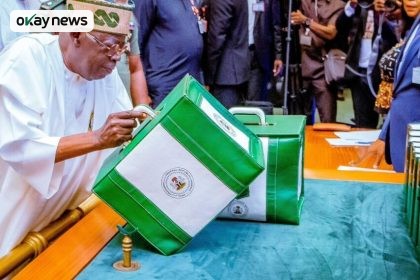
The 2026 Appropriation Bill, currently before the National Assembly, reveals a strained fiscal environment. With a projected revenue of N34.33 trillion and a massive budget deficit of N23.85 trillion (4.28% of GDP), the government remains heavily reliant on the oil sector.
-
Revenue Source: Crude oil receipts account for roughly 85% of total exports.
-
Budget Benchmark: The budget assumes oil production of 1.84 million barrels per day at $64.85 per barrel.
-
Debt Burden: Debt servicing is projected to gulp N15.52 trillion, consuming nearly 45% of total expected revenue.
Sectoral Growth Drivers
EnterpriseNGR and other analysts believe the services and digital ICT sectors will lead the charge, supported by the recapitalization of the banking sector and the expansion of the Dangote Refinery. However, the IMF warned that the global trade outlook for 2026 is weakening, which could hurt Nigeria’s macroeconomic prospects if energy commodity prices decline as expected.
Economists emphasize that the de-escalation of the domestic political environment and the effective rollout of “people-centric policies” are essential for navigating these risks.




 upwardly revised 4.4% growth projection for Nigeria in 2026. While the IMF expressed optimism based on ongoing macroeconomic reforms, local experts warn that stalled budgetary progress and "heightened pre-election politicking" could undermine these gains.)