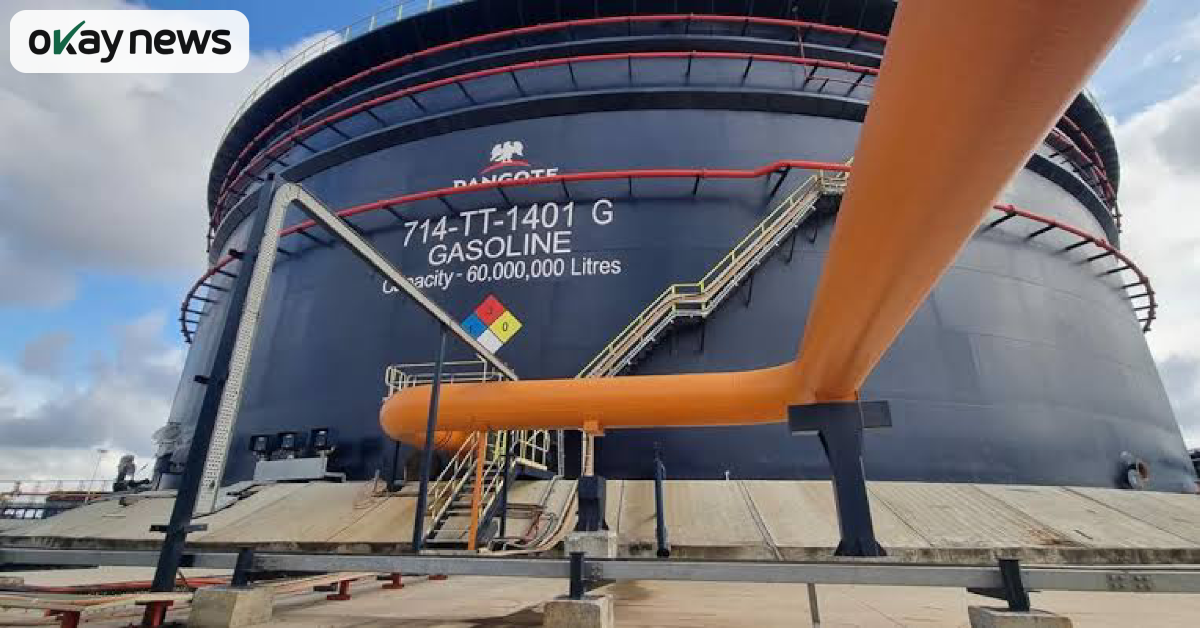
Dangote Petroleum Refinery, Africa’s largest single-train refinery located in Lagos, Nigeria, has warned that relying on coastal logistics for distributing petrol could drive pump prices up to N1,000 per litre if extra costs are passed to consumers.
Okay News reports that the statement, issued on Thursday, highlighted the higher expenses of shipping petroleum products via sea compared to pipelines or land-based methods.
The refinery noted marketers can choose their evacuation approach, but coastal options add significant burdens that might offset benefits from local refining in Nigeria, Africa’s most populous nation and largest oil producer.
According to the refinery, coastal logistics could add about N75 per litre to Premium Motor Spirit (PMS), commonly known as petrol, potentially raising prices to N1,000 per litre. With Nigeria’s average daily consumption of 50 million litres of PMS and 14 million litres of diesel, this reliance could impose an extra annual cost of N1.752 trillion, borne by producers or consumers.
The company urged marketers and policymakers to focus on solutions that maintain price stability and protect users. It explained that coastal transport involves sea movement along Nigeria’s coastline, incurring port charges, maritime levies, vessel fees, and other non-beneficial expenses.
Dangote Refinery stated that gantry-based truck loading is the most efficient method, as its facility with 91 loading bays can handle up to 2,900 tankers daily, avoiding marine-related costs.
Historically, Nigeria depended on imported refined products due to limited domestic capacity, leading to foreign exchange strain and price volatility. The refinery’s operations have shifted this by boosting local supply, reducing diesel prices from N1,700 to N980–990 per litre and PMS from N1,250 to N839–900 per litre.
Increased production has cut imports, eased currency pressure, and strengthened the naira to about N1,385 per dollar. The refinery called for investments in nationwide pipeline infrastructure to further lower distribution costs.
In January, the refinery affirmed it would supply over 50 million litres of petrol daily at full capacity. In October, it announced expansion plans from 650,000 barrels per day to 1.4 million barrels per day.