



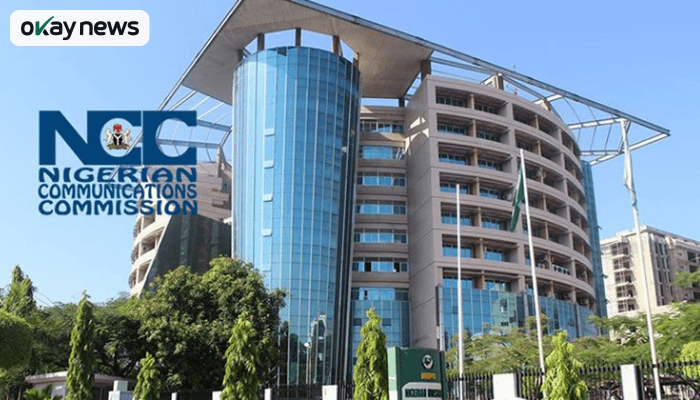
Abuja, Nigeria – The Nigerian Communications Commission (NCC), the independent regulator of the telecommunications sector in Nigeria, has initiated a review of the National Telecommunications Policy established in 2000.
The process began on Monday, February 9, 2026, with the publication of a consultation paper seeking contributions from industry stakeholders.
Okay News reports that the review seeks to modernise the framework in response to advancements in digital services, internet governance, satellite communications, broadband deployment, and universal service obligations, while preserving the sector’s contribution to Nigeria’s economic development.
The 2000 policy replaced an earlier 1998 version and introduced market liberalisation, ending the monopoly of the government-owned Nigerian Telecommunications Limited (NITEL), which had been hampered by outdated infrastructure and limited access.
This shift enabled the licensing of mobile operators in 2001 and 2002, rapid growth in subscriptions, substantial foreign direct investment, and the enactment of the Nigerian Communications Act in 2003, which provided a robust legal foundation for regulation.
The telecommunications industry has since emerged as a key pillar of Nigeria’s digital economy, supporting e-commerce, financial technology, and broader connectivity.
Proposed revisions target specific areas, including internet policy to address online safety, content moderation, and platform regulation; satellite communications to facilitate integration between terrestrial and non-terrestrial networks; and financing to support growth amid ongoing fiscal changes.
The NCC also intends to introduce a new chapter on broadband targets, safeguarding critical national infrastructure, uniform right-of-way charges across federal, state, and local governments, and a streamlined approval process for infrastructure rollout.
Challenges such as elevated right-of-way fees and overlapping taxation continue to constrain network expansion. NCC data indicates that operating costs for telecommunications companies in Nigeria increased by 85 percent to ₦5.85 trillion (approximately $4.3 billion) in 2024, driven significantly by these expenses.
The consultation will inform measures to resolve such obstacles, promoting affordable and widespread connectivity. Stakeholders have been invited to provide input, with the revised policy expected to guide the sector’s next phase of development.