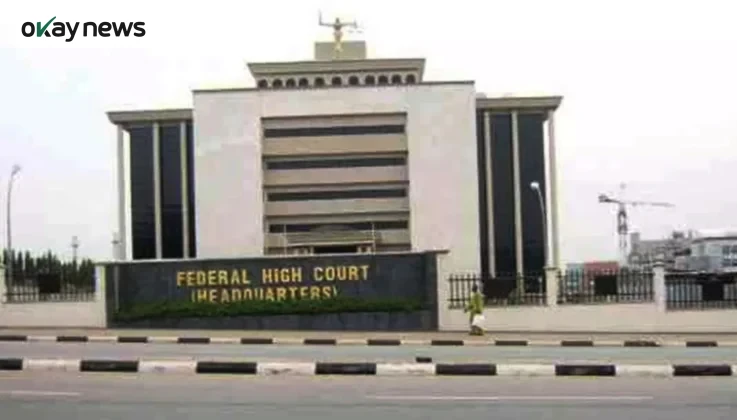
Abuja, Nigeria – On Thursday, February 19, 2026, the Federal High Court in Nigeria’s capital admitted key digital forensic evidence in the ongoing trial over the deadly attack on St. Francis Xavier Catholic Church in Owo, south-western Nigeria, as the prosecution formally closed its case.
The trial relates to the June 5, 2022 assault on St. Francis Xavier Catholic Church in Owo, Ondo State, Nigeria. About 40 worshippers were killed and several others injured during Sunday Mass in one of the country’s most shocking attacks on a place of worship.
Presiding judge, Justice Emeka Nwite, admitted into evidence a statement made by the fifth defendant dated November 9, 2022, which was marked as Exhibit S. The court also admitted a digital forensic report as Exhibit T and a black Tecno mobile phone presented as Exhibit U.
Five defendants are being prosecuted by Nigeria’s domestic intelligence agency, the Department of State Services, commonly known as the DSS, on terrorism-related charges linked to the church attack.
At the resumed hearing, a DSS investigator identified in court as SSJ was cross-examined by defence counsel A.A. Muhammad. The investigator confirmed that although he did not personally record the fifth defendant’s statement, it was taken by another officer within the agency.
The prosecution then applied to tender the original statement dated November 9, 2022. The defence did not object, and the court admitted it as Exhibit S.
SSJ told the court that he personally recorded the statements of the first to fourth defendants individually on August 18, 2022. According to him, the defendants indicated that they were not proficient in written English.
“They informed me individually that they cannot write perfectly well in the English language,” he told the court.
He explained that he asked each defendant whether he could write his own statement before proceeding to record them one after another. The process, he said, lasted about 10 hours, with each defendant interviewed separately on the same day.
When questioned about their educational backgrounds, the investigator said the second and fourth defendants had the least formal education, but he admitted that he did not memorise the exact qualifications of the others.
“I only took their statements,” he said.
During cross-examination, defence counsel suggested that other statements had been taken at DSS offices in Ondo State and in Lokoja, the capital of Kogi State in north-central Nigeria. The prosecution objected, citing Section 232 of Nigeria’s Evidence Act, which requires that any prior written statement intended for contradiction must first be shown to the witness.
Justice Nwite upheld the objection and disallowed that line of questioning.
A tense exchange followed when defence counsel questioned why the defendants were only being brought before the court several years after their arrest in 2022.
The investigator responded, “They made confessional statements. The issue of bringing them to court now is absolutely the decision of the DSS Director-General.”
He added that his responsibilities were limited to investigation and recording statements, not detention matters.
“I don’t work in custody. My office operates on the principle of need-to-know,” he said.
At one point, when defence counsel said, “I put it to you,” the witness replied, “I put it back, sir,” prompting a warning from the judge.
“We don’t tolerate that,” Justice Nwite cautioned.
The witness was later discharged without re-examination.
The prosecution then called its final witness, identified as SSK, a senior DSS operative and digital forensic specialist with 29 years of service. He told the court that he holds master’s degrees in forensic science and information technology and specialises in converting raw data into “forensic actionable intelligence that meets international standards for judicial admissibility.”
According to his testimony, the Director-General of the DSS directed his team to track down those responsible for the church attack.
“We applied geospatial network filtering and cell tower triangulation,” he testified.
He explained that investigators filtered and analysed thousands of mobile devices that connected to telecommunications towers around Owo and nearby communities including Elegbeka and Ifon in Ondo State.
“We narrowed it down to one of the defendants’ phone numbers identified as belonging to Idris Abdulmalik Omeiza,” he said.
He told the court that the International Mobile Equipment Identity number, known as IMEI, is a unique digital identifier assigned to every mobile device, and that it helped investigators trace and arrest the first defendant.
“No two phones have the same IMEI,” he said.
The forensic expert further testified that analysis showed two-way communication among three of the defendants between March 1 and July 30, 2022.
He said that on June 5, 2022, at about 7:23 a.m. West African Time (WAT, GMT+1), the first defendant’s phone was triangulated within a 35-kilometre radius of the church, a distance he said could be driven in 30 to 40 minutes.
“Even though the first defendant applied a no-phone-call rule as a trained terrorist, his mobile phone was active,” he said.
He described the device as a “silent witness” that tracked movements before and after the attack.
The digital forensic examination report was admitted into evidence as Exhibit T without objection. The black Tecno mobile phone allegedly linked to the first defendant was also admitted as Exhibit U.
Under cross-examination, defence counsel questioned the forensic expert’s qualifications and asked to see his certificates.
“My appointment is gazetted. Most of my training was sponsored by my service. I work with a covert organisation,” SSK responded.
Following the testimony of the forensic expert, the prosecution formally closed its case in the terrorism trial.
Defence counsel subsequently requested that the court provide an Ebira language interpreter for the defendants, who are from Kogi State.
Justice Nwite adjourned proceedings until Wednesday, March 4, 2026, and Thursday, March 5, 2026, for the defence to open its case. Okay News reports that the next phase of the trial will determine how the accused respond to the digital and testimonial evidence presented against them.