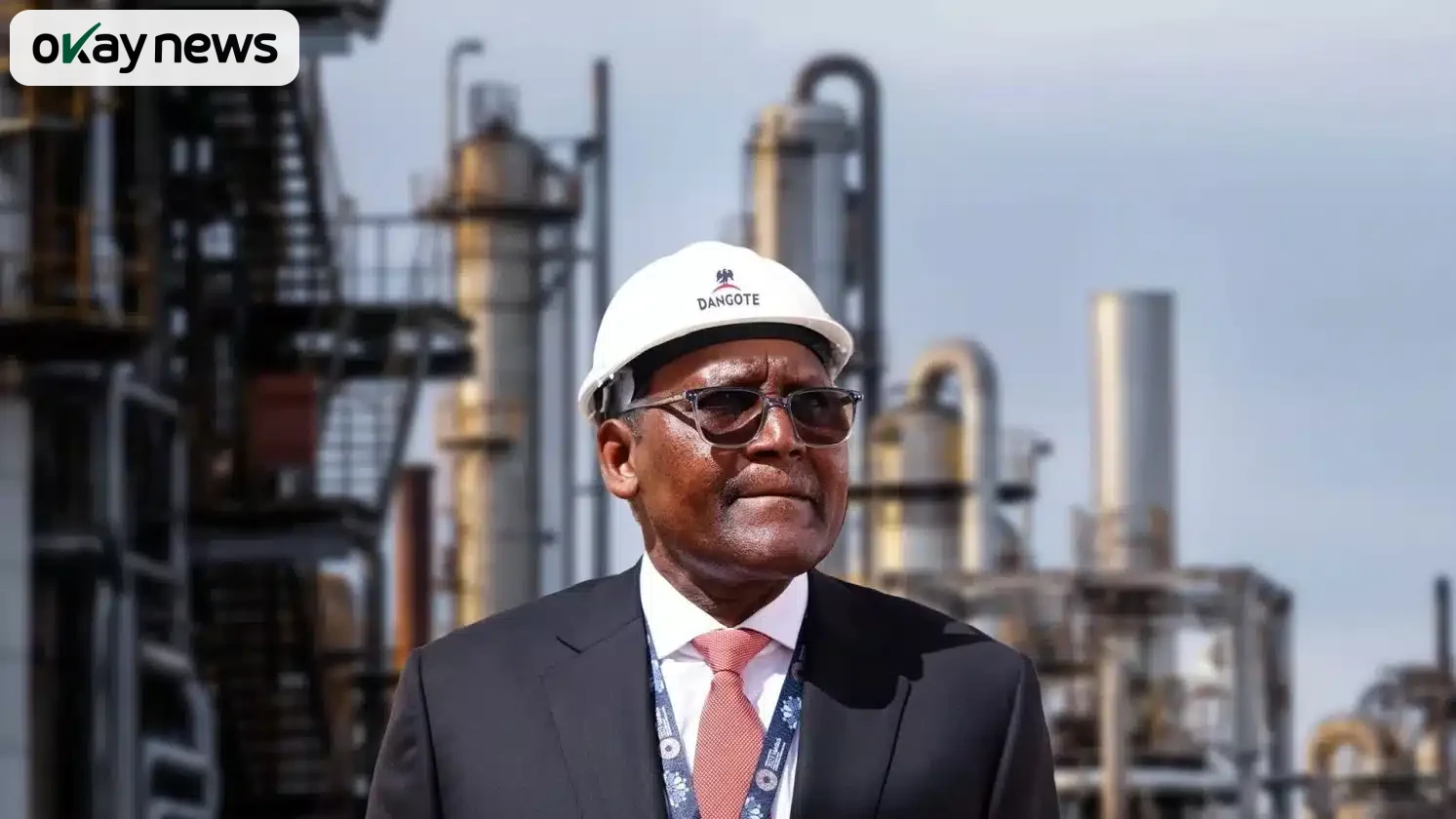
Lagos, Nigeria — Aliko Dangote, President of the Dangote Group, a Nigerian multinational industrial conglomerate, has announced fresh plans to expand into steel production, electricity generation, and port development as part of a broader strategy to accelerate industrialisation across Africa.
Dangote, one of Africa’s most prominent industrialists, said the new investments are designed to deepen the continent’s manufacturing base and reduce its dependence on imports. His business empire already operates across cement, sugar, salt, fertiliser, and petrochemicals in several African countries.
Speaking in a recent interview with The New York Times, a United States-based international newspaper, Dangote made clear that oil refining is only one part of a much larger vision for Africa’s economic future. “We have to industrialise Africa,” he said.
His latest major project, the Dangote Petroleum Refinery and Petrochemicals complex located in Lagos State in southwestern Nigeria, is currently producing about 650,000 barrels of refined petroleum products per day. The refinery, one of the largest single-train refineries in the world, has significantly altered Nigeria’s downstream oil sector. Dangote stated that output is expected to double within the next three years as expansion plans move forward.
Okay News reports that the new push into steel, electricity, and port infrastructure is aimed at addressing critical structural challenges that have long constrained industrial growth in Nigeria and across Africa. Analysts say entry into steel production would position the Dangote Group in a sector essential for infrastructure development, housing construction, and heavy industry. Investments in electricity generation could help tackle chronic power shortages in Nigeria, Africa’s most populous country, while additional port infrastructure would improve logistics and trade efficiency.
Dangote cited India’s Tata Group, formally known as Tata Group, an Indian multinational conglomerate headquartered in Mumbai, as a model for diversified industrial expansion. He described its multi-sector footprint as evidence that large-scale manufacturing can transform emerging economies.
Job creation remains central to his strategy. Nigeria, a West African nation of more than 200 million people, is projected to require between 40 million and 50 million new jobs by 2030 to accommodate its rapidly growing youth population. Dangote argued that only large-scale industrial projects can meaningfully absorb that demand.
The Dangote Petroleum Refinery currently employs about 30,000 workers, with approximately 80 percent of them Nigerians. With planned expansion into new sectors, total employment within the group is expected to rise to about 65,000.
Dangote also disclosed plans to list shares of the refinery on the Nigerian Exchange Limited, the country’s main stock exchange, in order to broaden local participation in the asset and deepen Nigeria’s capital markets.
Despite the progress, he acknowledged persistent infrastructure gaps and crude oil supply challenges. He has previously raised concerns about logistics bottlenecks and inefficiencies within Nigeria’s oil value chain that complicate the steady supply of feedstock to the refinery.
Nevertheless, Dangote reaffirmed his commitment to investing in industries that reduce Africa’s import dependence and retain more economic value within the continent. “Nobody dared to do it, so we did it,” he said.
With cement plants operating in multiple African countries and a refinery that has reshaped Nigeria’s energy landscape, Dangote’s planned expansion into steel, electricity, and port infrastructure marks a new phase in his ambition to industrialise Africa and position it as a competitive global manufacturing hub.