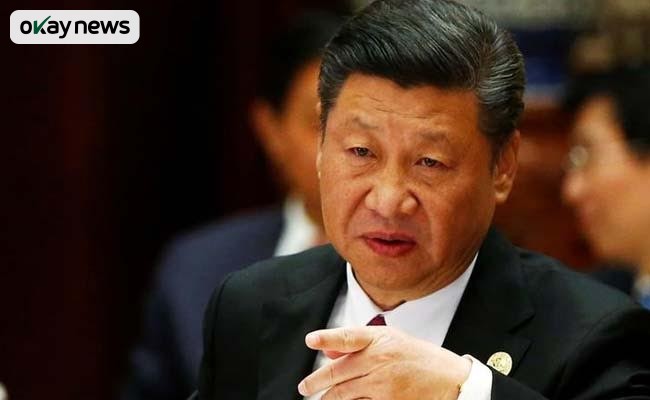
President Xi Jinping has officially removed General Zhang Youxia, one of China’s most prominent military figures, from his high-ranking position. The move is seen as a significant escalation in the ongoing efforts to restructure the leadership of the People’s Liberation Army (PLA) and has drawn international attention to the stability of the nation’s military command.
Okay News reports that the dismissal was prompted by allegations of “violations of discipline and law,” according to official statements released from Beijing. General Zhang, who served as a vice-chairman of the Central Military Commission (CMC), was considered a vital link between the traditional military structure and modern defense reforms.
The removal is particularly noteworthy due to Zhang’s long-standing personal and professional relationship with the Chinese President. At 75, he was among the few remaining senior commanders with actual combat experience, having served during the border conflict with Vietnam in the late 1970s. His exit marks one of the most consequential changes in the top military ranks in recent years.
This development coincides with reports that other high-level officials, including Liu Zhenli, the chief of staff of the CMC’s Joint Staff Department, are also under investigation. These collective actions have significantly reduced the number of active leaders within China’s primary military decision-making body, concentrating oversight into fewer hands.
Security experts suggest that while the purge strengthens the central leadership’s control over the armed forces, it may also introduce operational challenges. The loss of experienced commanders is viewed as a potential risk factor during a period of rapid technological advancement and hardware modernization within the military.
Analysts are closely monitoring how this internal shake-up will influence China’s regional defense strategy, specifically regarding its readiness for large-scale joint operations. The shift in command structure comes at a time when international attention remains focused on military preparedness and the broader geopolitical dynamics surrounding the Taiwan Strait.