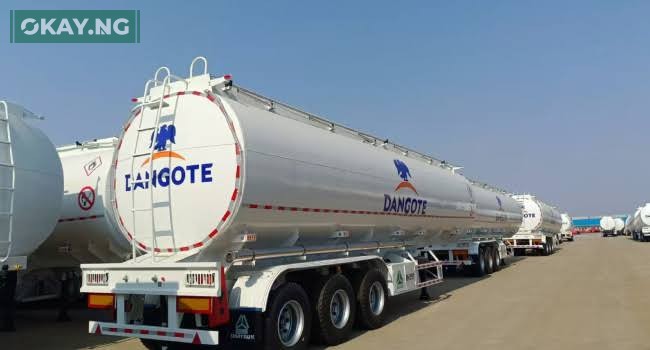
The impending launch of Dangote Refinery’s plan to directly distribute fuel using a fleet of 4,000 trucks is drawing significant attention from industry players less than a month before rollout. According to insiders, the refinery has secured agreements with at least 25 petroleum marketers, expanding from an initial count of three partners, indicating growing confidence in this direct supply model that will begin on August 15, 2025.
OKay.ng reports that this partnership surge reflects a strong alignment between Dangote Refinery and key marketers, an unforeseen shift in Nigeria’s traditional fuel supply chain.
Despite the enthusiasm among marketers, fears are rising among tanker drivers who depend on transporting PMS (Premium Motor Spirit) and other petroleum products. With Dangote’s direct distribution, many independent drivers anticipate job losses and redundancies, as the refinery’s own trucks will handle deliveries to filling stations, industries, and other bulk consumers. While some drivers could be integrated into Dangote’s workforce, the transition presents uncertainties. Discussions are underway among transport associations to address these developments.
Chinedu Ukadike, National Publicity Secretary of the Independent Petroleum Marketers Association of Nigeria (IPMAN), acknowledged marketers’ lack of alternatives, stating, “Dangote has become the only supplier of petroleum products in Nigeria and West Africa.” Ukadike emphasized the economic realities forcing marketers to collaborate, highlighting the pressing need to lower fuel prices at the pumps to sustain retail viability.
The refinery, having reached 85% of its installed capacity as of early 2025, began diesel and aviation fuel supply in January 2024 and rolled out PMS by September 2024. Stakeholders anticipate this distribution strategy will ease logistics challenges, especially in Northern Nigeria, and potentially reduce pump prices. However, experts caution about market dominance and urge government-owned refineries to increase capacity to sustain competition.
Meanwhile, the Petroleum Products Retail Outlets Owners Association of Nigeria (PETROAN) has issued warnings, drawing parallels with past monopolies in other industries, questioning the sustainability of temporary relief fuels that may lead to eventual price hikes.
This evolving fuel distribution landscape is poised to redefine Nigeria’s downstream petroleum sector in the coming months.