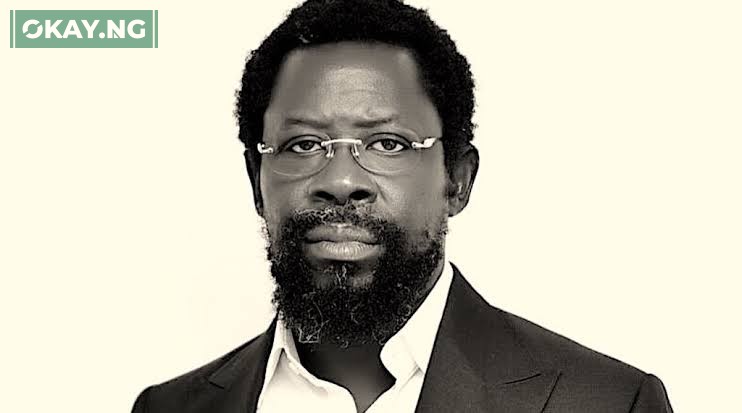
Nigerian lawyer and activist Dele Farotimi has strongly criticized the continued public recognition of former military president, General Ibrahim Badamasi Babangida (IBB), questioning the nation’s collective memory and its willingness to honor past leaders with controversial legacies.
In a statement posted on his official X (formerly Twitter) account, Farotimi expressed deep frustration over what he perceives as a lack of accountability in Nigeria’s political history, particularly concerning Babangida’s role in past national events.
“MKO on my mind,” he began, invoking the memory of Chief Moshood Kashimawo Olawale (MKO) Abiola, the widely acclaimed winner of the June 12, 1993, presidential election, which was annulled by the Babangida-led military government.
Farotimi lamented the fate of those who sacrificed for the nation, suggesting that Nigeria’s historical amnesia continuously dishonors their memory. “To die for a people devoid of memory, is to be killed over and over, again and again,” he stated.
His words underscored the recurring neglect of figures like Abiola, who fought for democracy but, in his view, have not been given the justice they deserve.
The activist’s remarks reflect a broader sentiment among many Nigerians who believe the country has failed to hold past leaders accountable for their actions. Farotimi asserted that in a society with a strong historical consciousness, Babangida would not be celebrated.
“In a place inhabited by the conscious, IBB would not dare to show his face in public,” he declared.
His statement came amidst renewed discussions about Babangida’s legacy following the launch of his autobiography, A Journey in Service, in Abuja.
The event, attended by several prominent figures, reignited debates over his administration’s impact on Nigeria, particularly the annulment of the 1993 election—a pivotal moment in the country’s democratic struggle.
Farotimi did not stop at Babangida but extended his criticism to the broader political class, condemning what he perceives as a continuous cycle of failed leadership.
He argued that Babangida’s public acceptance today is only possible because those who succeeded him have done worse.
“But in the crime scene that doubles as our country, having been succeeded by even more villainous ruiners, Badamasi is installed in the seat of the statesman,” he wrote.
His choice of words painted a bleak picture of Nigeria’s governance, suggesting that the country’s political landscape remains marred by individuals whose actions have further deepened the nation’s struggles.
Concluding his statement with a symbolic expression of disdain, Farotimi dismissed the notion of Babangida being revered as a statesman. “Tueh.” he wrote, using a colloquial Nigerian expression that signifies spitting in disgust.