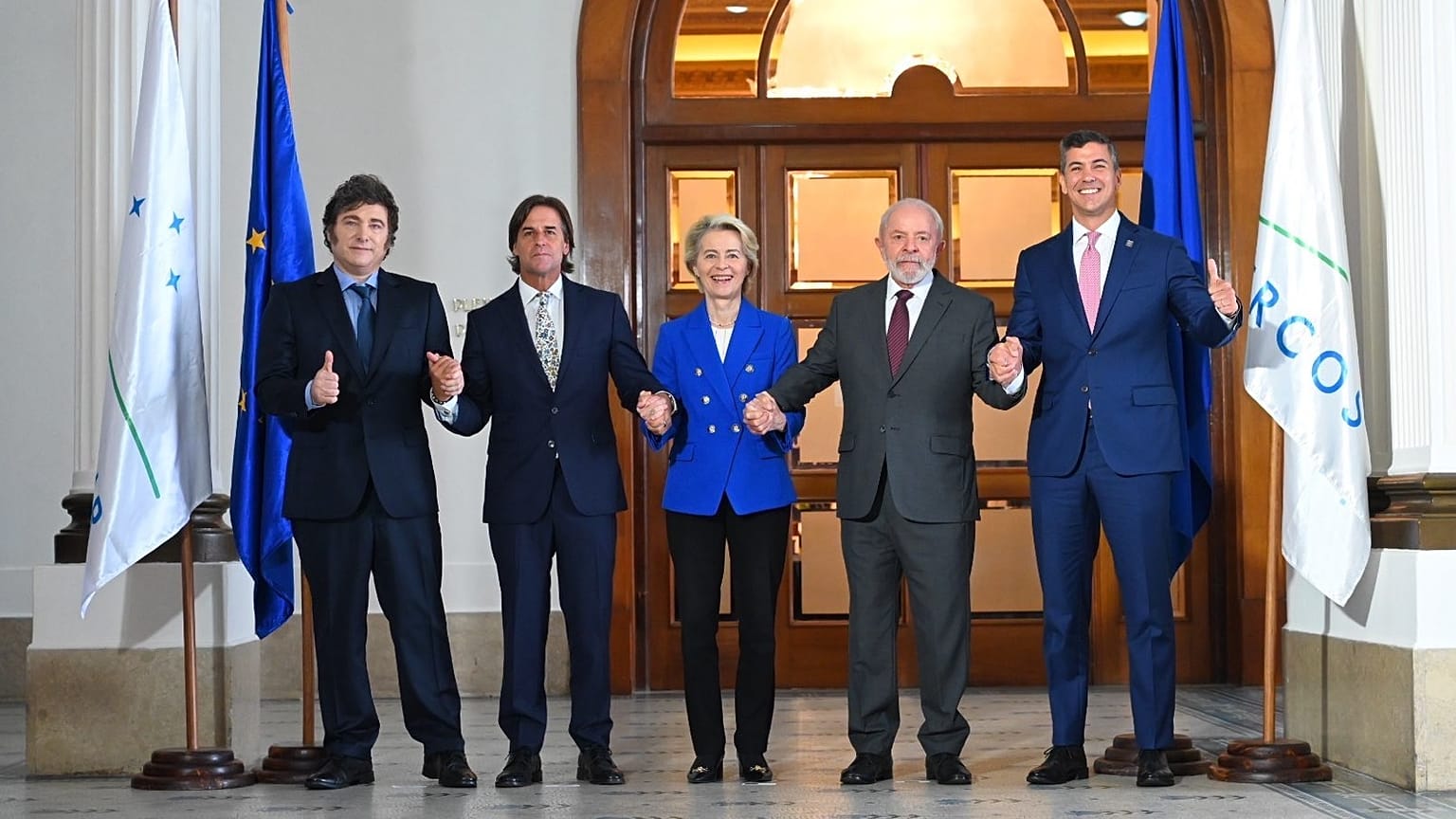
A majority of European Union member states have officially voted to approve the long-awaited free trade agreement with the Mercosur bloc, clearing the path for one of the world’s largest trade pacts.
The decision, reached on Friday in Brussels, paves the way for European Commission President Ursula von der Leyen to potentially sign the treaty with Brazil, Paraguay, Argentina, and Uruguay as early as next week.
Okay News gathered that while the deal faced stiff opposition from France—with President Emmanuel Macron condemning it as an “agreement from another age”—it secured the necessary majority of 15 member states representing 65% of the EU’s population. The agreement aims to eliminate import tariffs on more than 90% of products, a move Brussels argues will save billions in duties and boost exports of vehicles, machinery, and agricultural goods.
German leadership has strongly backed the move as a vital economic stimulus. Chancellor Friedrich Merz hailed the approval as a significant victory, describing it as a “milestone in European trade policy” and a crucial signal of the bloc’s “strategic sovereignty and capacity to act.”
Finance Minister Lars Klingbeil also welcomed the development, positioning it as a necessary counter to rising global protectionism. “While others are closing themselves off and pursuing increasingly aggressive trade policies, we are focusing on new partnerships,” Klingbeil stated, in a veiled reference to the “America First” policies of the U.S. administration.
Despite the political breakthrough, the deal continues to spark unrest on the ground. Farmers across Europe, fearing they will be undercut by cheaper South American imports, have taken to the streets in protest, with tractors blocking routes in Paris and parts of Germany throughout Thursday and Friday.
Thousands of Farmers March Against EU-Mercosur trade deal | Paris Protest
This video is relevant as it shows the scale of the farmer protests in Paris that are directly responding to the trade deal discussed in the article.