Abuja, Nigeria – Nigeria’s Attorney-General of the Federation and Minister of Justice, Lateef Fagbemi, has formally taken over the prosecution of his predecessor, Abubakar Malami, in the terrorism and firearms case instituted against him by the Department of State Services, Okay News understands.
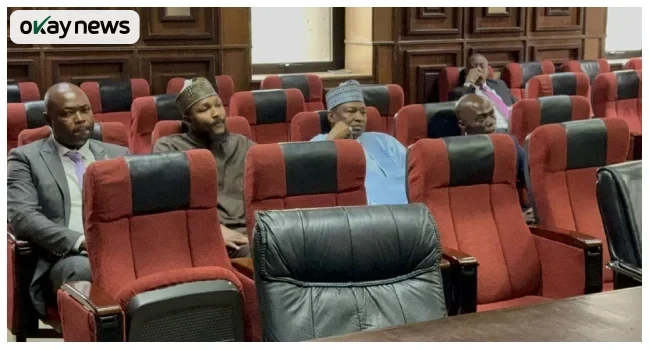
The takeover was announced on Wednesday at the Federal High Court sitting in Abuja by the Director of Public Prosecutions of the Federation, Rotimi Oyedepo. He informed the trial judge, Justice Joyce Abdulmalik, that the Attorney-General had assumed responsibility for the case and that the prosecution would require additional time to properly review the facts and processes before proceeding. On that basis, he said the matter could not go on as scheduled.
Counsel to the defendants, Adedayo Adedeji, did not oppose the request for adjournment but urged the court to strike out the case if the prosecution fails to open its case on the next date, citing concerns about diligent prosecution. Justice Abdulmalik subsequently adjourned the trial to March 10 for the prosecution to formally commence its case.
Malami and his son, Abdulaziz, are facing a five-count charge bordering on alleged terrorism financing and unlawful possession of firearms and ammunition. The charges, marked FHC/ABJ/CR/63/2026, include allegations that Malami knowingly abetted terrorism financing during his tenure as Attorney-General by refusing to prosecute certain suspects whose case files were allegedly forwarded to his office. Both defendants are also accused of possessing a Sturm Magnum 17-0101 firearm, live cartridges and expended ammunition at their residence in Birnin Kebbi without lawful authority, contrary to provisions of the Terrorism (Prevention and Prohibition) Act, 2022 and the Firearms Act, 2004.
The court had earlier admitted Malami and his son to ₦200 million bail each, with two sureties required to own landed property in Maitama or Asokoro, Abuja. The sureties were ordered to deposit property titles and international passports with the Deputy Chief Registrar of the court, alongside affidavits of means and passport photographs. The defendants were also directed to submit their own international passports pending the determination of the case.