The Nigerian government has informed a French delegation that the economic reforms implemented by President Bola Ahmed Tinubu are fostering national stability and driving growth, despite acknowledged short-term hardships.
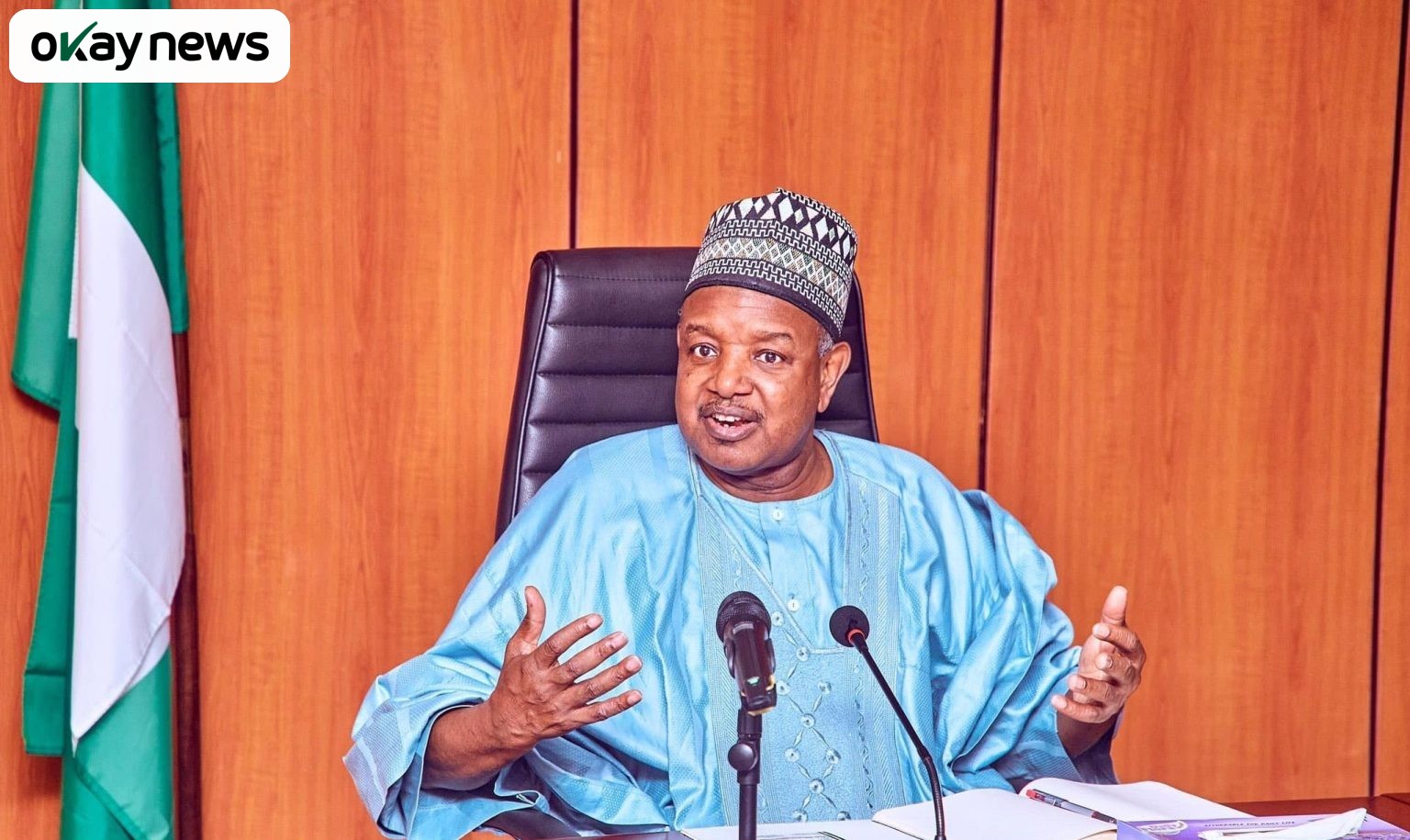
Nigeria’s Minister of Budget and Economic Planning, Senator Abubakar Bagudu, conveyed this message during a meeting in Abuja, Nigeria’s capital city, with officials from the Agence Française de Développement (AFD), the French development agency.
Okay News reports that Minister Bagudu stated the reforms have strengthened collaboration between Nigeria’s executive and legislative branches and improved relations across federal, state, and local governance tiers. He argued this growing political consensus is yielding results, including currency stabilization and sustained investor interest, which has helped reduce the pre-election uncertainty common in developing economies.
Ward-Level Development Strategy
The meeting was with the AFD’s Microeconomic Risk Analysis Due Diligence Mission, led by its Country Director, Mr. Jacky Amprou. Bagudu outlined the administration’s goal of building a one-trillion-dollar economy within five years, a vision he described as being rooted in inclusive growth. A key initiative is the Renewed Hope Ward Development Plan, which aims to identify economic opportunities in all 8,809 wards across Nigeria and integrate local needs into national planning.
Minister Bagudu emphasized a focus on agriculture, local production, and value chains to generate employment, enhance food security, and raise household incomes. He reaffirmed Nigeria’s commitment to private-sector-led growth while acknowledging challenges like low revenue, high interest rates, and global economic pressures. He maintained the reforms are essential for long-term stability, despite causing temporary difficulties.
Aligning International Support
Mr. Jacky Amprou explained that the AFD mission was conducting a broad review of Nigeria’s economic reforms to update the agency’s country risk and economic assessment, which will guide its future support and financing decisions. Both parties agreed that future AFD activities must align with Nigeria’s own development priorities, particularly its forthcoming 2026–2030 National Development Plan.
The Permanent Secretary of the Ministry, Dr. Deborah Odoh, also welcomed the delegation, stressing the importance of aligning international support with Nigeria’s strategic goals. Discussions included plans for a new AFD-Nigeria Country Partnership Agreement, as the current five-year agreement is expected to conclude in 2025.