


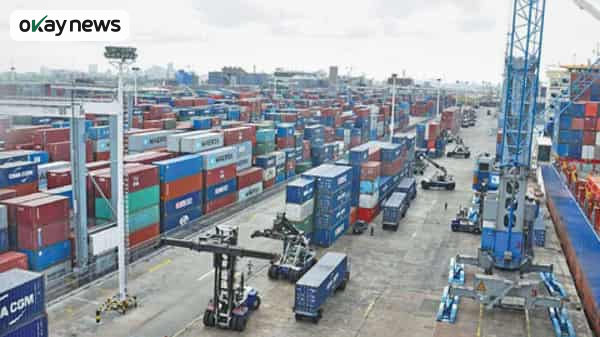
The Federal Government is preparing a nationwide export strategy that would see every one of Nigeria’s 774 local government areas develop at least one product for the African market as part of efforts to deepen non-oil trade and strengthen competitiveness under the African Continental Free Trade Area (AfCFTA).
Okay News reports that the initiative, disclosed by Dada Olusegun, Special Assistant to President Bola Ahmed Tinubu on Social Media, is designed to anchor export growth at the grassroots by identifying products that can be produced, processed, and sold across Africa.
Under the proposed framework, each local government is expected to focus on goods where it has a comparative advantage, spanning agriculture, light manufacturing, processing, and other value-adding activities, with the goal of reducing Nigeria’s long-standing reliance on crude oil exports.
Officials say the approach is intended to unlock dormant productive capacity in rural and semi-urban communities while stimulating local industries that can feed into regional value chains under AfCFTA’s preferential trade rules.
The plan was unveiled by the Minister of Industry, Trade and Investment, Dr. Jumoke Oduwole, during the launch of Nigeria’s AfCFTA Achievements Report for 2025, which also outlined the country’s trade priorities for 2026 and beyond.
Oduwole said the Federal Government would work closely with state governments and local authorities to identify products with real export potential and provide support to position them competitively within the African market.
Beyond product identification, the initiative includes reforms aimed at improving trade data management, clarifying export procedures, strengthening coordination among trade-related institutions, and conducting nationwide sensitisation campaigns to help businesses better understand AfCFTA opportunities.
Government officials believe these measures will address bottlenecks that have historically limited participation by small businesses, cooperatives, and local producers in cross-border African trade.
The proposal builds on Nigeria’s growing AfCFTA footprint, including its status as the first African country to publish a five-year implementation review, a move seen as reinforcing its leadership role in continental trade integration.
Analysts say that if effectively executed, the scheme could drive job creation, stimulate local value chains, boost non-oil export earnings, and ensure that economic benefits from AfCFTA are felt across communities rather than concentrated in major commercial centres.
The Federal Government maintains that localising AfCFTA is central to its broader economic reform agenda, positioning Nigeria to play a stronger leadership role in Africa’s $3.4 trillion single market while expanding inclusive growth.


.)