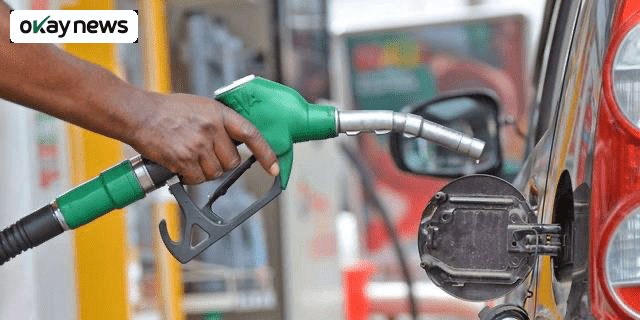
Lagos, Nigeria — A disagreement has emerged in Nigeria’s fuel industry after marketers claimed imported petrol is cheaper than locally refined fuel from the Dangote Petroleum Refinery and Petrochemicals, while the refinery strongly rejected the claim and challenged importers to prove it under current global conditions.
The dispute comes as global oil markets react to rising geopolitical tensions in the Middle East involving the United States, the Islamic Republic of Iran, the State of Israel, and other regional actors. The conflict has pushed crude oil prices higher and triggered concerns about possible supply disruptions worldwide.
Data released by the Major Energies Marketers Association of Nigeria (MEMAN), an industry body representing large petroleum product importers and distributors in Nigeria, indicated that imported petrol currently has a lower landing cost than petrol produced by the Dangote Petroleum Refinery and Petrochemicals.
According to the association, the gantry price of petrol at the Dangote refinery stood at ₦874 per litre (about $0.58) as of Monday, March 2, 2026. In comparison, the landing cost of imported petrol was estimated at ₦809.37 per litre (about $0.54), suggesting a difference of roughly ₦64 per litre.
The association also reported that diesel from the refinery was priced at ₦1,169.42 per litre (about $0.78), while imported diesel landed at around ₦1,125.70 per litre (about $0.75).
However, officials at the Dangote refinery disputed the figures and accused some importers of spreading misleading information to maintain Nigeria’s dependence on imported fuel.
“Anybody can go to Apapa to get the landing cost, and anybody who likes should go to Iran and import. Some people just want us to depend on imports. Isn’t it time we ended that dependence on foreign products?
“Some people want importation to continue, and that’s not normal. You keep importing what can be produced locally. Is that a good thing? How do you expect our children to survive? Nigerians will import and destroy what we have locally,” an official said.
Okay News reports that the refinery recently raised its petrol ex-depot price by ₦100 per litre, moving the gantry price from ₦774 per litre (about $0.52) to ₦874 per litre (about $0.58). The adjustment followed a surge in global crude oil prices, which climbed to about $84 per barrel after escalating military actions in the Middle East.
Following the increase, petrol pump prices at filling stations across Nigeria rose sharply. By Tuesday, March 3, 2026, some stations were selling petrol for as much as ₦937 per litre (about $0.62), depending on location.
Before the crisis intensified over the weekend, some retailers had been selling petrol between ₦812 (about $0.54) and ₦839 (about $0.56) per litre. The sudden rise in global crude prices disrupted the fuel market and forced a quick price adjustment.
Industry observers say Nigeria’s situation could have been worse if the country still relied almost entirely on imported petrol.
One refinery official argued that the Dangote facility has helped prevent severe fuel shortages in Nigeria during the current global turmoil.
“Let’s think about what could have happened to Nigeria if we didn’t have a refinery in Nigeria at this time. Assuming there is no Dangote refinery in Nigeria, economic activities would have been paralysed by now.
“Many countries are not so lucky, and they are now facing long queues at filling stations. Dangote has saved Nigeria from that fuel crisis. This has taught us that there’s nothing like one’s country, and we must always be prepared,” he said.
In the United Kingdom, motorists reportedly rushed to petrol stations as fears of an oil supply crisis grew after hostilities in the Middle East escalated. Reports indicated that fuel prices in some parts of Britain rose by as much as 11 pence per litre, while some stations experienced shortages.
In contrast, analysts say Nigeria’s reliance on domestic refining capacity is helping cushion the impact of the global shock.
Figures released by the Nigerian Midstream and Downstream Petroleum Regulatory Authority (NMDPRA), the government agency responsible for regulating the country’s petroleum supply chain, showed that domestic refining recently overtook imports.
The agency’s State of the Downstream Sector report for January 2026 revealed that Nigeria’s average daily petrol supply reached 64.9 million litres.
Domestic refineries, largely driven by the Dangote Petroleum Refinery and Petrochemicals located in Lagos State, southwestern Nigeria, supplied about 40.1 million litres per day. Imports by oil marketing companies and the Nigerian National Petroleum Company Limited (NNPC Limited), the state-owned energy firm of Nigeria, accounted for 24.8 million litres per day.
This marked the first time in 13 months that domestic supply exceeded imports.
The refinery also recently complained that local crude oil producers are failing to supply enough crude oil to support its operations, forcing it to purchase additional crude from international traders at higher prices.
According to the company, the conflict in the Middle East has disrupted global refining operations and reduced fuel exports from some countries, including China.
“The Dangote refinery will ensure that Nigeria is insulated from these supply shocks by prioritising supply to the domestic market. This is one of the many benefits of domestic refining,” the refinery said.
It explained that global benchmark Brent crude prices had risen by about 26 per cent within a short period to above $84 per barrel.
“It is worth noting that Nigerian crude oil is more expensive than the Brent benchmark price by $3 to $6 per barrel. After adding freight of $3.50 per barrel, crude oil will be landing in our tanks between $88 and $91 per barrel. For context, crude oil was landing in our tanks at about $68 per barrel when our ex-depot price was N774/litre,” the refinery stated.
The company also said it receives about five crude oil cargoes each month from NNPC Limited, even though it requires 13 cargoes to maintain full production for the domestic market.
Energy experts say Nigeria must increase crude oil production to support local refining capacity.
Professor Emeritus Wumi Iledare, an energy economist, said Nigeria’s oil revenue in 2025 reached about ₦55 trillion (about $36.7 billion), compared with roughly ₦50 trillion (about $33.3 billion) in 2024.
However, he said production shortfalls remain a major problem.
“Looking ahead to 2026, meeting oil production targets will depend far less on ambitious projections and far more on practical, on-the-ground actions. The government must prioritise improved security around oil assets, reduce operational disruptions, fast-track regulatory approvals, and create a stable operating environment that allows existing fields to produce at full capacity,” he stated.