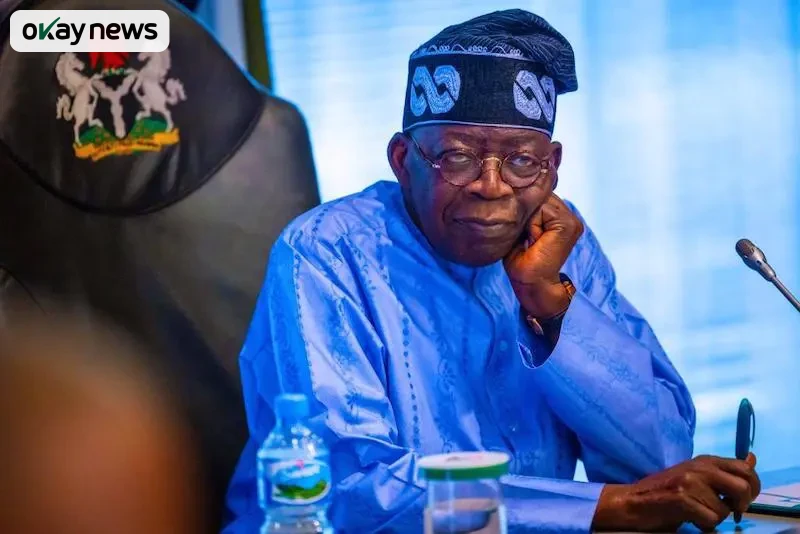
The House of Representatives has approved President Bola Tinubu’s request to obtain $2.35 billion from the international capital market to help fund Nigeria’s 2025 budget deficit and refinance maturing Eurobonds.
Okay News reports that the approval came after lawmakers adopted the report presented by the House Committee on Aids, Loans, and Debt Management, chaired by Hon. Abubakar Hassan Nalaraba, during plenary presided over by Speaker Tajudeen Abbas.
Since assuming office in May 2023, President Tinubu’s administration has sought several external loans to support government operations and key economic reforms. Between May 2023 and May 2025, Nigeria secured around $7.2 billion in loans from the World Bank to support developmental initiatives, in addition to a $1 billion facility from the African Development Bank, expected to be disbursed between 2024 and 2025.
In continuation of these efforts, the House approved a new borrowing plan that includes $1.23 billion to part-finance the 2025 budget and a $500 million debut Sovereign Sukuk bond to be issued in the international market.
According to the committee’s report, “The new borrowing plan comprises $1.23 billion to fund the 2025 budget deficit and $1.12 billion to refinance Nigeria’s Eurobond maturing in November 2025.”
Deputy Speaker Benjamin Kalu, who presided over the Committee on Supply, presented the motion for adoption, which received unanimous support from lawmakers. The House authorised the Federal Government to implement the external borrowing component of the 2025 Appropriation Act amounting to ₦1.84 trillion (approximately $1.23 billion) at the exchange rate of ₦1,500 to $1.
The lawmakers also permitted the government to access the loans through Eurobond issuance, loan syndication, bridge financing facilities, or direct borrowing from international financial institutions. They further endorsed President Tinubu’s proposal to issue Nigeria’s first-ever Sovereign Sukuk bond of up to $500 million in the global market, with or without a credit guarantee.
President Tinubu had earlier explained in his correspondence to the National Assembly that the borrowing was necessary to close the gap between projected revenue and expenditure in the 2025 fiscal year and to meet the government’s debt obligations as they mature.