
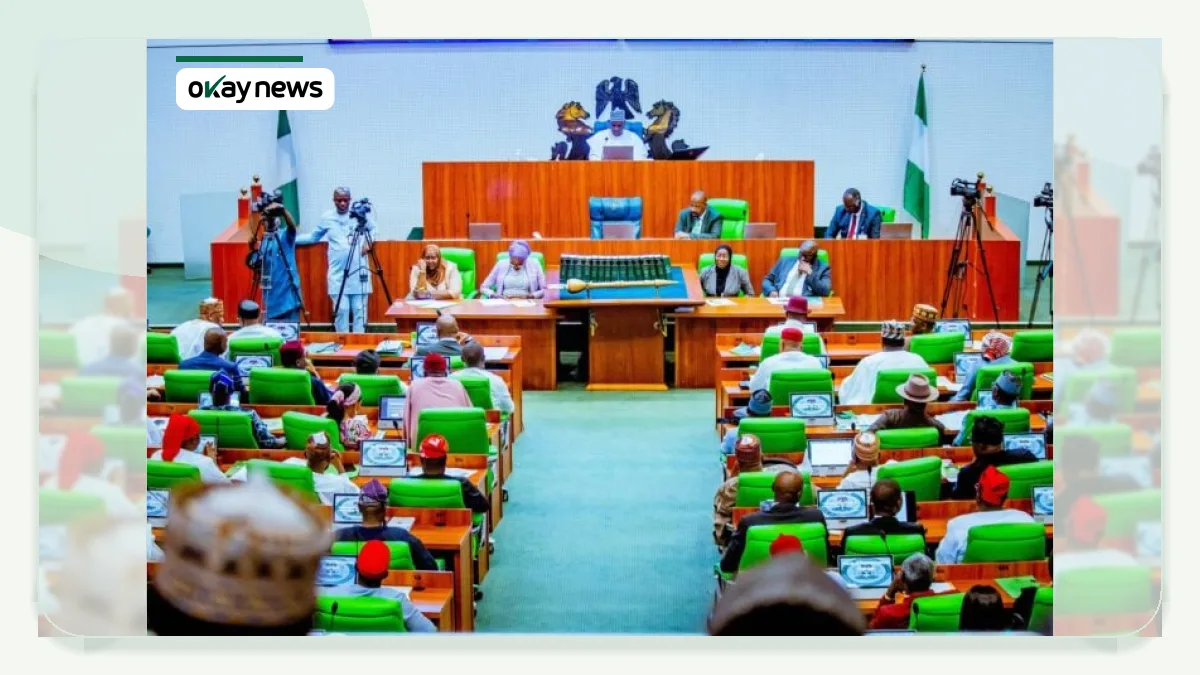
ABUJA, Nigeria — Nigeria moved a step closer to establishing state police on Thursday after the House of Representatives approved constitutional amendment proposals aimed at creating state-controlled police forces, marking one of the most significant security reforms considered by the National Assembly in recent years.
Okay News reports that lawmakers prioritised the state police amendment during voting on constitutional reforms, while consideration of several other proposed amendments was postponed to a future legislative session. The development follows weeks of growing momentum behind the proposal amid worsening insecurity, banditry, kidnappings and violent crimes across different parts of the country.
The House’s decision comes days after Senate Leader Senator Opeyemi Bamidele disclosed that the National Assembly had resolved to fast-track the state police proposal by separating it from the broader constitutional amendment process due to what lawmakers described as a matter of national urgency. Deputy Speaker Benjamin Kalu, who chairs the House Committee on Constitution Review and is among the sponsors of the bill, had earlier directed members on oversight assignments to return to Abuja for the crucial vote.
State police has emerged as one of the most debated constitutional reforms in Nigeria, with supporters arguing that decentralised policing would enable quicker responses to local security threats and strengthen intelligence gathering at the community level. President Bola Ahmed Tinubu, many state governors, federal lawmakers and security stakeholders have publicly expressed support for the initiative, although concerns remain about possible political misuse of state-controlled security agencies.
The proposal forms part of broader efforts to restructure Nigeria’s security architecture. Earlier this year, Inspector-General of Police Olatunji Disu submitted a framework on the implementation of state policing to the Senate Constitution Review Committee, outlining operational, administrative and legal structures for a dual federal-state policing system.
For the amendment to become law, it must still secure approval from the Senate and receive endorsement from at least 24 of Nigeria’s 36 State Houses of Assembly before being transmitted for presidential assent.