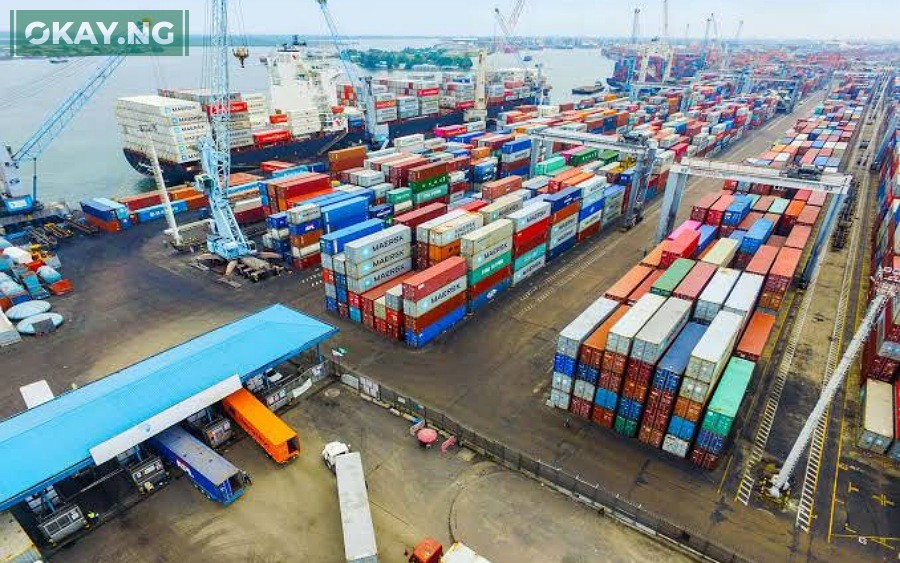
The Central Bank of Nigeria (CBN) has increased the exchange rate used for calculating tariff and import duties collection at the nation’s seaports and airports.
The customs exchange rate has been hiked by 14 percent, soaring to N1,327.35 per dollar, marking a substantial jump from the previous rate of N1,164.84.
This decision comes against the backdrop of the Naira’s persistent devaluation against the US Dollar in the foreign exchange market.
Over the past week, the Naira has witnessed significant depreciation in both official and parallel markets.
According to data from FMDQ, the Naira lost N79 against the Dollar on Monday alone, plummeting to N1,419/$1 in the investor’s and Exporters’ window from N1,234.49 at the beginning of the previous week.
This marks the eighth consecutive session of weakening for the Naira.
The depreciation directly affects Nigeria’s customs exchange rate, which historically mirrors fluctuations in the broader market. The newly adjusted customs exchange rate for duties closely aligns with the prevailing rate in the official market, where the Naira was trading at around N1,350 per dollar on Monday.
However, the CBN’s decision has not been without criticism. The Centre for the Promotion of Private Enterprise (CPPE) has consistently advocated for a fixed customs exchange rate of N1,000 per dollar for at least six months, citing the need for stability in international trade.
The CBN has employed various measures to address the Naira’s depreciation, including raising the Monetary Policy Rate (MPR) by 600 basis points in March to curb inflation and stabilize the exchange rate.
Additionally, the apex bank has provided discounted dollar sales to Bureau de Change (BDC) operators to boost liquidity. Recently, the Economic and Financial Crimes Commission (EFCC) received a court order to freeze over 1,000 accounts allegedly involved in illicit foreign exchange transactions.
Nigeria’s heavy reliance on imports, including agricultural products and ingredients for food and drinks, means that the increase in tariffs and import duties will inevitably impact food prices domestically, posing challenges for consumers and businesses alike.