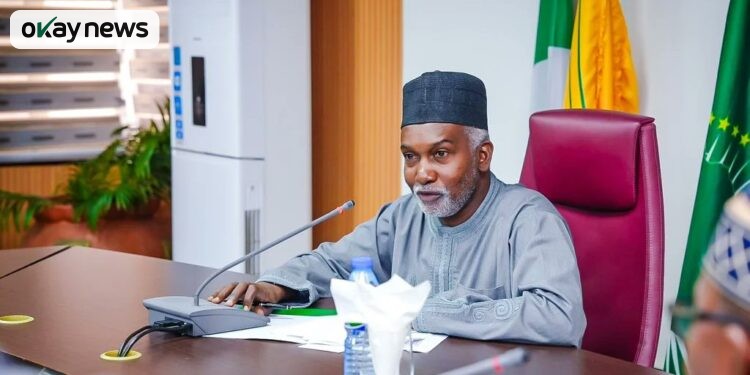
Nigeria’s Minister of Foreign Affairs, Yusuf Maitama Tuggar, has disclosed that the Federal Republic of Nigeria supplied the intelligence that enabled the United States of America to carry out recent airstrikes against suspected terrorist targets within Nigerian territory and formally approved the military operation before it was executed.
The minister made this revelation on Friday while speaking during an interview on Channels Television, Nigeria’s privately owned 24 hour news television station, one day after the United States government publicly confirmed that it had conducted counter terrorism air operations in Nigeria.
Okay News reports that the disclosure comes amid widespread public debate and international attention following confirmation by Washington that United States forces had struck terrorist locations in Nigeria as part of joint security efforts.
According to Tuggar, the airstrike was a direct outcome of long standing security cooperation between Nigeria and the United States and was not influenced by religious considerations or external political pressure.
Speaking on the coordination process, the minister said, “It’s Nigeria that provided the intelligence. I was on the phone yesterday for 19 minutes with Secretary of State Marco Rubio of the United States. We spoke extensively, and we agreed that I was going to speak with President Tinubu for President Tinubu to give the go-ahead.”
He continued, “And I did speak with him and it was agreed also that the statements that would follow would be statements that would show clearly that it is a strike against terrorism and that it is part of the ongoing joint operations between Nigeria and collaboration between Nigeria and the United States.”
President Bola Ahmed Tinubu is Nigeria’s current President and Commander in Chief of the Armed Forces, having assumed office in May 2023 following a general election in Africa’s most populous country.
Tuggar explained that Nigeria has consistently pursued deeper collaboration with international partners, including the United States, to address persistent security challenges, adding that the recent airstrike validates the Tinubu administration’s security approach.
He said, “Nigeria has remained consistent in its approach, which is to work with all partners that are committed to the fight against terrorism, irrespective of what religion, who the victims are, whether they are Muslims or Christians, and irrespective of what type of terrorism, be it terrorism being carried out in the name of one religion or the other, or indeed even banditry. So this is an ongoing process.”
The minister further stated that Nigeria’s cooperation with Washington is aimed at ending violence against civilians and restoring stability across regions affected by armed groups.
“We have been working closely with the Americans. This is what we’ve always been hoping for: to work with the Americans, work with other countries to combat terrorism, to stop the death of innocent Nigerians. So this is a vindication of the Tinubu administration,” Tuggar said.
Addressing critics who have accused the government of slow action, he added, “For those who thought that there was some foot dragging or, you know, the government wasn’t doing enough, it is a clear indication that we are committed and we are prepared to work with all countries.”
Tuggar emphasized repeatedly that the airstrike was not motivated by religion but solely focused on protecting lives.
“It is not to do with religion, it is to do with protecting Nigerians and the innocent lives of either Nigerians or non Nigerians. This was clear. We spoke twice,” he said.
“We spoke for 19 minutes before the strike, and then we spoke again for another five minutes before it went on.”
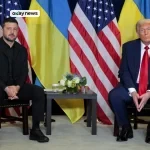
On Thursday, the President of the United States of America, Donald Trump, confirmed that American forces had carried out airstrikes targeting suspected terrorist elements in Nigeria as part of broader counter terrorism efforts.
United States officials later stated that the operation was conducted using shared intelligence and in coordination with the Nigerian government, aimed at weakening extremist groups operating in parts of the country.
Months before the strike, Trump had publicly warned that Washington might take action against terrorist groups in Nigeria, citing repeated attacks and allegations of violence targeting Christian communities. Those comments generated mixed reactions within Nigeria, with government officials insisting that insecurity in the country is not religiously driven.
Nigeria has faced multiple security threats for over a decade, including insurgency by Boko Haram and the Islamic State West Africa Province in the North East, alongside widespread banditry and terror attacks across the North West, leading to thousands of deaths and mass displacement of civilians.
While the United States has long supported Nigeria through intelligence sharing, training, and military assistance, direct American airstrikes on Nigerian soil remain rare and often attract significant public and diplomatic attention.