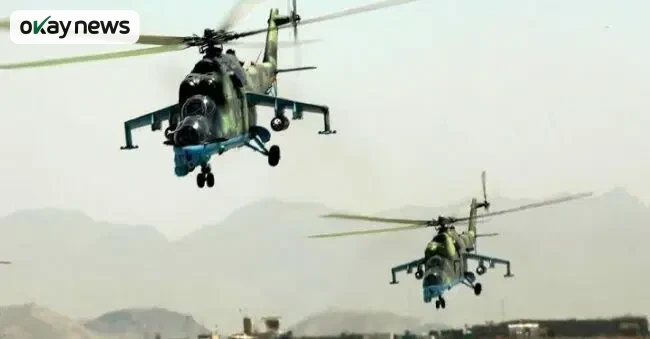
The Nigerian Air Force, the aerial branch of the Armed Forces of the Federal Republic of Nigeria, has carried out a major air operation in Borno State in North East Nigeria, resulting in the death of more than forty insurgents in two days of targeted aerial engagements.
The operation took place in the Azir and Musarram areas of Damboa Local Government Area of Borno, a region that has endured more than fourteen years of violent insurgency driven by Boko Haram and the Islamic State West Africa Province, a splinter faction of Boko Haram.
According to a statement released in Abuja, Nigeria’s capital city, by the Director of Public Relations and Information of the Nigerian Air Force, Air Commodore Ehimen Ejodame, the airstrikes were executed through coordinated close air support missions and interdiction flights conducted by the Air Component of Operation Hadin Kai on Thursday, January 15 and Friday, January 16, 2026.
Ejodame stated that actionable intelligence and close coordination with ground troops made the strikes possible. He explained that Nigerian Air Force aircraft responded to a distress call in the early hours of Friday, January 16, after soldiers engaged a retreating band of terrorists at Azir.
He noted that, after initial engagements, air surveillance detected clusters of terrorist fighters attempting to regroup under the cover of trees. This prompted a second wave of precision strikes that effectively neutralised several fighters.
According to the statement, “Post-strike assessment confirmed no further threats, while feedback from ground troops, local authorities, and community sources indicated a significant degradation of terrorist presence and a return of relative calm.”
Ejodame disclosed that, a day earlier on Thursday, January 15, Nigerian Air Force platforms also conducted a successful interdiction strike in Musarram, located within the Tumbuns general area. The operation followed intelligence reports suggesting that armed fighters were assembling along water channels using canoes as staging platforms to launch coordinated attacks along the Baga and Fish Dam axis.
He added that, upon arrival, surveillance cameras detected approximately ten canoes and over forty armed insurgents preparing for movement. He explained that, “The aircraft sighted about ten canoes and over forty suspected terrorists, who were engaged in multiple passes, throwing them into disarray. Some fleeing elements were trailed and neutralised, while others who regrouped at an assembly area were also engaged, effectively dismantling the terrorist concentration.”
Reacting to the outcome of the offensive, the Chief of the Air Staff of the Nigerian Air Force, Air Marshal Sunday Aneke, affirmed that the operation demonstrated the impact of intelligence-led air power and improved cooperation between air units and ground forces.
Aneke said the Nigerian Air Force remains committed to providing timely and decisive aerial support in order to deny hostile elements freedom of action within the region. He further assured Nigerians that the Armed Forces of Nigeria will sustain pressure against violent extremist groups, insisting that their operational capacities will continue to shrink as the counterinsurgency progresses.
Azir, Musarram, and other surrounding communities within Damboa Local Government Area have been the scene of repeated attacks, ambushes, kidnappings, and mass displacement since the insurgency expanded in 2014. The region has also witnessed multiple military losses, including an ambush near Wajiroko in November 2025 in which soldiers and Civilian Joint Task Force operatives were killed, alongside the execution of a captured Brigadier General Musa Uba by insurgents.
The counterinsurgency campaign in the North East remains one of the largest internal military operations on the African continent, involving a combination of ground forces, intelligence services, multinational cooperation, and humanitarian interventions for displaced civilians.
Okay News reports that Nigeria’s security authorities have repeatedly emphasised that strategic air power has become increasingly crucial in reducing the operational space available to insurgent factions while enabling ground troops to advance into previously inaccessible territories.