
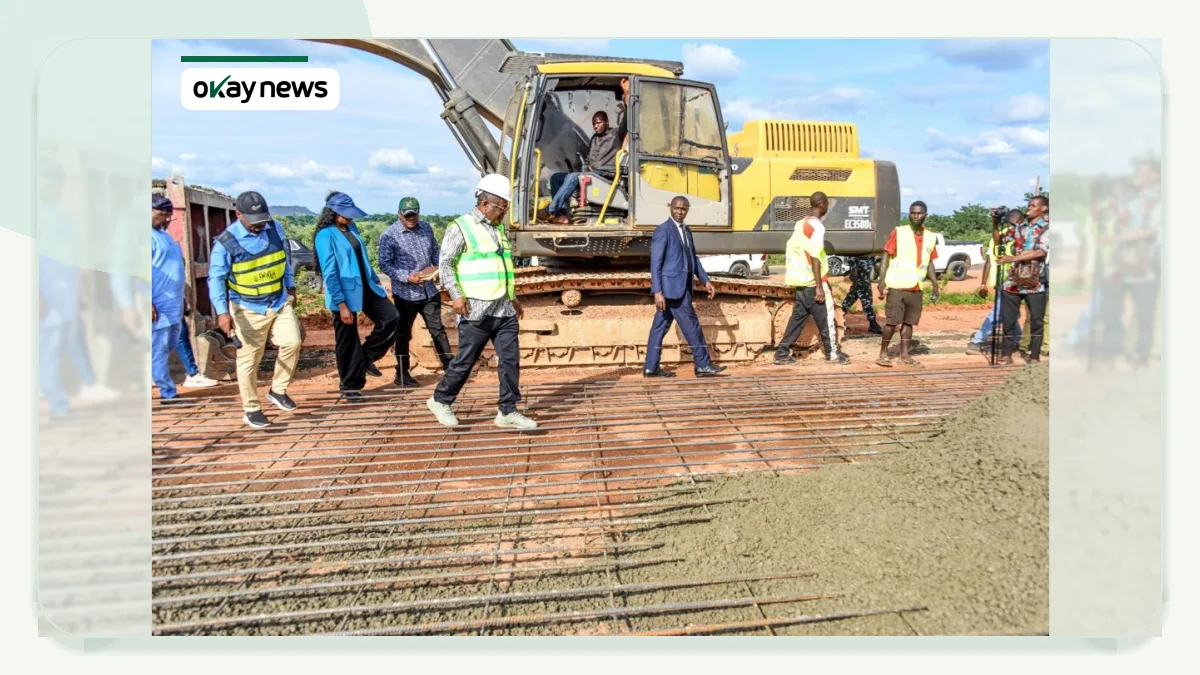
ENUGU, Nigeria — The Federal Government has fully completed the rehabilitation and structural upgrade of the Enugu–Port Harcourt Expressway, a critical interstate artery linking the commercial corridors of the South-East and South-South regions.
The extensive engineering overhaul was concluded under the strict supervision of the Federal Ministry of Works, led by the Honourable Minister of Works, Senator David Umahi, as part of the presidency’s nationwide infrastructure renewal drive.
Okay News reports that the successful rehabilitation has dramatically transformed the travel experience along the 61-kilometer dual carriageway. According to Senate Committee on Works member Senator Osita Ngwu, during a federal projects evaluation tour in Enugu, the extensive intervention has slashed travel times between Enugu and Port Harcourt from a punishing five-to-six-hour commute on cratered paths down to a seamless, little over two-hour journey.
The comprehensive project executed by construction firms including Arab Contractors and CGC Nigeria Limited targeted historically failed portions of the highway. The scope of work entailed deep scarification of old bituminous surfaces, massive asphalt resurfacing, the complete reconstruction of the collapsed New Artisan Bridge in record time, and extensive drainage upgrades to guarantee long-term durability. To ensure the highway stands the test of time, the administration incorporated reinforced concrete pavement technology on heavily burdened sections—a signature engineering standard designed to last up to 50 years with minimal maintenance.
With the transport corridor fully restored and integrated into the State House digital showcase, the expressway has re-established safe, unhindered connectivity across Enugu, Abia, and Rivers states. The Ministry of Works confirmed that the completed highway will be maintained under a public-private partnership (PPP) tolling arrangement to guarantee sustainable upkeep, providing vital structural logistics support for passenger traffic, agricultural transit, and small-to-medium enterprises operating within the regional economic blocks.