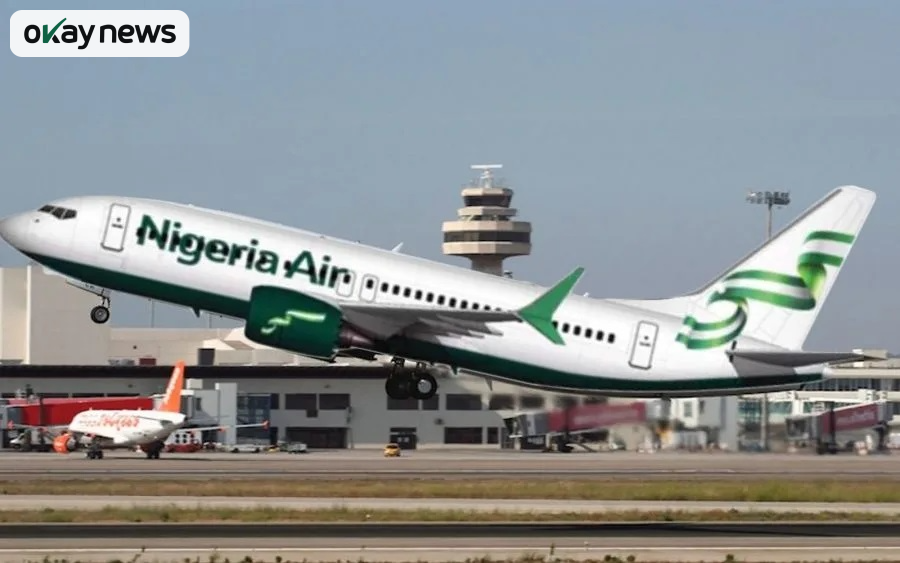
Nigeria’s domestic aviation sector recorded a decline in available seats for December 2025, totalling 850,420 according to data from global aviation analytics firm OAG.
Okay News reports that this marks a 7.5 per cent year-on-year drop from 919,400 seats in December 2024, positioning Nigeria among the markets with the steepest contractions in Africa.
The reduction reflects ongoing challenges including limited access to aircraft leasing, high financing costs, and maintenance constraints.
In contrast, South Africa solidified its position as the continent’s largest domestic market with 1.803 million seats, up 6.9 per cent from 1.687 million the previous year.
Kenya saw an 8.6 per cent increase to 456,500 seats, while Tanzania posted strong 27 per cent growth to 415,130 seats.
North African markets also expanded, with Algeria up 26.2 per cent to 388,731 seats, Morocco rising 11.8 per cent to 240,499, and Egypt gaining modestly by 2.5 per cent to 391,736 seats.
Cape Verde recorded the highest percentage growth at 33.7 per cent, reaching 92,924 seats.
Other declines included Ethiopia, down to 389,562 seats, and the Democratic Republic of Congo with a sharp fall to 101,598 seats.
Experts attribute Nigeria’s capacity constraints to historical difficulties in dry-leasing aircraft due to past non-compliance with the Cape Town Convention.
Although Nigeria improved its compliance score to 75.5 per cent and was removed from the Aviation Working Group watchlist in October 2024, only one airline has secured a dry-lease aircraft to date.
Carriers continue relying on costly wet leases or outright purchases, while the absence of local wide-body maintenance facilities leads to expensive overseas servicing and prolonged downtime.