


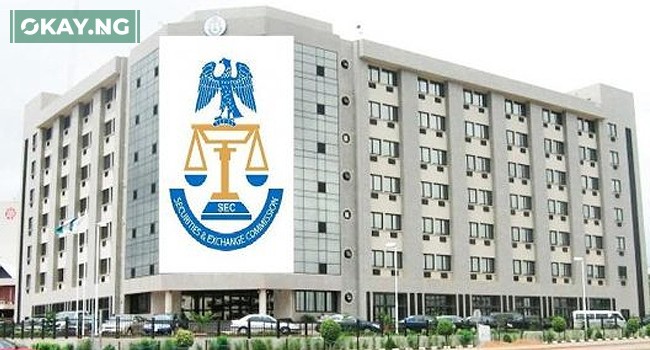
The Securities and Exchange Commission (SEC) has issued a public warning to Nigerians against investing in “Shalom Coin (SHLM),” citing strong indications of fraud and manipulation.
In a statement released on Friday, the Commission said it had received intelligence reports about cryptocurrency promoters advertising Shalom Coin as a legitimate investment issued on the Ethereum Blockchain under the ERC-20 protocol. The regulator, however, stated that the promoters are not registered or authorized to operate within Nigeria’s capital market framework.
According to the SEC, preliminary findings show that Shalom Coin is being marketed across multiple social media platforms as a “meme coin” or community-based digital token with promises of quick financial returns. The Commission noted that these claims are speculative and not backed by any verifiable economic fundamentals.
The SEC further revealed that the token’s underlying smart contract includes functionalities that permit the issuer to alter essential parameters, including trading permissions, transaction fees, and total token supply — features often exploited in fraudulent crypto schemes.
“The risk of loss or fraud associated with Shalom Coin (SHLM) is extremely high. The promoters and issuers are not licensed by the Commission, and the token has not been approved for issuance, trading, or offering to the investing public in Nigeria,” the SEC stated.
The Commission urged investors to exercise extreme caution when dealing with any digital asset not recognized or regulated under Nigerian law. It also reminded the public to verify all investment products, promoters, and trading platforms through the SEC’s official website, www.sec.gov.ng/cmos, before committing funds.
In reinforcing its position, the SEC highlighted its ongoing efforts to ensure that digital asset activities in Nigeria are transparent and compliant with regulatory standards. It also stressed that while the Commission supports innovation in financial technology, investor protection remains its top priority.
The warning follows previous regulatory interventions aimed at sanitizing the crypto market. In 2024, the SEC granted approval-in-principle to two local exchanges — Quidax and Busha — marking a significant step toward a structured and regulated crypto ecosystem in Nigeria.
Dr. Emomotimi Agama, the Director-General of SEC, reaffirmed that the Commission will continue to crack down on unregistered crypto operators and schemes designed to defraud the public. He noted that the agency’s vigilance is part of a broader effort to strengthen Nigeria’s financial system and protect citizens from digital market abuse.


 has issued a public warning to Nigerians against investing in “Shalom Coin (SHLM),” citing strong indications of fraud and manipulation.)