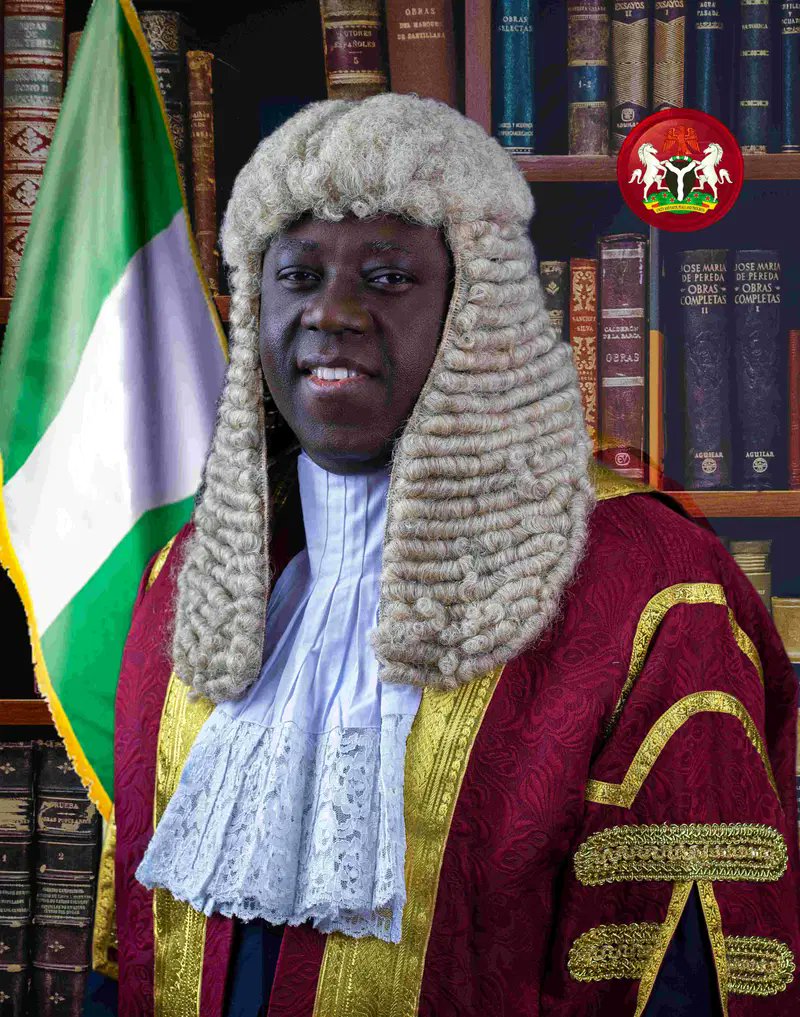
The Nigerian Senate has officially confirmed the nomination of Justice Joseph Olubunmi Kayode Oyewole as a Justice of the Supreme Court of Nigeria. The confirmation, which took place during the plenary session on Tuesday, February 3, 2026, followed the adoption of a comprehensive report presented by the Senate Committee on Judiciary, Human Rights, and Legal Matters.
Okay News reports that the legislative action was taken just a week after President Bola Ahmed Tinubu forwarded the nominee’s name to the upper chamber for urgent screening and confirmation. The swift process underscores the government’s current effort to ensure the apex court is fully constituted to handle the nation’s legal demands efficiently.
The elevation of Justice Oyewole was initially recommended by the National Judicial Council (NJC) during its 110th meeting held on January 13, 2026. The meeting, which was presided over by the Chief Justice of Nigeria, Justice Kudirat Kekere-Ekun, tapped Oyewole for the highest court alongside 35 other candidates recommended for various judicial offices across the federation.
Prior to this confirmation, Justice Oyewole served with distinction as the Presiding Justice of the Court of Appeal, Enugu Division. His judicial career has been marked by a series of significant rulings, and his promotion to the Supreme Court is widely viewed by legal experts as a testament to his dedication, experience, and legal acumen over the years.
Born on May 13, 1965, in Ila-Orangun, Osun State, the new Supreme Court Justice steps into a critical role for the regional representation of the judiciary. He specifically fills the vacancy created for the Southwest geopolitical zone following the retirement of the immediate past Chief Justice of Nigeria, Justice Olukayode Ariwoola.
The confirmation process was concluded without objection, signaling strong legislative support for the nominee. With this final approval from the Senate, Justice Oyewole is expected to be sworn in shortly, joining his colleagues on the bench to adjudicate on matters of national importance at the country’s final court of appeal.