

By using this site, you agree to the Privacy Policy and Terms of Use.
Accept
Okay NewsOkay NewsOkay News
  • News
  • Politics
  • Business
  • Technology
  • Security
  • Entertainment
  • Sports
Reading: Supreme Court Dismisses States’ Challenge to EFCC Act, Upholds Anti-Graft Agency’s Powers
Font ResizerAa
Font ResizerAa
Okay NewsOkay News
Search
  • News
  • Politics
  • Business
  • Technology
  • Security
  • Entertainment
  • Sports
Follow US
  • About Us
  • Advertising
  • Contact
  • Careers
  • Team
2026 © Okay International Limited - All rights reserved
News

Supreme Court Dismisses States’ Challenge to EFCC Act, Upholds Anti-Graft Agency’s Powers

By
Muhammad A. Aliyu
ByMuhammad A. Aliyu
Muhammad Ameer Aliyu is a prolific journalist who joined Okay News in 2015, aiming to contribute to the platform's positive growth. Currently serving as the Senior...
Follow:
November 15, 2024 - 1:36 pm
Share
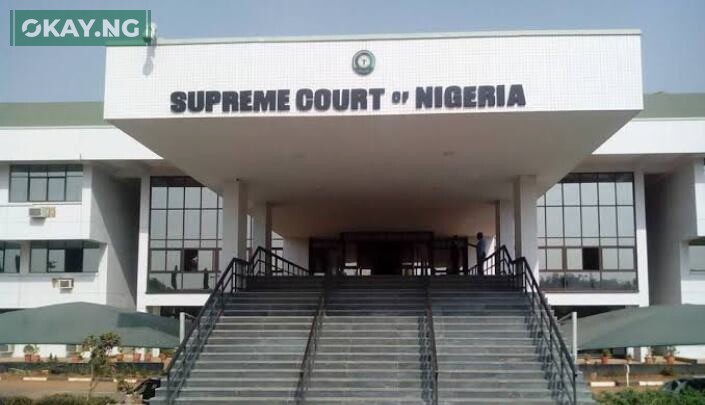
Supreme Court of Nigeria
SHARE

The Supreme Court has dismissed a suit filed by some state Attorneys General, challenging the constitutionality of the Economic and Financial Crimes Commission (EFCC) Establishment Act, and upheld the agency’s powers to investigate and prosecute crimes nationwide.

The suit, originally filed by the Kogi State Government through its Attorney General, sought to question the EFCC’s authority, along with the powers of the Nigerian Financial Intelligence Unit (NFIU) and other anti-corruption agencies, to investigate, arrest, or prosecute matters concerning state funds.

The Ondo, Edo, Oyo, Ogun, Nassarawa, Kebbi, Katsina, Sokoto, Jigawa, Enugu, Benue, Anambra, Plateau, Cross River, and Niger States later joined as co-plaintiffs.

The plaintiffs argued that the EFCC Act, enacted in 2004, was based on the United Nations Convention against Corruption, but failed to comply with Section 12 of the 1999 Constitution.

- Advertisement -

According to the argument, the section requires that a majority of the state Houses of Assembly must agree to domesticate any international convention into Nigerian law, which they claimed did not happen in the case of the EFCC Act.

Citing a previous ruling in Dr. Joseph Nwobike Vs Federal Republic of Nigeria, the plaintiffs contended that the EFCC Act contradicted the constitution, which they asserted is the supreme law of the land, and demanded the Act be declared null and void.

Delivering its judgment on Friday, the Supreme Court, in a unanimous decision by a seven-member panel led by Justice Uwani Abba-Aji, dismissed the suit, describing it as self-serving.

The court affirmed the establishment of the EFCC and upheld its authority to investigate and prosecute corruption cases across all states of the federation.


Follow Okay News channel on WhatsApp
Add as a preferred source on Google
Follow Okay News on Instagram
- Advertisement -

TAGGED:EFCCSupreme Court
Share This Article
Facebook Pinterest Whatsapp Whatsapp Email Print
Previous Article Stanley Nwabali Super Eagles Goalkeeper Stanley Nwabali Loses Father
Next Article National Judicial Council NJC Sanctions Five Judges for Misconduct, Recommends Compulsory Retirement for Two Over Age Falsification
FacebookLike
XFollow
InstagramFollow
TiktokFollow
WhatsAppFollow
- Advertisement -
- Advertisement -
Ad imageAd image
Okay NewsOkay News
2026 © Okay International Limited - All rights reserved
  • About Us
  • Advertising
  • Contact
  • Careers
  • Team
Welcome Back!

Sign in to your account

Username or Email Address
Password

Lost your password?

Continue with Facebook