
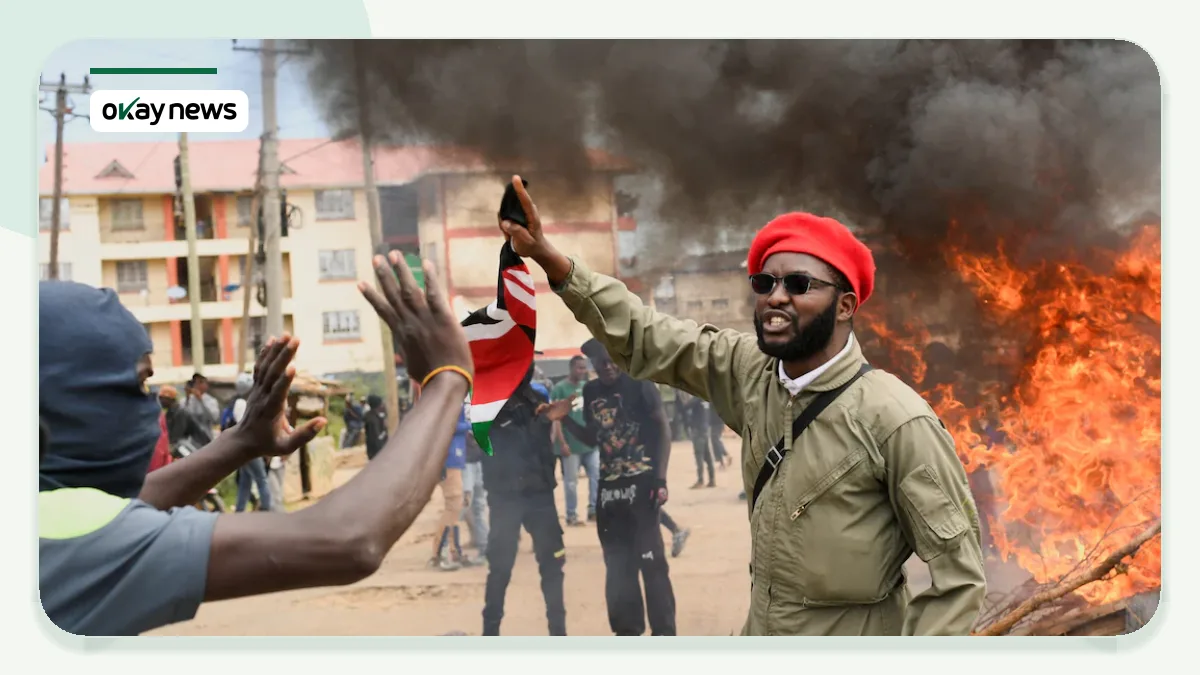
NANYUKI, Kenya — Violent protests outside the Laikipia Air Base near Nanyuki have left at least two people dead after Kenyan police opened fire on hundreds of demonstrators marching against a United States military plan to establish an Ebola quarantine facility on Kenyan soil.
The civil unrest on Monday prompted immediate judicial intervention, with the Kenyan High Court stepping in on Tuesday, June 2, 2026, to issue an emergency injunction blocking the opening of the medical isolation site for at least three weeks pending a full constitutional review.
Okay News reports that the demonstrations erupted after the Kenyan government quietly approved a bilateral defense request from the U.S. Trump administration. The plan sought to utilize the joint military airbase to isolate and monitor American nationals, defense contractors, and diplomatic personnel exposed to the highly lethal Bundibugyo strain of the Ebola virus currently spreading across East Africa.
The decision triggered immediate domestic outrage, as Kenya has not recorded a single active case of Ebola during the current regional outbreak. Protest organizer Patrick Wahome and independent local security sources confirmed that two civilian marchers died from gunshot wounds after riot police deployed live ammunition to disperse crowds attempting to breach the perimeter gates of the airbase. Federal police spokesperson Michael Muchiri, however, claimed he had not received official field reports validating the civilian fatalities.
The severe diplomatic standoff is tied directly to a highly controversial pandemic containment strategy enacted by Washington. A senior U.S. official confirmed that the White House has implemented a strict ban on repatriating any American citizens exposed to the virus abroad, with the administration stating it “cannot and will not allow” active Ebola cases to cross into U.S. borders. This border policy has effectively shifted the burden of medical isolation to foreign military outposts like the one in Laikipia, stoking deep anti-imperialist sentiments and local public health fears in Nanyuki. The Bundibugyo variant remains a major global concern, as it currently lacks an approved therapeutic treatment or commercial vaccine, unlike the more common Zaire strain.