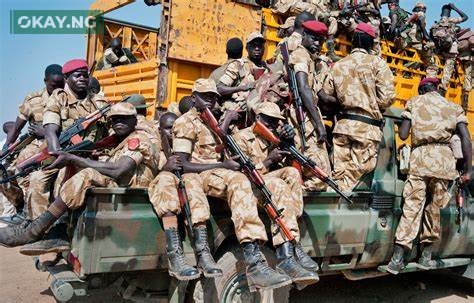
The United States has mandated the departure of non-emergency government personnel from South Sudan, citing escalating armed conflict and pervasive violence across the nation, the State Department confirmed Sunday. The decision underscores a deepening humanitarian and political crisis in a region already grappling with the scars of a brutal civil war.
“Armed conflict is ongoing and includes fighting between various political and ethnic groups. Weapons are readily available to the population,” the State Department stated, painting a stark portrait of instability. The warning follows a grim assessment from the United Nations human rights agency, which reported Saturday that surging violence and political infighting now jeopardize South Sudan’s fragile 2018 peace agreement.
Political Fractures Reignite Fears of Civil War Resurgence
At the heart of the turmoil lies a resurgence of tensions between factions loyal to President Salva Kiir and opposition leader Riek Machar, architects of the 2018 peace deal that halted a five-year civil war claiming nearly 400,000 lives. This month, security forces aligned with Kiir detained two cabinet ministers and senior military officials linked to Machar, a move critics argue risks reigniting large-scale hostilities.
“The arrests are a dangerous escalation,” said John Prendergast, co-founder of the Enough Project, a Washington-based conflict prevention organization. “They signal a return to the zero-sum politics that fueled South Sudan’s last civil war.” The 2018 accord, brokered after international mediation, aimed to integrate rival militias and establish power-sharing governance. Today, its foundations appear increasingly precarious.
Daily Life Plagued by Violence and Fear
For civilians and foreign personnel alike, South Sudan has become a tinderbox. The State Department highlighted alarming rates of violent crime, including carjackings, ambushes, and kidnappings, even within the capital, Juba. Journalists and aid workers face heightened risks, with movements restricted to armored convoys under strict curfew.
“These aren’t just statistics—these are mothers, fathers, and children living in constant fear,” said Maria Fernandes, a Médecins Sans Frontières coordinator operating in Juba. “Hospitals are treating gunshot wounds daily, yet many avoid seeking care due to checkpoints manned by armed groups.”
UN Sounds Alarm on Humanitarian Fallout
The UN’s humanitarian office estimates over 8 million South Sudanese—two-thirds of the population—require emergency aid, a figure likely to rise as violence disrupts food supplies and healthcare. Meanwhile, the peace process, once hailed as a milestone, now teeters on collapse.
“Without urgent de-escalation, South Sudan risks spiraling back into full-scale conflict,” warned UN Special Representative Nicholas Haysom. Diplomats urge regional mediators to revive stalled talks, but progress remains stalled amid mutual accusations of bad faith.
Implications for Regional Stability
South Sudan’s crisis reverberates beyond its borders. Neighboring nations like Uganda and Kenya fear a refugee influx akin to the 2013–2018 war, when over 2 million fled. Economically, the instability threatens oil production—a critical revenue source for the region—and risks drawing in external actors with competing interests.
As the U.S. withdrawal signals a loss of confidence in South Sudan’s stability, questions linger: Can the international community salvage the peace deal? And for a nation weary of war, how much longer can its people endure the cost of political failure?