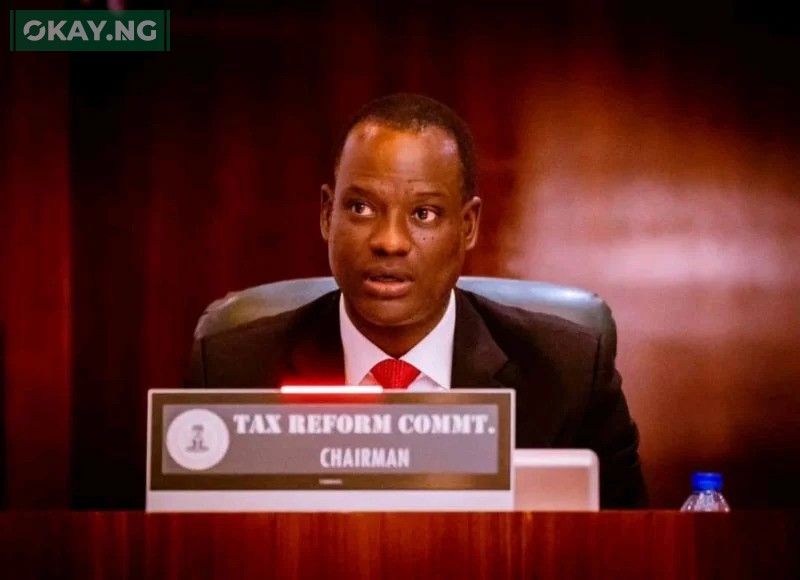
Following public concern over a proposed 5% fuel (petrol) surcharge mentioned in Nigeria’s new tax laws, the chairman of the Presidential Fiscal Policy and Tax Reforms Committee, Taiwo Oyedele, has issued a detailed clarification. His message: this is not a new tax, it won’t start automatically, and household fuels like kerosene, LPG and CNG are exempt. Below is a clear, search-friendly breakdown for motorists, businesses, and policy watchers.
Key takeaways at a glance
- Not a new charge: The 5% provision already existed in the Federal Roads Maintenance Agency (FERMA) Amendment Act, 2007. The new tax act restates it for transparency and legal harmonisation.
- No automatic start: It will not commence until the Minister of Finance signs an Order and it is published in the Official Gazette.
- Exempt fuels: Household kerosene, cooking gas (LPG), compressed natural gas (CNG), and clean/renewable energy products are not covered.
- Purpose: To create a dedicated, predictable fund for road maintenance and infrastructure, reducing travel time, vehicle repairs and logistics costs across the economy.
- Reform consistency: The broader tax reforms have removed or suspended several burdens (e.g., VAT on fuel, telecoms excise, cybersecurity levy). The surcharge provision remains only as part of a streamlined framework, not immediate rollout.
- Legal housekeeping: The provision has been moved out of the old FERMA Act into the new tax act to keep all fiscal measures under one modern law.
FAQ: 5% Fuel Surcharge — Questions Nigerians Are Asking
1) Did the current administration introduce a new 5% fuel tax?
No. It is not new. The charge has existed since 2007 under the FERMA Act. The new tax law repeats the provision for clarity and harmonisation; it was not part of the original reform bills sent by the President.
2) Will the surcharge begin in January 2026 when the new tax laws kick in?
No. It does not take effect automatically. It will only start if and when the Minister of Finance issues an official Order and it is gazetted as required by the new act. This safeguard allows government to choose timing carefully.
3) Does the 5% apply to all fuels?
No. Several products used by households are exempt, including household kerosene, LPG, CNG, and clean/renewable energy products. The policy aims to support the energy transition while focusing road funding on motor fuels that drive wear and tear.
4) Why keep a surcharge at all during hardship and high inflation?
It is designed as a ring-fenced fund for roads. When implemented efficiently, it improves safety, travel time, and vehicle maintenance costs. Many countries earmark parts of fuel pricing to fund highways and keep maintenance regular rather than ad hoc.
5) Why not use savings from fuel subsidy removal instead?
Subsidy savings help but are not enough to cover Nigeria’s recurring road needs along with other national priorities. A dedicated fund ensures predictable cash flow for highways, bridges and repairs, complementing the annual budget.
6) Isn’t a surcharge against the reform goal of reducing taxes?
No. The reforms have already reduced multiple taxes and removed/suspended charges that hit households and MSMEs. By harmonising earmarked levies in one law, the system becomes simpler, more transparent, and easier to manage.
7) Why not abolish the surcharge entirely?
The government has removed it from the FERMA Act and placed it under the new tax law to modernise and streamline fiscal rules. Keeping the legal framework in place allows Nigeria to activate sustainable road financing when necessary, with clearer governance.
If the surcharge is ever activated: what would change at the pump?
- It would not be retrospective. The Minister’s Gazette Order would specify the start date.
- Price effect (illustration only):
If the pump price were ₦X, a 5% surcharge would equal ₦0.05 × X.
Example: If petrol is ₦900/litre, 5% is ₦45.
This is only a calculation guide. The surcharge is not in effect now. - Use of funds: Proceeds would be earmarked for road maintenance and infrastructure, ideally with regular reporting to sustain public trust.
What motorists and businesses should do now
- No change today: There is no active 5% surcharge at the pump.
- Monitor official notices: Any commencement must be gazetted by the Minister of Finance.
- Plan logistics prudently: Transporters and manufacturers can prepare scenario budgets but should avoid speculative price hikes.
- Demand transparency: Ask for clear reporting on collections and projects if the surcharge is later activated.
Plain-English summary
- The 5% fuel surcharge has existed since 2007; it was restated in the new tax act for clarity.
- It won’t start automatically in 2026. It needs a Ministerial Order and Gazette.
- Household fuels like kerosene, LPG and CNG are exempt.
- The idea is to fund roads sustainably, not to add random levies.
- For now, nothing changes at the pump.