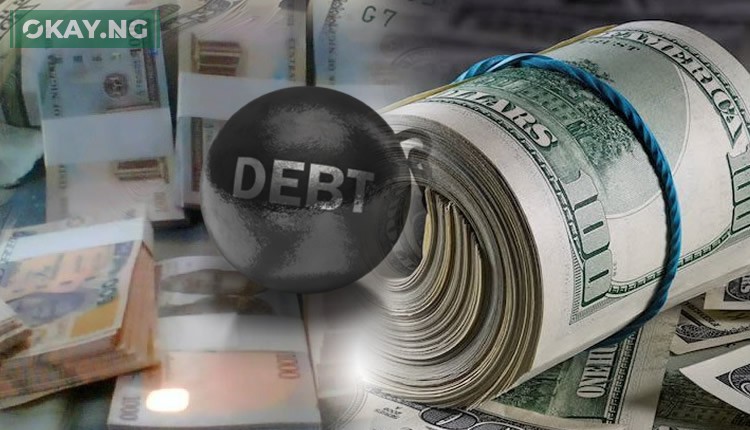
Nigeria’s external debt service is projected to climb to a substantial $5.2 billion in 2025, signaling increased strain on the nation’s public finances, even as ongoing economic reforms aim to stabilize the economy, Fitch Ratings revealed in a recent report. This projection, up from $4.7 billion in 2024, includes a significant $1.1 billion Eurobond repayment due in November 2025, placing heightened scrutiny on the country’s fiscal management.
“Government external debt service is moderate but expected to rise to $5.2 billion in 2025,” Fitch noted, highlighting the impending financial obligations. This increase arrives despite Fitch’s upgrade of Nigeria’s long-term foreign-currency issuer default rating to ‘B’ from ‘B-’, with a stable outlook, a recognition of recent positive economic reform steps.
However, the agency also pointed to a minor delay in a Eurobond coupon payment in March 2025 as a potential red flag, indicating persisting challenges within Nigeria’s public finance management. While external debt service remains manageable, the agency has expressed concern over high interest costs, weak revenue performance, and limited fiscal space.
“We expect general government revenue-to-GDP to rise but to remain structurally low (averaging 13.3 per cent in 2025–2026),” Fitch stated. This low revenue-to-GDP ratio contributes to a high general government interest/revenue ratio, exceeding 30 percent, with the federal government’s interest/revenue ratio nearing 50 percent. This means a significant portion of Nigeria’s earnings are consumed by debt service.
The agency further observed that Nigeria’s gross reserves, which reached $41 billion by the end of 2024, have since declined to $38 billion due to debt service payments. Despite this fluctuation, Fitch anticipates that reserves will average five months of current external payments over the medium term, surpassing the median for similarly rated economies.
Read Also: Nigeria’s Credit Rating Climbs to B Amidst Economic Reforms, Fitch Says
Recent policy reforms, including the removal of fuel subsidies, exchange rate liberalization, and monetary policy tightening, have been acknowledged by Fitch as positive steps. “Net official FX inflows through the CBN and autonomous sources rose by about 89 per cent in Q4 2024,” the agency reported, indicating improved foreign exchange inflows.
These reforms have contributed to better monetary stability, with inflation projected to average 22 percent in 2025. However, risks remain, particularly concerning potential drops in oil prices and the pace of policy implementation.
JP Morgan has also raised concerns, projecting a potential current account deficit if oil prices remain low, which could push the naira beyond N1,700 per dollar.
Data from the Central Bank of Nigeria (CBN) reveals that Nigeria expended $5.47 billion on external debt servicing between January 2024 and February 2025. Furthermore, the Debt Management Office (DMO) reported that Nigeria spent N13.12 trillion on debt servicing in 2024, a 68 percent increase from the previous year, surpassing the budgeted N12.3 trillion.
The 2025 budget allocates N16 trillion for debt servicing, reflecting the government’s anticipation of continued high debt-related expenditures. This underscores the growing pressure on Nigeria’s fiscal sustainability.
It’s clear that while the reforms are showing promise, the escalating debt service poses a significant challenge. Addressing this requires a multifaceted approach, focusing on revenue diversification and prudent fiscal management to ensure long-term economic stability.