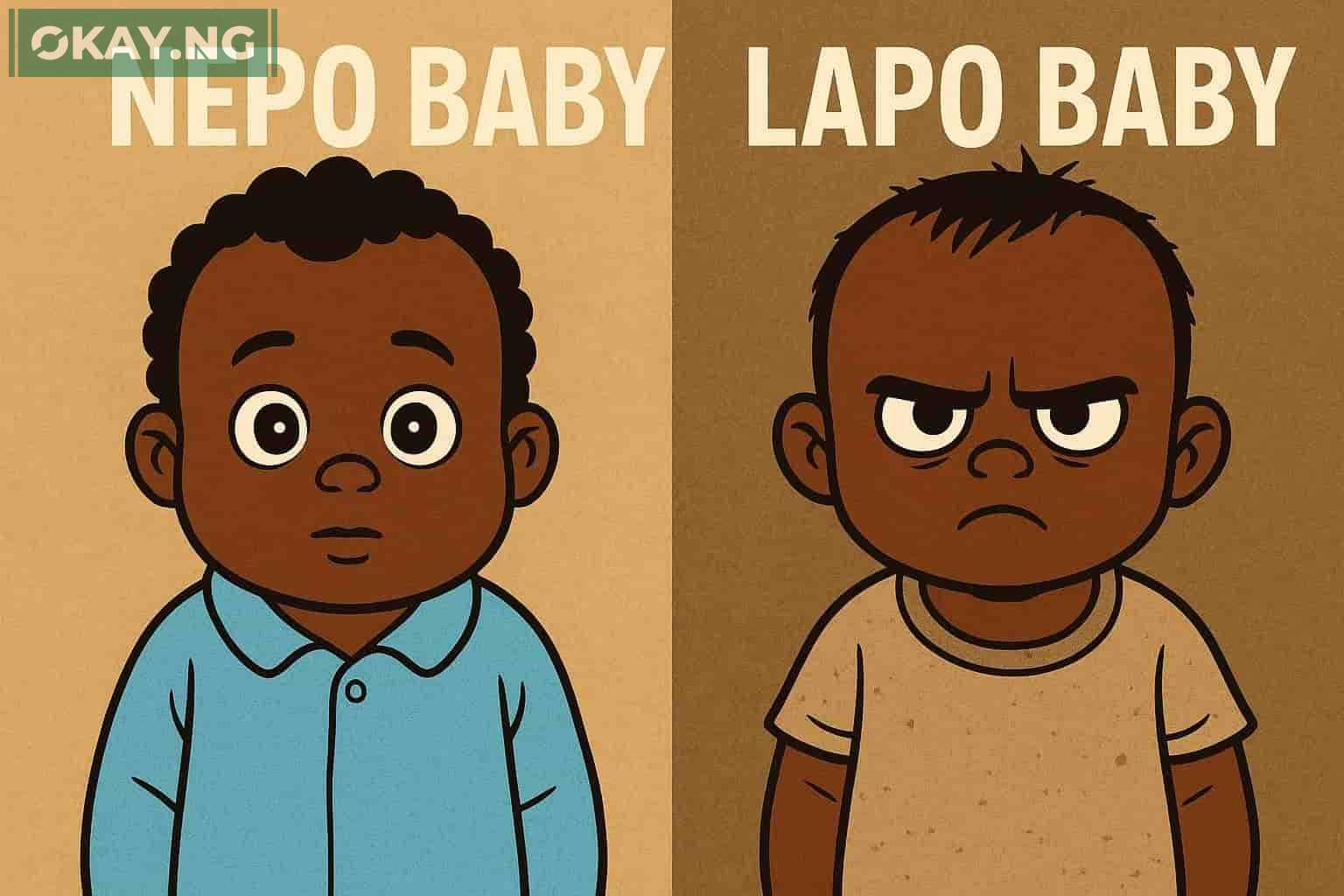
In the ever-evolving world of Nigerian social media, two catchy terms have recently dominated timelines: NEPO baby and LAPO baby.
While they may sound humorous, these labels are sparking serious conversations about privilege, poverty, and social mobility in Nigeria’s cultural and entertainment landscape.
NEPO baby is a borrowed concept that has gained traction globally and now resonates deeply within the Nigerian context. Derived from the word “nepotism”, a NEPO baby refers to a person who benefits from their family’s fame, influence, or wealth, especially in fields like music, film, business, or politics. The term became a viral label used to describe individuals whose success may be rooted in inherited advantages.
For example, the children of Nigerian music icons, politicians, and billionaires are often branded as NEPO babies when they debut in the limelight. Think of it as someone starting life or a career from level 5, while the average Nigerian begins at level zero or below.
On the flip side, LAPO baby is a more local, tongue-in-cheek term with a biting social edge. It refers to individuals born into working-class or poor families, especially those whose parents relied on microfinance loans from institutions like LAPO (Lift Above Poverty Organization), a popular microfinance bank known for helping low-income households in Nigeria.
Being a LAPO baby signifies starting life from a disadvantaged position, often needing to hustle against odds, with little or no safety nets. It’s a nod to the millions of Nigerians who rise from humble beginnings, sometimes mocked, but mostly admired for their grit and survival instincts.
The terms began trending after several viral posts contrasted the opportunities available to NEPO babies with the struggles LAPO babies face in trying to access the same heights.
As one X (formerly Twitter) user put it:
“You’re calling someone lazy because they couldn’t make it by 25, meanwhile you’re a NEPO baby and their mum was a LAPO customer. Rest.”
Another user wrote:
“LAPO babies were raised on Garri and survival — no inheritance, no network, just vibes and resilience.”
These sentiments highlight a growing cultural awareness of class privilege, economic disparity, and how starting points in life shape people’s journeys.
The conversation is not just about memes or jokes. It’s fueling deeper discourse about how social capital, access to education, and family wealth can dictate outcomes, from careers in Nollywood to entrepreneurship and beyond.
While NEPO babies often face criticism for being unaware of their privilege, some argue that it’s not wrong to be born into advantage; it’s only problematic when it’s denied or weaponized against those who didn’t have the same access.
Meanwhile, LAPO babies have emerged as a symbol of grit, resilience, and authenticity, often wearing the label with pride as a badge of their hustle mentality.
As the debate continues, one thing is clear: the divide between NEPO babies and LAPO babies is not just viral slang, but a mirror to Nigeria’s complex story of class, struggle, and opportunity, and how the internet is giving voice to those often overlooked in traditional narratives.