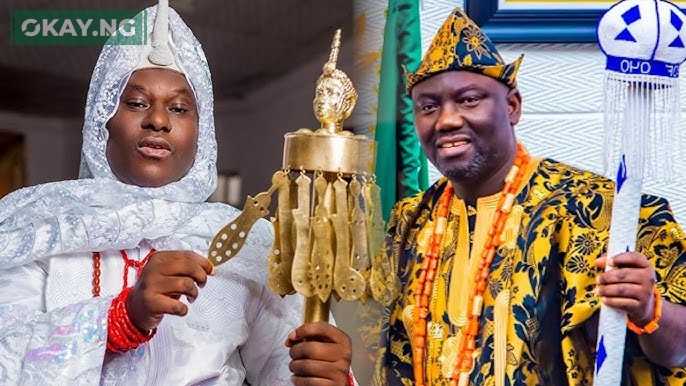
The story of the Yoruba royal houses is the story of West African civilization itself, shaped by sacred origins, city-states, trade, scholarship, and art. From the ritual authority of Ile-Ife to the imperial reach of Old Oyo, from the courtly artistry of Benin to the riverine diplomacy of Warri and the historic court of Agbor, these thrones forged networks of influence that still define culture and identity across Nigeria and beyond.
- Ooni of Ife — Sacred Source of Kingship
- Alaafin of Oyo — Empire, Checks and Balances
- Oba of Benin — Courtly Power and Artistic Genius
- Olu of Warri — Riverine Diplomacy and Cosmopolitan Trade
- Dein of Agbor — Anioma Heritage and Royal Continuity
- How these royal houses shaped Nigeria
- Key ideas that connect the thrones
- Frequently asked questions
Okay.ng reports that understanding these dynasties is essential to understanding the political ideas, festivals, and artistic heritage that continue to thrive today.
Related background for readers exploring Yoruba royalty: Awujale of Ijebuland: Past and Present – Full List on Okay.ng helps place Ijebu within the wider Yoruba world.
Ooni of Ife — Sacred Source of Kingship
At the heart of Yoruba tradition stands Ile-Ife, celebrated as the spiritual cradle of the people. The Ooni of Ife embodies sacred authority linked to the creation narratives of Odùduwà. Ife’s early urban culture produced the famed naturalistic sculptures that signal organized kingship, specialized guilds, and far-reaching trade. Dynastic memory connects Oranmiyàn and other progenitors of royal lineages across Yorubaland back to Ife, which explains why many courts recognize the Ooni as a spiritual primate. Ceremonies such as Olojo renew this role, while modern Ife sustains scholarship, crafts, and cultural tourism anchored on its ritual calendar and museums.
Alaafin of Oyo — Empire, Checks and Balances
The Alaafin of Oyo presided over an empire that mastered cavalry, long-distance trade, and statecraft. The political design of Old Oyo combined royal authority with powerful institutions like the Oyo Mesi and the Bashorun, whose duty was to advise, restrain, and legitimize royal power. The Are Ona Kakanfo, the generalissimo, symbolized Oyo’s military nerve that projected influence deep into the savanna and forest belt. Festivals, palace architecture, and war roads testify to an imperial legacy that introduced durable ideas about consultation, merit, and constitutional restraint in Yoruba governance.
Oba of Benin — Courtly Power and Artistic Genius
The Oba of Benin sits on a throne renowned for artistic brilliance and sophisticated court ritual. Though the Kingdom of Benin is Edo rather than Yoruba, its royal history is intertwined with Yoruba traditions through narratives of Oranmiyàn and early dynastic exchanges. Benin’s palace guilds produced the celebrated Benin bronzes, ivory carvings, plaques, and regalia that documented diplomacy, trade, and royal ceremony with exceptional realism. Court titles, palace structure, and annual rites such as Igue preserve an enduring system of sacred kingship, while modern Benin City remains a center of heritage and artistic apprenticeship.
Olu of Warri — Riverine Diplomacy and Cosmopolitan Trade
The Olu of Warri leads the Itsekiri kingdom that grew as a maritime hub along the Niger Delta’s creeks and estuaries. Tradition holds that Ginuwa, a prince from Benin, founded the dynasty, linking Warri to Edo court culture while the kingdom developed a distinctive Itsekiri identity. Early contact with Portuguese traders and missionaries fostered a cosmopolitan court noted for literacy, diplomacy, and Christianity alongside indigenous rites. The Olu’s palace became a meeting point between inland markets and Atlantic networks, shaping trade, language, and diplomacy across the western Delta.
Dein of Agbor — Anioma Heritage and Royal Continuity
The Dein of Agbor presides over an Anioma Igbo kingdom whose history reflects centuries of interaction with neighboring Benin and the western Delta states. Agbor’s royal culture blends deep ancestral veneration with titled societies, court etiquette, and craft traditions, while its strategic position on trade routes tied the court to wider regional politics. The Dein’s stool symbolizes continuity through periods of migration, conflict, and colonial change, and modern Agbor maintains festivals, regalia, and palace institutions that keep its identity vivid in Delta State’s cultural mosaic.
How these royal houses shaped Nigeria
These courts developed legal customs, diplomatic etiquette, and artistic languages that still power Nigeria’s creative economy and social life. Ife framed sacred kingship and artistry. Oyo refined deliberative politics and military administration. Benin elevated courtly arts and urban planning. Warri specialized in maritime trade and cross-cultural diplomacy. Agbor exemplified adaptive kingship in a multiethnic frontier. Together they built networks that moved ideas, cloth, beads, metals, religion, and language across centuries, leaving festivals, titles, and craft guilds that remain visible in today’s Nigeria.
Key ideas that connect the thrones
A few themes repeat across these histories. Authority is sacred yet bounded by councils and oaths. Courts rely on guilds and titled societies to organize knowledge and labor. Art is not decoration but a language of memory, power, and diplomacy. Geography matters, whether hilltop towns like Ife, savanna capitals like Oyo, or riverine ports like Warri. Above all, these kingdoms thrived by balancing tradition with innovation, a pattern that continues as palaces today support education, cultural preservation, and local development.
Frequently asked questions
Are the Oba of Benin and the Dein of Agbor Yoruba?
No. Benin is Edo and Agbor is Anioma Igbo. They appear here because their royal histories are deeply connected to Yoruba courts through migration, dynastic stories, trade, and shared diplomatic culture.
How are the Ooni of Ife and the Alaafin of Oyo connected?
Tradition traces elements of Oyo’s founding to Oranmiyàn, associated with Ife, which explains why Yoruba royal genealogies often acknowledge spiritual origins in Ife even as each kingdom developed distinct institutions.
Why do these thrones still matter?
They anchor festivals, preserve languages and crafts, attract tourism, and provide forums for mediation, philanthropy, and cultural education. Their archives, artworks, and rituals are living classrooms for Nigerian and African history.
What evidence tells these stories?
Court chronicles, oral traditions, archaeology, palace guild records, art histories, and colonial-era documentation together illuminate timelines, trade routes, and institutional design across the centuries.