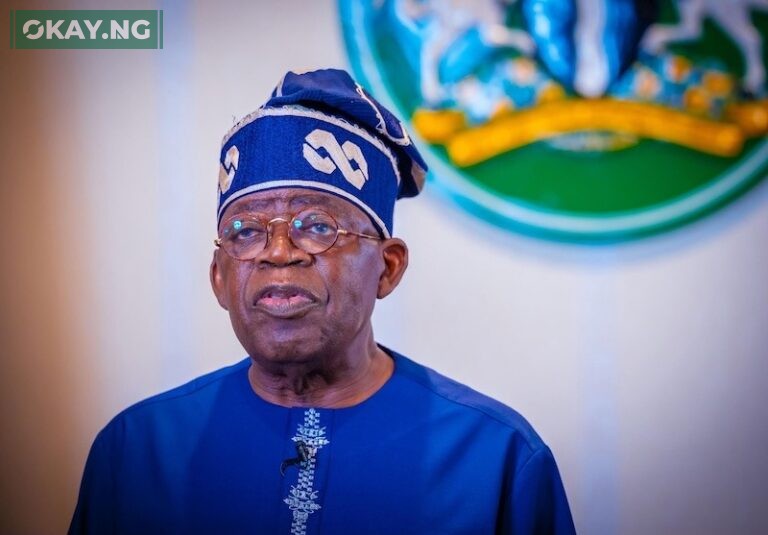
The political atmosphere in Nigeria intensified on Wednesday following President Bola Ahmed Tinubu’s declaration that the Federal Government had already achieved its 2025 revenue target in August. The announcement has ignited a war of words between the ruling All Progressives Congress (APC) and opposition political parties.
While the APC celebrated the achievement as proof of the administration’s economic recovery efforts, opposition groups — including the Labour Party (LP), African Democratic Congress (ADC), New Nigeria Peoples Party (NNPP), and the Coalition of United Political Parties (CUPP) — dismissed the claim, describing it as disconnected from the struggles of everyday Nigerians.
APC Defends Tinubu’s Statement
According to APC’s Deputy National Organising Secretary, Nze Chidi Duru, the revenue milestone demonstrates that the government is capable of implementing its 2025 budget without excessive borrowing.
Duru said, “We support the President because if the target revenue for the year has been met in August, it then shows that the budget is capable of implementation. It means the government would not, as had been the case before, borrow money to be able to fulfil the budget of 2025.”
He further argued that the development would ease financial pressure, enabling the government to address infrastructure deficits nationwide.
Opposition Counters With Harsh Criticism
The ADC’s National Publicity Secretary, Bolaji Abdullahi, however, dismissed Tinubu’s statement as “absurd,” stressing that the figures do not reflect improvements in the lives of ordinary citizens.
He queried, “What is the essence of the revenue target if it has no direct impact on the lives of the people? Nigerians want to see improvement in their lives, not mere statistics.”
The NNPP’s spokesperson, Ladipo Johnson, also criticised Tinubu, saying revenue growth without a reduction in the suffering of citizens is meaningless. He argued that the administration’s tax-heavy approach is strangling citizens.
Economists Raise Doubts
Economic experts have also expressed scepticism over Tinubu’s assertion that the government had stopped borrowing locally. They pointed to ongoing activities by the Debt Management Office (DMO) and the Central Bank of Nigeria (CBN), both of which continue to raise funds through treasury bills and bonds.
Professor Akpan Ekpo noted, “DMO is still issuing financial papers, and the Central Bank is still involved in debt market operations. I don’t know what he means by not borrowing.”
Other experts, such as Prof. Segun Ajibola, stressed the need for clarification from the Ministry of Finance regarding the revenue data.
Tinubu’s Economic Agenda
Since taking office in 2023, Tinubu has introduced sweeping reforms, including the removal of fuel subsidy and the unification of foreign exchange rates. While these policies increased government revenues, they also pushed inflation and worsened living conditions for millions of Nigerians.
Despite criticisms, the President insists that his “Renewed Hope Agenda” will deliver results in healthcare, food security, infrastructure, and national security.
okay.ng reports that the Presidency disclosed total revenue collections between January and August 2025 reached ₦20.59 trillion, a 40.5% increase from ₦14.6 trillion in 2024, largely driven by non-oil sectors.